
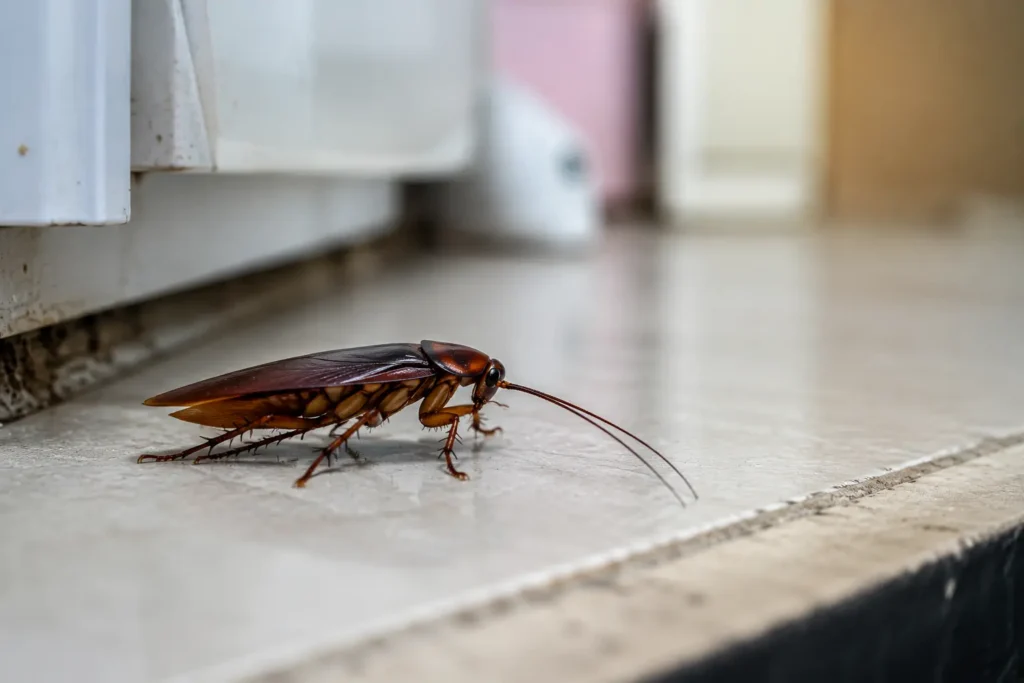
You’re in the kitchen late at night, you flip on the light, and something large and brown launches itself off the counter directly toward your face. Your heart stops. Did that cockroach just fly at you? If you’ve ever experienced this, you know exactly how unsettling it is — and you’re probably here because you want to know whether cockroaches actually fly and how worried you should be about it.
The short answer is yes — some cockroaches can fly. But the full answer is a lot more interesting than that, and understanding which species fly, when they fly, and why they fly toward you makes the whole thing a lot less terrifying.
Do Cockroaches Have Wings?
Most cockroach species have wings. That’s the part that surprises a lot of people, especially those who’ve only ever seen cockroaches running along baseboards or scurrying across the floor.
Here’s the thing though — having wings doesn’t automatically mean a cockroach uses them to fly. Many species carry wings their entire lives without ever taking flight. The wings are there, fully formed in some cases, but flight just isn’t part of their normal behaviour. In other species, the wings are so underdeveloped that flight is physically impossible.
What you’ll typically see on a cockroach is two sets of wings. The outer pair, called tegmina, are tough and leathery — they protect the delicate inner wings rather than provide lift. The inner wings are thinner and more membranous, and these are the ones that actually enable flight when a species uses them.
So the presence of wings tells you nothing on its own. What matters is the species.
Which Cockroaches Can Fly?
Not all cockroaches are equal when it comes to flight. Some species are capable, confident fliers. Others have wings but never use them. And a few can’t fly at all.
American cockroach — This is the large, reddish-brown cockroach most commonly found in basements, drains, and utility areas. American cockroaches have fully developed wings and are capable of flight, though they tend to glide more than they actively flap their wings. They’re most likely to fly in warm, humid conditions — hot summer days are when you’re most likely to see one take off.
Smokybrown cockroach — One of the stronger fliers among common cockroach species. Smokybrown cockroaches are drawn to outdoor lights and will readily fly toward them. They’re more common in warmer regions but can make their way indoors.
Wood cockroach — Found mainly outdoors in wooded areas and mulch beds. Wood cockroaches are active fliers, particularly the males, and are frequently attracted to porch lights and lit windows at night. They occasionally wander indoors but don’t typically establish infestations inside homes.
Australian cockroach — Similar in appearance to the American cockroach but slightly smaller. Australian cockroaches can and do fly, and like the smokybrown variety, they’re attracted to light sources.
Do All Roaches Fly?
No — and this is actually good news for most Canadian homeowners, because the most common indoor pest species in Canada doesn’t fly at all.
German cockroach — The most widespread cockroach species found inside Canadian homes and apartments. German cockroaches have wings, but they are completely flightless. They prefer to run, and they’re incredibly fast on their feet. If you’ve ever spotted a small, light-brown cockroach sprinting across your kitchen counter, it was almost certainly a German cockroach — and it won’t be taking off anytime soon.
Oriental cockroach — Sometimes called a water bug, the oriental cockroach is another common indoor pest that doesn’t fly. Males have short wings that cover only part of their abdomen. Females are entirely wingless. Neither can fly.
So do all roaches fly? Definitely not. The species most likely to be living inside your home right now — the German cockroach — is completely grounded.
Do Cockroaches Fly in Canada?
This is one of the most searched questions on this topic, and it makes sense — Canadian homeowners want to know whether flying cockroaches are actually something they need to worry about locally.
The honest answer is: occasionally, yes — but it’s not common indoors.
The German cockroach, which makes up the vast majority of indoor cockroach infestations across Canada, does not fly. So if you’re dealing with a cockroach problem inside your home, the chances are very high that whatever you’re seeing is running, not flying.
Flying cockroaches — American cockroaches, smokybrown, and wood cockroaches — are more of an outdoor concern in Canada. They may wander indoors through open windows, doors, or gaps in the exterior, especially during warm summer months. But they’re far less likely to establish large indoor infestations the way German cockroaches do.
Alberta’s climate also plays a role. Cockroach flight is strongly influenced by temperature — most flying species only take wing when it’s warm enough, typically above 27°C. During Alberta’s colder months, flying cockroach activity drops significantly.
If you’re seeing cockroaches indoors in Calgary and wondering whether they can fly, check out our cockroach pest control guide to identify exactly what you’re dealing with.
Why Do Cockroaches Fly at You?
This is the moment that sends most people running out of the room — a cockroach suddenly launching itself in your direction. It feels personal. It isn’t.
Cockroaches are poor, clumsy fliers. They don’t have the aerial precision of a housefly or a wasp. When a cockroach takes flight, it’s usually a panic response — a sudden burst triggered by perceived danger, a burst of heat, or a light source it’s been drawn toward. The flight itself is often erratic and poorly controlled, which is exactly why it sometimes ends up heading straight for you.
You are not the target. You just happen to be between the cockroach and wherever it thought it was going.
Heat also plays a significant role. When a cockroach is sitting near a hot surface and the temperature spikes — say you’ve just turned on the stove, or a hot light has been on for a while nearby — the sudden heat can trigger flight as an escape response. This is why cockroach flight events often happen in kitchens.
Are Flying Cockroaches Dangerous?
Flying cockroaches are no more dangerous than their ground-running cousins — and cockroaches of all kinds carry real hygiene risks worth knowing about.
Cockroaches pick up bacteria, pathogens, and allergens on their legs and bodies as they move through drains, garbage, and decaying matter. When they travel across kitchen surfaces, food preparation areas, or dishes, they transfer those contaminants. This is true whether the cockroach walked there or flew there.
The specific risks associated with cockroach infestations include food contamination, triggering of allergy and asthma symptoms — cockroach droppings and shed skin are known allergens — and the spread of bacteria like Salmonella and E. coli.
So the flying itself isn’t the danger. The danger is having cockroaches in your home at all, regardless of whether they use their wings to get around.
How to Keep Flying Cockroaches Out of Your Home
Since flying cockroaches typically enter from outside, prevention focuses on making your home’s exterior as uninviting as possible.
Seal gaps around windows, doors, and utility lines. Flying cockroaches enter through the same gaps as any other pest. Check window screens for tears, inspect door frames and weatherstripping, and caulk any cracks around pipes or cables entering your home.
Reduce outdoor lighting near entry points. Wood cockroaches and smokybrown cockroaches are strongly attracted to bright outdoor lights. Switching to amber or warm-toned bulbs reduces this attraction significantly compared to white or blue-spectrum lights.
Keep exterior areas clear. Firewood stacked against your home, heavy mulch directly against the foundation, and dense ground cover near entry points all provide shelter for outdoor cockroach species. Keep these away from the immediate perimeter of your home.
Fix moisture issues. All cockroaches, flying or otherwise, are strongly attracted to moisture. Leaky outdoor taps, standing water, and damp soil near your foundation all draw cockroaches closer to your home’s exterior — and eventually inside.
Install door sweeps. A gap under an exterior door is one of the easiest entry points for any ground-level pest. Door sweeps are inexpensive and eliminate one of the most common ways cockroaches get inside.
For a full breakdown of how to eliminate cockroaches once they’re already inside, our guide on how to get rid of cockroaches covers exactly what works.
When to Call a Professional Cockroach Control Service
Seeing a single flying cockroach that wandered in through an open window on a hot summer night isn’t necessarily cause for alarm — it’s a nuisance, not an infestation.
But certain signs indicate something more serious is happening, and at that point DIY efforts alone often aren’t enough.
Call a professional if:
- You’re seeing cockroaches regularly, not just once in a while
- You’ve spotted cockroaches during the day — cockroaches are nocturnal, so daytime sightings usually mean numbers are high
- You’ve found droppings, egg cases, or shed skins in multiple areas
- The problem is persisting despite cleaning, sealing, and trapping efforts
- You live in a multi-unit building where cockroaches can travel between units through shared walls and plumbing
Cockroach control from a trained professional targets both the visible population and the hidden one — the egg cases tucked into cracks, the nesting areas behind appliances, and the entry points you haven’t found yet.
Xpeller pest control helps homeowners and tenants across Alberta identify the exact cockroach species they’re dealing with and apply the right treatment to eliminate the problem at its source, not just the surface.
FAQ
Can German cockroaches fly?
No. German cockroaches have wings but are completely flightless — they rely entirely on running to get around. This is actually good news since German cockroaches are the most common indoor cockroach species in Canada. If you’re seeing cockroaches inside your home, the chances are high they’re German cockroaches and won’t be taking flight.
Why did a cockroach fly at me?
It wasn’t targeting you. Cockroaches are clumsy, erratic fliers that take off as a panic response to perceived danger, heat, or a nearby light source. Their flight direction is poorly controlled, which is why they sometimes end up heading straight toward a person. It’s startling but not aggressive behavior.
Are flying cockroaches a sign of a serious infestation?
Not necessarily. A single flying cockroach entering through a window or open door is usually just an outdoor species wandering inside temporarily. However, if you’re seeing cockroaches regularly inside — flying or otherwise — it’s worth investigating further, as indoor populations grow quickly once established.
Do cockroaches fly more in summer?
Yes. Cockroach flight is heavily influenced by temperature, and most flying species only take wing when it’s warm enough — typically above 27°C. Summer heat triggers significantly more flight activity, which is why flying cockroach encounters tend to spike during hot weather.
How do I tell a flying cockroach from a beetle?
Cockroaches have a distinctly flattened, oval body with long antennae and visible legs even in flight. Beetles tend to be more rounded with shorter antennae and a hard outer shell that splits down the middle when they fly. If you’re unsure what you’ve seen, a photo sent to a pest control professional can usually confirm the species quickly.
Conclusion
So do cockroaches fly? Some absolutely do — American cockroaches, smokybrown cockroaches, and wood cockroaches are all capable fliers. But the most common indoor species in Canada, the German cockroach, doesn’t fly at all. Understanding which species you’re actually dealing with makes the whole situation much less alarming.
Flying or not, cockroaches in your home are a hygiene concern that’s worth addressing promptly. Whether you’re dealing with a single outdoor wanderer or the early signs of an indoor infestation, the sooner you act, the easier the solution becomes.
If cockroaches keep showing up despite your prevention efforts, contact our team today for a professional inspection and get a clear plan to eliminate the problem before it grows any further.