
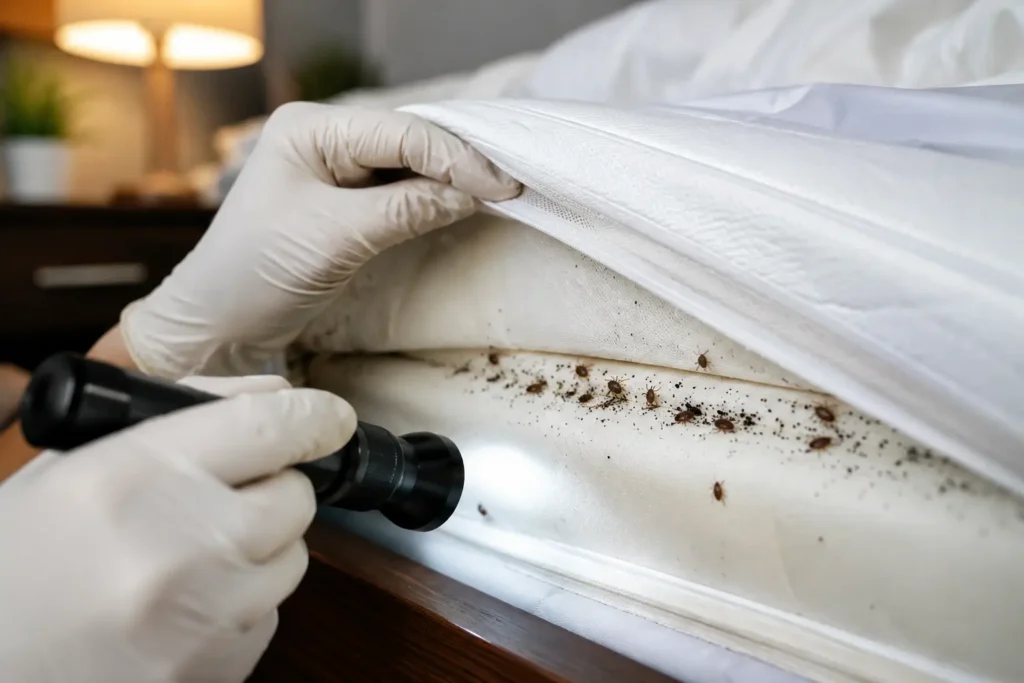
You wake up with a row of itchy red bites on your arm that weren’t there last night. A quick search later, you’re staring at a hundred different home remedies for killing bed bugs — vinegar, baking soda, rubbing alcohol, essential oils — and you have no idea which ones are actually worth your time and which are just internet myths.
Here’s the honest truth before you spend a weekend trying every suggestion online: some home remedies genuinely help reduce bed bug activity. Others are popular but completely unproven, and a few are downright dangerous to attempt indoors. Let’s go through exactly which is which, so you can spend your time and effort on what actually works.
Why Bed Bugs Are So Hard to Kill With Home Remedies Alone
Before getting into specific remedies, it helps to understand why bed bugs are such a stubborn problem in the first place.
Bed bugs hide in mattress seams, box springs, headboards, baseboards, wall cracks, and behind electrical outlets — places that are nearly impossible to fully treat with a spray bottle or a sprinkle of powder. They’re also resilient. Bed bug eggs are protected by a tough outer shell that many home remedies simply can’t penetrate.
What actually happens is that most home remedies kill bed bugs they directly touch but do nothing for the ones hiding deeper in cracks, or for eggs that haven’t hatched yet. That’s why even remedies that genuinely work tend to reduce a bed bug population rather than eliminate it completely.
This doesn’t mean home remedies are useless — it means you need to know which ones offer real value and use them with realistic expectations.
Home Remedies That Actually Work
These methods are backed by genuine science and consistent results, even though none of them guarantee complete elimination on their own.
Steam cleaning. Heat is one of the most reliable ways to kill bed bugs, and steam delivers it directly into the cracks and fabric seams where bugs hide. A steamer that reaches at least 200°F can kill bed bugs and their eggs on contact. Move the nozzle slowly across mattress seams, couch cushions, and baseboards rather than rushing through the process — the heat needs time to penetrate.
Washing in hot water and high heat drying. This is one of the simplest and most effective remedies available, and it costs you nothing extra if you already own a washer and dryer. Wash bedding, clothing, and curtains in the hottest water setting for at least 30 minutes, then dry on the highest heat setting for another 30 minutes. This kills bed bugs at every life stage, including eggs.
Freezing infested items. Cold works just as well as heat, but only under the right conditions. Items need to be sealed in a bag and placed in a freezer set to 0°F for at least four days. Here’s the catch — most home refrigerator freezers don’t actually get that cold. Always check with a thermometer before relying on this method.
Vacuuming. This won’t eliminate an infestation by itself, but it genuinely helps reduce numbers. Vacuum mattress seams, furniture crevices, baseboards, and corners thoroughly, then immediately seal the vacuum contents in a plastic bag and dispose of it outside. Skipping this last step risks letting bugs crawl right back out.
Diatomaceous earth. This natural powder works by damaging the bed bug’s outer shell, causing it to slowly dehydrate. It’s a legitimate DIY option, but it works gradually — expect results over several days, not instantly — and it doesn’t affect eggs. Apply a fine, even layer along mattress seams, bed frames, and baseboards.
Common Bed Bug Home Remedies That Are Mostly Myths
These get recommended constantly online, but the evidence behind them is weak or nonexistent. Knowing this can save you time and frustration.
Does vinegar kill bed bugs? Only on direct contact, and that’s the problem. Spraying vinegar directly onto a bed bug can kill it, but vinegar doesn’t reach the bugs hiding deep in cracks or affect their eggs at all. It’s not a treatment — it’s a way to kill the few bugs unlucky enough to be sitting right where you spray.
Does baking soda kill bed bugs? There’s no scientific evidence supporting this one at all. Despite being a popular suggestion, entomologists have found nothing to confirm that baking soda has any real effect on bed bugs, whether sprinkled alone or mixed with salt.
Rubbing alcohol for bed bugs. Rubbing alcohol can kill bed bugs it directly touches, similar to vinegar. But it evaporates within seconds, meaning it has zero residual effect, and it doesn’t reach hidden bugs or eggs. There’s also a serious safety concern here — rubbing alcohol is highly flammable, and spraying it around your bedroom near any heat source or open flame is genuinely dangerous.
Essential oils alone. Tea tree, lavender, peppermint, and eucalyptus oils get recommended constantly, but the research tells a different story than the marketing. At best, these oils act as a mild, temporary deterrent. They don’t kill bed bugs in any meaningful number and definitely don’t address hidden bugs or eggs. If you enjoy the smell, there’s no harm in using them — just don’t expect them to solve your problem.
Dryer sheets. The theory is that the scent repels bed bugs. There’s no scientific evidence supporting this at all, and pest control experts consistently list it as one of the least effective remedies people try.
Ultrasonic devices. These plug-in gadgets claim to emit sound waves that drive bed bugs away. University entomologists have specifically studied this and found no evidence of effectiveness — if anything, the slight heat these devices give off may attract bed bugs rather than repel them.
What About Mothballs and Other “Quick Fix” Suggestions?
Mothballs occasionally come up as a bed bug remedy, but they’re designed and labeled for an entirely different purpose — protecting fabrics in sealed containers, not treating an active infestation. Health Canada’s pest control products guidelines make clear that pesticides must be used strictly according to their labeled purpose, and using mothballs outside their intended use can pose real safety risks to children and pets while offering no meaningful benefit against bed bugs specifically.
Petroleum jelly applied to bed legs is another suggestion you might come across. The idea is that bugs get stuck trying to climb up. It might slow down a few bugs trying to reach your bed, but it does absolutely nothing for the bugs already hiding in your mattress, furniture, or wall cracks.
Imagine spending an entire evening applying petroleum jelly to every piece of furniture in your bedroom, only to wake up with new bites the next morning because the bugs were never on the floor trying to climb up — they were already inside your mattress the whole time.
How to Combine Remedies for Better Results
The remedies that actually work become significantly more effective when combined rather than used in isolation.
A reasonable DIY approach looks like this: wash and dry all bedding and clothing on high heat, vacuum thoroughly throughout the affected room, steam clean the mattress and furniture seams, and apply diatomaceous earth along baseboards and cracks as an ongoing deterrent. Repeat the process weekly, since newly hatched eggs will continue to emerge for a couple of weeks even after thorough treatment.
If you’ve spotted just one or two bugs and want to understand whether you’re dealing with a larger problem, our guide on what to do if you see 1 bed bug in your home walks through exactly how to assess the situation.
When Home Remedies Aren’t Enough
Here’s the part that’s important to be honest about — even when you do everything right, home remedies rarely eliminate a bed bug infestation completely on their own.
Bed bugs are incredibly good at staying hidden. They can survive for months without feeding, which means even a thorough cleaning effort can miss a few bugs that simply wait out the disruption before becoming active again weeks later.
You should consider professional treatment if:
- You’ve tried the effective remedies consistently for three to four weeks without improvement
- The infestation has spread to multiple rooms
- You’re finding bites despite thorough cleaning and treatment
- You want certainty that the problem is fully resolved, not just reduced
For more detail on just how resilient these pests can be, our article on how long a single bed bug can live explains why they’re so difficult to fully eliminate without professional-grade treatment.
Xpeller pest control offers thorough inspections and treatment plans that go beyond what home remedies can achieve, targeting bed bugs at every life stage — including the hidden bugs and eggs that DIY methods typically miss.
FAQ
What is the fastest home remedy to kill bed bugs? Steam cleaning and hot water washing are the fastest legitimate options, both killing bed bugs and their eggs on contact through heat. Steam works well for mattresses and furniture, while washing and drying on high heat is ideal for bedding and clothing. Neither requires waiting days for results the way diatomaceous earth does.
Can I get rid of bed bugs completely using only home remedies? It’s possible for very minor, early-stage infestations, but it’s genuinely difficult. Bed bugs hide in places home remedies struggle to reach, and their eggs are particularly resistant to most DIY treatments. Most pest professionals recommend combining several effective remedies and being prepared to seek professional help if the problem doesn’t improve within three to four weeks.
Why doesn’t vinegar or rubbing alcohol work on bed bug eggs? Bed bug eggs have a protective outer shell that liquid contact sprays like vinegar and rubbing alcohol can’t penetrate effectively. These remedies only kill bugs they directly touch on contact, which means eggs tucked into mattress seams or wall cracks remain completely unaffected and will continue hatching afterward.
Is diatomaceous earth safe to use around pets and children? Food-grade diatomaceous earth is generally considered safe when used as directed, but it’s still a fine powder that can cause respiratory irritation if inhaled in large amounts. It’s best to apply it in areas children and pets don’t have direct access to, and to avoid creating visible dust clouds during application.
Why do I still have bed bug bites after trying several home remedies? This usually means hidden bugs or unhatched eggs survived your treatment efforts, which is extremely common even with consistent, correct application of effective remedies. Bed bugs are skilled at avoiding direct contact and can remain dormant for weeks before becoming active again. Continued bites after several weeks of treatment is a strong signal that professional intervention would be worthwhile.
Conclusion
When it comes to home remedies for killing bed bugs, the honest answer is mixed. Steam cleaning, hot water washing, freezing, vacuuming, and diatomaceous earth all have real science behind them and can genuinely help reduce an infestation. Vinegar, baking soda, rubbing alcohol, essential oils alone, dryer sheets, and ultrasonic devices are largely myths that won’t solve your problem, no matter how often they’re recommended online.
Combine the remedies that actually work, repeat the process consistently, and watch closely for continued activity over the following weeks. For a deeper understanding of your overall treatment options, check out our complete guide to bed bug control or our guide on how to get rid of bed bugs fast.
If you’ve put in the effort and you’re still seeing bites or signs of activity after several weeks, don’t keep guessing. Contact our team today for a professional inspection and get a treatment plan that actually eliminates the problem for good.
Meta Title: Home Remedies for Killing Bed Bugs: What Works
Meta Description: Discover which home remedies for killing bed bugs actually work and which are myths. Learn safe, effective DIY methods and when to call a professional.
URL Slug: /home-remedies-for-killing-bed-bugs/