
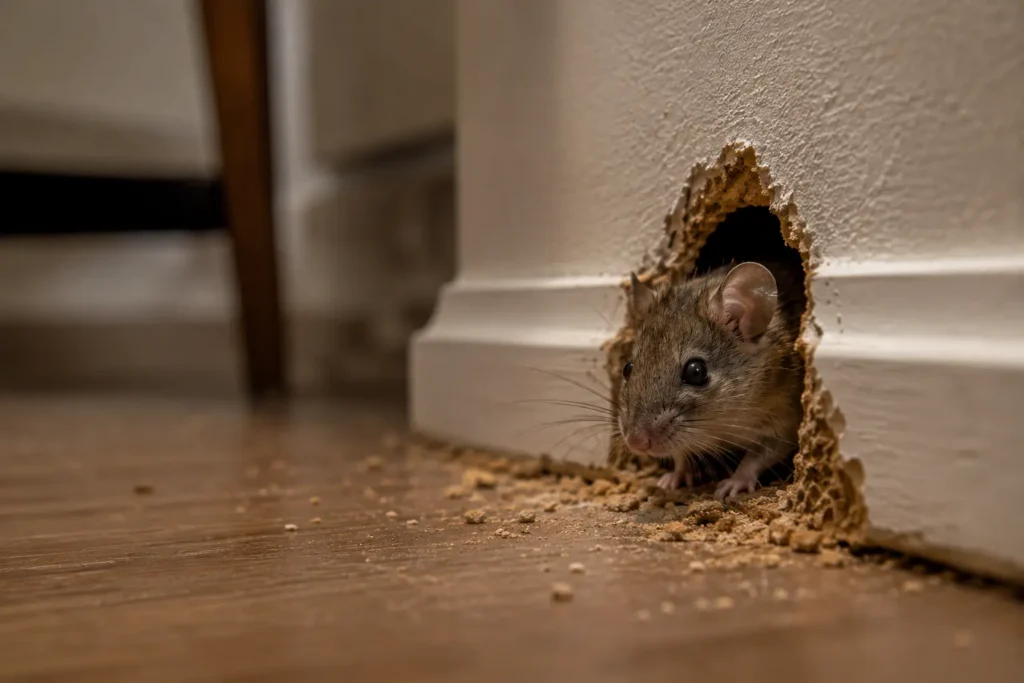
Have you been hearing strange scratching noises at night? Maybe it happens just as you’re falling asleep. At first, you ignore it. Then you hear it again the next night. If this sounds familiar, you may be wondering how to tell if mice are living inside your walls.
The truth is that mice are experts at staying hidden. Most homeowners never actually see them. Instead, they notice small clues that something is moving behind the walls. The sooner you identify those clues, the easier it is to prevent a small rodent problem from becoming a costly infestation.
Many homeowners eventually contact professional pest control services after discovering mice have been living inside their walls for weeks or even months without being noticed.
Why Mice Choose to Live Inside Walls
Your home’s walls provide almost everything mice need to survive.
Wall cavities are warm, quiet, and protected from predators. Mice can travel from room to room without being seen while staying close to food and water sources.
During colder months, mice actively search for shelter indoors. A tiny gap around a pipe, utility line, or foundation crack is often all they need to get inside.
Once they’re in, wall spaces become the perfect hiding place.
How to Tell If Mice Are Living Inside Your Walls
If you’re trying to determine whether mice are hiding behind your walls, there are several warning signs you should watch for.
Scratching Sounds in Walls at Night
One of the most common signs of mice in walls is hearing scratching or scurrying noises.
Mice are nocturnal. That means they are most active after dark when the house becomes quiet.
You may hear:
- Scratching
- Light tapping
- Running sounds
- Gnawing noises
- Movement between walls
Most people notice these sounds in bedrooms, kitchens, basements, or near ceilings.
Here’s the thing. If the sounds occur around the same time every night, there is a good chance mice are responsible.
Mouse Droppings Around Your Home
Mice rarely stay inside walls all the time. Eventually, they come out searching for food.
As they travel, they leave droppings behind.
Check:
- Pantry shelves
- Kitchen cabinets
- Under sinks
- Utility rooms
- Basement corners
Mouse droppings are usually small, dark, and shaped like grains of rice.
Fresh droppings are often a sign of active rodent activity.
Unusual Odors
Have you noticed a strange smell that seems impossible to locate?
Mice often leave behind strong odors from urine, nesting materials, and droppings.
Some homeowners describe the smell as:
- Musty
- Stale
- Ammonia-like
A strong odor coming from walls can sometimes indicate a larger infestation.
Pets Suddenly Focused on Walls
Most people don’t realize that pets often discover mice before humans do.
Dogs and cats have stronger senses of hearing and smell. They may react to activity hidden inside walls long before you notice anything.
Watch for pets that:
- Stare at walls
- Paw at drywall
- Bark at certain areas
- Follow sounds around the room
If your pet becomes unusually interested in one section of the house, it may be worth investigating.
Signs of Mice in Walls That Homeowners Often Miss
Some mouse infestation signs are less obvious.
Grease Marks Along Walls
As mice travel repeatedly along the same paths, oils from their fur can leave dark smudge marks.
These marks are commonly found:
- Along baseboards
- Near entry points
- Around wall openings
Chewed Materials
Mice constantly chew because their teeth never stop growing.
Look for damage to:
- Food packaging
- Cardboard boxes
- Plastic containers
- Stored belongings
Chewing activity often occurs close to nesting areas.
Nesting Materials
Mice build nests using soft materials they find around the home.
You may discover:
- Shredded paper
- Fabric pieces
- Insulation
- Dryer lint
Finding these materials can indicate mice are living nearby.
A Real-Life Example
Imagine you wake up one morning and notice a few tiny droppings under your kitchen sink.
That evening, you hear scratching sounds in walls behind the cabinets. A few days later, your dog keeps staring at the same section of the kitchen wall.
Individually, each clue might seem insignificant.
Together, they tell a different story.
This is how many homeowners discover a mouse problem before ever seeing an actual mouse.
Why Mice in Walls Can Become a Serious Problem
A few mice may not sound like a major issue.
The truth is that mice reproduce quickly.
One small problem can become a larger infestation within a short period of time.
Mice can also:
- Contaminate food
- Damage insulation
- Chew electrical wiring
- Create unpleasant odors
- Spread bacteria throughout the home
The longer they remain inside walls, the greater the potential damage.
How Do Mice Get Into Walls?
Many homeowners wonder how mice get inside in the first place.
The answer is surprisingly simple.
A mouse can squeeze through an opening about the size of a dime.
Common entry points include:
- Foundation cracks
- Utility line gaps
- Roof openings
- Damaged vents
- Garage door gaps
- Spaces around plumbing pipes
Once inside, mice often move directly into wall cavities.
What Should You Do If You Suspect Mice in Your Walls?
If you believe mice are living inside your walls, don’t ignore the signs.
Start by:
- Inspecting the exterior of your home
- Looking for entry points
- Storing food in sealed containers
- Cleaning food spills quickly
- Reducing clutter
These steps can help reduce conditions that attract rodents.
Homeowners dealing with recurring rodent activity often rely on professional mice control services to identify hidden nesting areas and stop infestations before they spread further.
How to Prevent Mice From Returning
Prevention is always easier than dealing with a large infestation.
Seal Potential Entry Points
Inspect your home’s exterior regularly.
Seal:
- Cracks
- Holes
- Utility openings
- Gaps around pipes
Remove Food Sources
Store pantry items properly and avoid leaving pet food out overnight.
Reduce Clutter
Storage areas filled with boxes and paper products provide ideal hiding places.
Schedule Routine Inspections
Regular inspections can help identify problems before mice become established inside your home.
If you’ve already dealt with rodents before, reading our guide on rodentshttps://xpeller.ca/rodents-in-attic-signs/ in attic signs can help you identify additional warning signs elsewhere in your home.
When to Call Professional Pest Control
Sometimes mouse activity continues despite your best efforts.
You should consider contacting our pest control team if:
- Scratching sounds continue nightly
- Droppings keep appearing
- Multiple rooms show signs
- DIY methods fail
- You suspect a larger infestation
Professional inspections can locate hidden entry points, nesting areas, and activity inside wall cavities that homeowners often miss.
FAQ
What is the first sign of mice in walls?
For many homeowners, the first sign is hearing scratching sounds in walls at night. Others notice droppings or unusual odors before hearing any activity.
Do mice stay in walls during the day?
Yes. Mice typically remain hidden during daylight hours and become active after dark when the home is quiet.
Can mice damage electrical wiring?
Yes. Mice frequently chew electrical wires, which can create serious fire hazards if left unchecked.
How do I know if scratching sounds are mice?
Mice usually create light scratching, scurrying, and gnawing sounds. If the noises happen regularly at night, rodents may be responsible.
Should I worry about one mouse?
Yes. If you see one mouse, there may be more nearby. Mice reproduce quickly, which is why early action is important.
Conclusion
Learning how to tell if mice are living inside your walls can help you identify a problem before it becomes a major infestation. Scratching sounds in walls, droppings, unusual odors, pet behavior, and nesting materials are all common warning signs that shouldn’t be ignored.
If you suspect mice are hiding inside your walls, take action quickly. Inspect your home, seal potential entry points, and address any conditions that may attract rodents. If the problem continues, don’t wait for it to get worse. Contact a professional pest control team to protect your home and keep it rodent-free.