
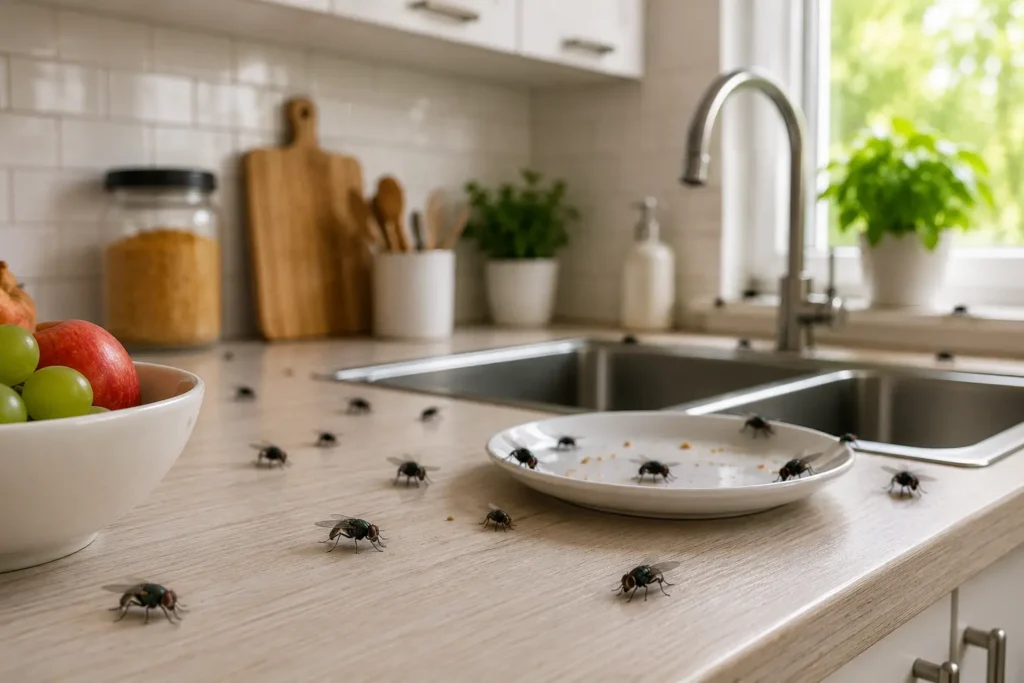
You sit down for dinner, and before you even pick up your fork, a fly lands on your plate. You wave it away. It comes back. Then another one shows up. If this sounds familiar, you’re not alone. Flies are one of the most frustrating household pests, and figuring out how to get rid of flies fast can feel like a losing battle if you don’t know what’s actually drawing them in.
The good news is that most fly problems are completely manageable. You don’t need expensive products or professional equipment to deal with a basic infestation. What you do need is a clear understanding of why they’re there and what actually works to get rid of them.
This guide covers everything Alberta homeowners need to know — from what attracts flies to practical solutions you can start using today.
Why Are Flies in My House?
Flies don’t wander into your home by accident. They’re looking for something specific — food, warmth, moisture, or a place to lay eggs.
Most flies enter through open doors and windows, gaps in screens, or cracks around door frames. Once inside, if they find what they need, they stay. And they multiply quickly. A single housefly can lay hundreds of eggs in her lifetime, and those eggs hatch within a day or two under warm conditions.
Alberta summers bring warm temperatures that speed up fly breeding cycles significantly. What starts as a minor annoyance in June can become a serious problem by July if you don’t address it early.
Here’s the thing — flies are not just annoying. They carry bacteria on their legs and bodies, picking it up from garbage, animal waste, and decaying matter before landing on your food and kitchen surfaces. That’s reason enough to take the problem seriously.
What Attracts Flies Into Your Home?
Understanding what attracts flies is the first step toward keeping them out.
Flies are drawn to your home by a combination of food sources, moisture, warmth, and breeding opportunities. The most common attractants include:
- Uncovered garbage bins inside and outside the home
- Food left out on counters — even small crumbs or fruit
- Overripe or rotting fruit on the counter
- Pet food left in open bowls
- Dirty dishes sitting in the sink
- Moist organic matter in drains and garbage disposals
It’s not just about cleanliness either. Even a well-kept home can attract flies if there’s a compost bin nearby, standing water in the yard, or animal waste that hasn’t been cleaned up.
What actually happens is that flies pick up scent trails from outside and follow them straight through any available opening. Keeping your home sealed and your food properly stored removes the signals that bring them in.
How to Get Rid of Flies in Your Home Naturally
Most homeowners want to deal with flies without reaching for harsh chemical sprays — especially in homes with children or pets. The good news is that natural methods work surprisingly well when used consistently.
Apple cider vinegar trap. Pour a small amount of apple cider vinegar into a glass and cover it tightly with plastic wrap. Poke a few small holes in the top. Flies are attracted to the vinegar smell, enter through the holes, and can’t find their way back out. Replace every few days.
Essential oils. Flies strongly dislike certain scents. Peppermint, eucalyptus, lavender, and clove oil all work as natural deterrents. Add a few drops to a spray bottle with water and spray around window sills, doorframes, and kitchen surfaces.
Herbs on the windowsill. Fresh basil, mint, and bay leaves naturally repel flies. Keeping a small pot near your kitchen window is a simple and effective long-term deterrent.
Keep surfaces dry. Flies need moisture. Wiping down counters, fixing dripping taps, and keeping the sink dry after use removes one of their basic needs.
These methods won’t eliminate a serious infestation overnight, but used together, they make your home significantly less attractive to flies on an ongoing basis.
How to Get Rid of Flies in the Kitchen
The kitchen is where most fly problems show up first — and for obvious reasons. Food, moisture, warmth, and garbage are all concentrated in one place.
Imagine you’re cooking dinner and you notice three or four flies circling the bin in the corner. You’ve cleaned the counters, but the bin hasn’t been emptied in a few days and there’s a banana peel sitting on top. That’s all flies need.
Here’s how to get rid of flies in the kitchen specifically:
- Empty the garbage bin daily. Even small amounts of food waste left overnight attract flies quickly. Use a bin with a tight-fitting lid.
- Clean your drains weekly. Organic buildup inside drains is a common fly breeding spot, especially for drain flies and fruit flies. Pour boiling water or a baking soda and vinegar mixture down the drain regularly.
- Store fruit in the fridge. Overripe fruit on the counter is one of the biggest fly attractants in any kitchen.
- Wipe down the stovetop and counters after every meal. Grease and food residue — even tiny amounts — are enough to attract flies.
- Rinse recycling before storing it. Empty bottles and cans with food residue are a major but often overlooked attractant.
Do you have a fruit bowl sitting on the counter right now? Check it. Overripe bananas, soft tomatoes, or any fruit past its best is basically a welcome sign for flies.
How to Get Rid of Flies Outside Around Your Home
Controlling flies outside reduces how many make it inside. If your yard is attracting large numbers of flies, they’ll keep finding their way in no matter how well you seal your home.
Outdoor fly control comes down to eliminating breeding sites and attractants:
- Keep garbage bins sealed and away from the house. Use bins with tight lids and keep them as far from doors and windows as practical.
- Clean up pet waste daily. Animal waste is one of the most significant outdoor fly attractants. Don’t let it sit.
- Maintain your compost bin properly. Turn it regularly, keep it covered, and never add meat or dairy.
- Eliminate standing water. Flies breed near moisture. Empty bird baths regularly, fix drainage problems, and clear gutters of debris.
- Trim back overgrown vegetation near the house. Dense, damp plant growth near walls and windows gives flies a sheltered resting area close to your entry points.
A few hours spent on outdoor cleanup can dramatically reduce the number of flies trying to get inside your your home each day.
Best Ways to Keep Flies Away for Good
Getting rid of flies is one thing. Keeping them away long term is another. These habits make a real difference over time.
Install or repair window screens. This is the single most effective physical barrier. Check every screen for holes or gaps, especially heading into summer. A small tear is all a fly needs.
Use a fly screen on your back door. If you like leaving doors open in warm weather, a magnetic fly screen lets air through while keeping flies out.
Keep your kitchen bin sealed at all times. Not just closed — sealed. Flies can smell through loosely fitting lids.
Clean garbage bins with soapy water regularly. The residue inside bins attracts flies even after they’ve been emptied. A quick wash every couple of weeks makes a noticeable difference.
Fix any gaps around doors and windows. Weather stripping and door sweeps are inexpensive and block one of the most common entry routes.
Long-term fly prevention is about removing the things that attract them, not just reacting when they appear. Professional Pest Control can also help assess your home for structural vulnerabilities that make fly problems worse.
When to Call a Professional Pest Control Company
Most fly problems can be solved with the steps above. But some situations go beyond what DIY methods can handle.
You should consider calling a professional if:
- Flies keep returning despite consistent cleaning and prevention efforts
- You’re seeing large numbers of flies suddenly appearing from inside the home — which can indicate a dead animal or hidden breeding site inside a wall or ceiling
- You notice a specific type of fly in large numbers — cluster flies, drain flies, or blow flies all indicate different underlying problems that need targeted treatment
- The problem is affecting multiple rooms or your entire property
If you’ve already read about why pests appear in your kitchen and tried the standard prevention steps without success, it may be time to get a professional inspection.
Professional fly control goes beyond surface treatment. A trained technician can identify the specific fly species, locate breeding sites you can’t find on your own, and apply targeted treatment that eliminates the problem at the source.
FAQ
Why do I suddenly have so many flies in my house? A sudden increase in flies usually means there’s a nearby food or breeding source you haven’t found yet. Check for forgotten food, overripe fruit, a full garbage bin, or moisture buildup in drains. In some cases, a dead animal inside a wall or roof space can cause a sudden fly surge — if you can’t find an obvious cause, that’s worth investigating.
Do flies go away on their own? They can decrease when the food source runs out or temperatures drop in autumn, but they won’t simply disappear while conditions remain attractive. Without removing what draws them in, a fly problem almost always continues or gets worse through the summer months.
Are flies dangerous to have in the house? Yes, more than most people realize. Flies carry bacteria, pathogens, and parasites on their bodies and legs, picked up from waste, garbage, and decaying matter. Every time a fly lands on your food or kitchen surface, it can transfer those contaminants. Flies are linked to food contamination and the spread of several gastrointestinal illnesses.
What is the fastest way to get rid of flies indoors? The fastest immediate fix is a combination of a fly trap, removing any obvious food sources, and sealing entry points. Apple cider vinegar traps work quickly for fruit flies. For houseflies, sticky traps placed near windows are effective. Long-term, consistent cleaning and sealing gaps is what keeps them from coming back.
Why do flies keep coming back even after I clean? If flies keep returning after cleaning, there’s likely a breeding site you haven’t found yet — inside a drain, behind an appliance, in the garbage bin itself, or somewhere outside near your entry points. Flies don’t need much. Even a thin film of organic residue inside a drain is enough to sustain a small population indefinitely.
Conclusion
Knowing how to get rid of flies starts with understanding why they’re there. Food, moisture, warmth, and easy entry points — remove those, and you remove most of what keeps flies coming back to your home.
Start with the kitchen. Empty the bin daily, store fruit in the fridge, clean your drains, and wipe down surfaces after every meal. Check your window screens, seal gaps around doors, and clean up outside. These steps together make a significant difference within days.
If flies keep coming back despite your best efforts, don’t keep guessing. Contact our team today for a professional inspection and get a clear plan to eliminate the problem for good — before fly season in Alberta gets any worse.