
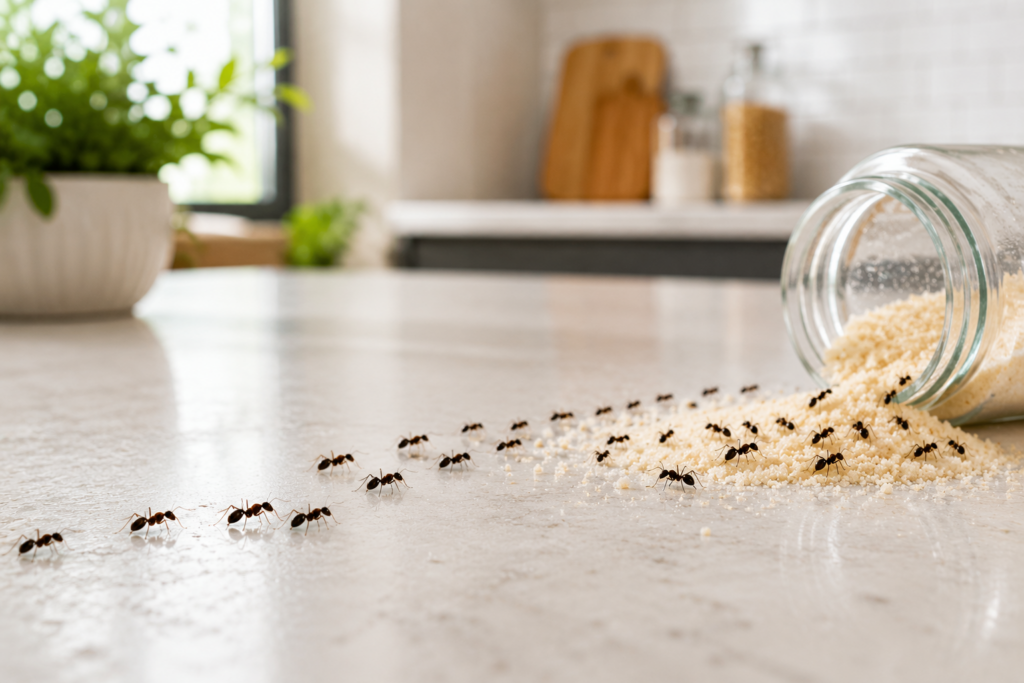
Seeing a few ants in your kitchen may not seem like a serious problem. But within a short time, a few ants can turn into a steady trail moving across countertops, floors, cupboards, and other areas of your home.
Ants usually enter homes in search of food, water, and shelter. Crumbs under appliances, sticky spills, pet food, leaking pipes, and small gaps around doors or windows can all attract them.
If you are wondering how to get rid of the ants in the house, the key is to do more than kill the ants you can see. You need to remove their food sources, find their entry points, and deal with the colony whenever possible.
Here are 10 practical methods that can help you control ants and reduce the chances of them coming back.
Why Are Ants Coming Into Your House?
Before trying to remove ants, it helps to understand why they are coming indoors.
Ants are excellent at finding food and moisture. Even a small amount of sugar, grease, crumbs, or pet food can attract them. Once worker ants find a food source, they leave a scent trail that helps other ants from the colony find it.
Some common reasons for ants in the house include:
- Food crumbs and spills
- Open food packages
- Pet food left out for long periods
- Overflowing garbage bins
- Moisture under sinks
- Leaking pipes or taps
- Cracks around windows and doors
- Gaps in the foundation or exterior walls
Ant activity often becomes more noticeable during warmer months when colonies are active and worker ants are searching for food. Changes in weather can also encourage ants to move indoors in search of food, water, or suitable shelter.
How to Get Rid of the Ants in the House: 10 Effective Methods
1. Find Where the Ants Are Coming From
Before wiping away every ant you see, watch the trail for a few minutes.
Follow the ants and check where they appear and where they disappear. Common entry points include gaps under doors, window frames, baseboards, plumbing openings, utility lines, and small cracks in walls.
Finding the entry point can help you decide where cleaning, sealing, baiting, or professional treatment may be needed.
2. Clean Ant Trails Properly
Ants use chemical scent trails to guide other members of the colony towards food.
Clean countertops, floors, baseboards, and other surfaces where ants are travelling. Regular household cleaning can help remove food residue and disrupt the trails ants are following.
Pay special attention to hidden areas, including under the toaster, stove, refrigerator, microwave, and garbage bin. Small crumbs in these areas can provide a regular food source for ants.
3. Remove Food Sources
One of the most important steps when learning how to get rid of the ants in the house is making food difficult for them to find.
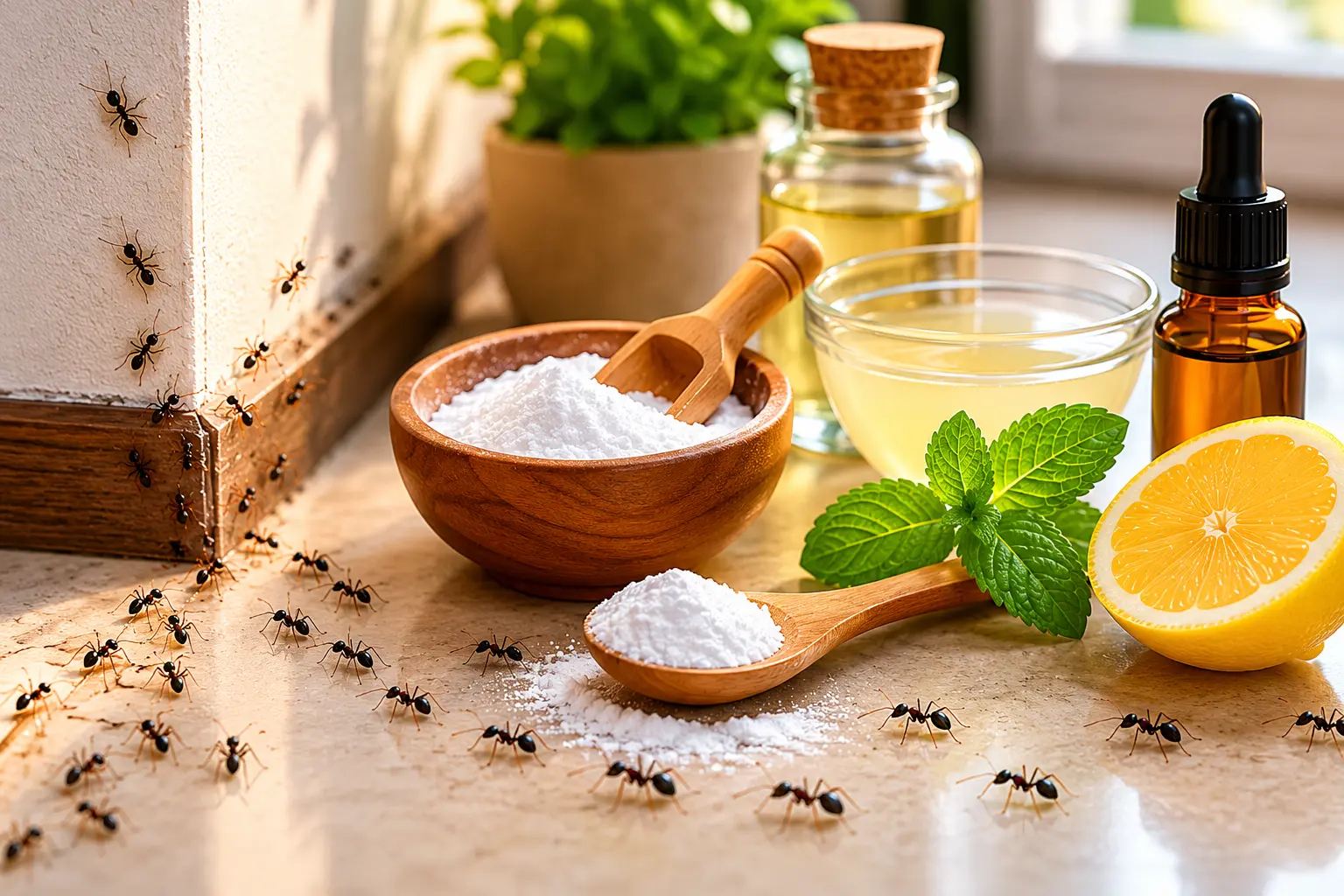
Store sugar, cereal, flour, snacks, and pet food in sealed containers. Clean spills as soon as possible, wipe kitchen counters after preparing food, and avoid leaving dirty dishes in the sink overnight.
Do not forget about pet feeding areas. Clean up spilled pet food and wash food bowls regularly.
A few crumbs may not seem important to us, but they can be enough to keep ants coming back.
4. Use Ant Baits Correctly
Ant baits can be useful because worker ants are attracted to the bait and may carry it back towards the colony.
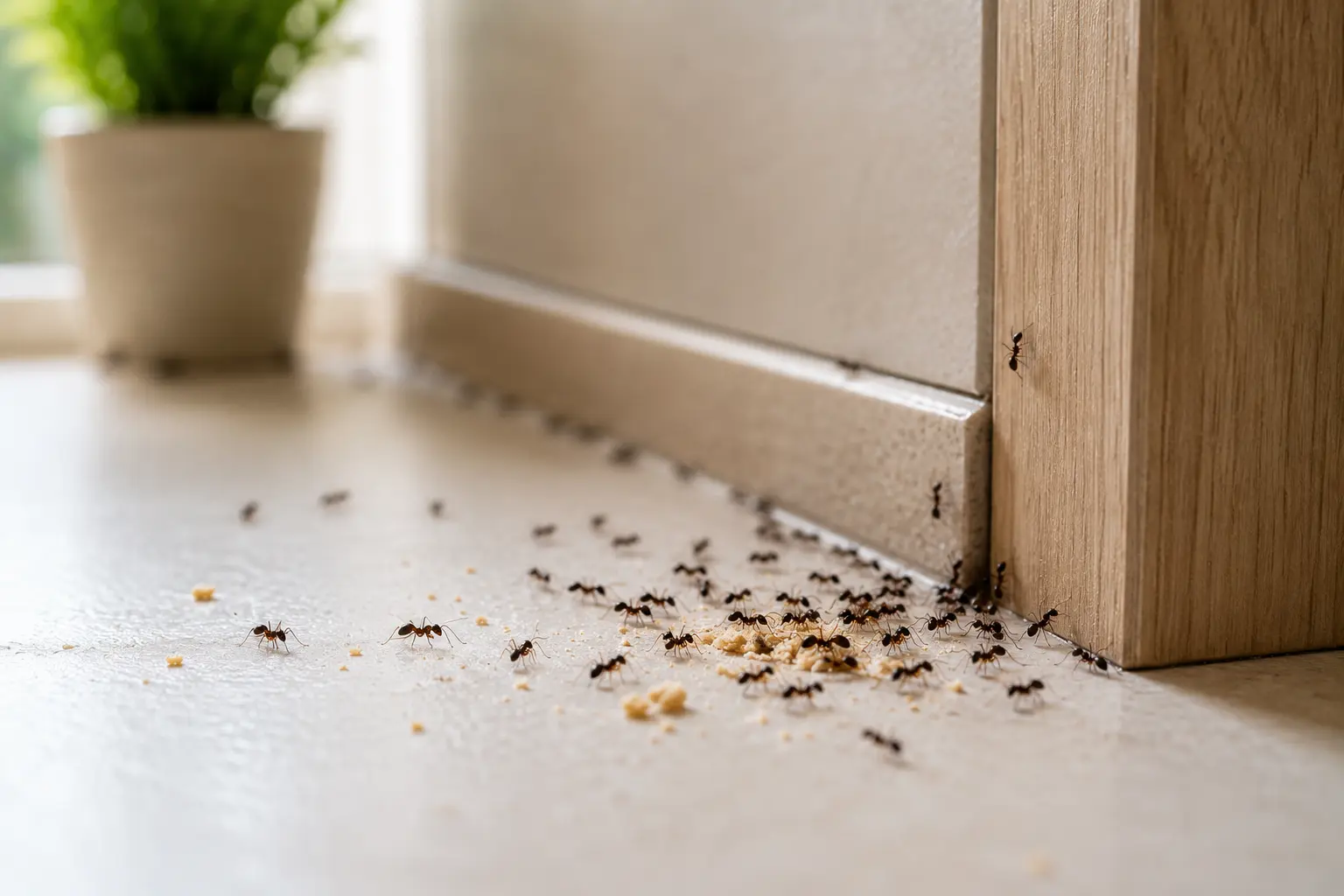
Place bait stations near active ant trails or in areas where ants are frequently seen. Always read and follow the product label carefully, and keep pest control products away from children and pets as directed.
Avoid spraying insecticide directly around an ant bait station. Some sprays may repel ants and prevent them from reaching the bait.
Patience is also important. Depending on the type of ant and the size of the colony, baiting may take time to produce noticeable results.
5. Seal Cracks and Entry Points
Once you have identified where ants are entering, seal accessible gaps and cracks where practical.
Check areas around:
- Window frames
- Exterior doors
- Baseboards
- Utility lines
- Plumbing openings
- Foundation cracks
Caulking small openings can help reduce future ant entry. However, sealing entry points alone may not solve an active infestation if ants are already nesting inside the building and how to get rid of the ants in the house.
6. Fix Moisture Problems
Some types of ants are attracted to damp areas, which makes moisture control an important part of ant prevention.
Check under kitchen and bathroom sinks for leaks. Look for dripping taps, condensation, damaged wood, and other areas where moisture collects.
Keeping these areas dry can make your home less attractive to ants and may also help reduce conditions that attract other household pests.
7. Keep Garbage and Recycling Areas Clean
Garbage and recycling areas can provide ants with easy access to food.
Use garbage bins with secure lids and clean up spills around them. When practical, rinse food containers before placing them in recycling bins and avoid allowing sticky food residue to build up.
Check both indoor and outdoor garbage areas regularly. Food waste stored close to the house can attract ants and other pests.
8. Trim Plants Away From the House
Tree branches, shrubs, vines, and other plants touching your home can provide convenient routes for ants.
Trim vegetation away from exterior walls, windows, and the roofline where practical. Also inspect areas around patios, decks, and foundation edges for signs of ant activity.
Reducing easy access routes around the outside of your home can support your overall ant prevention efforts.
9. Check for Signs of Carpenter Ants
Not every ant problem is the same.
Carpenter ants can be a greater concern because they create nesting galleries in wood. They are often associated with damp or moisture-damaged wood.
Watch for large ants, repeated indoor activity, or small piles of sawdust-like material near wooden areas.
If you suspect carpenter ants or cannot locate the source of the activity, consider getting a professional inspection. Identifying the ant species is important because different types of ants may require different control methods.
10. Call a Pest Control Professional for Persistent Ant Problems
DIY cleaning, baiting, and prevention methods can help with minor ant activity. However, ants that repeatedly return may indicate a larger or hidden colony.
A pest control professional can identify the type of ant, inspect areas of activity, locate possible nesting areas, and recommend a treatment approach based on the infestation.
Professional ant control may be worth considering when ants continue returning after repeated DIY efforts, appear in several rooms, or seem to be nesting inside walls or structural wood.
How to Prevent Ants From Coming Back
Knowing how to get rid of the ants in the house is only one part of long-term ant control. Prevention is just as important.
Keep your kitchen clean, store food in sealed containers, repair leaking taps and pipes, seal accessible cracks, and check common entry points regularly.
Outdoor maintenance can also help. Keep plants and branches away from the building where practical, clean up food waste, and check areas around the foundation for signs of ant activity.
A few simple changes in cleaning and home maintenance can make your home much less attractive to ants.
Health Canada also recommends sealing cracks and openings around the home as part of preventing and controlling ant problems.
Final Thoughts
Learning how to get rid of the ants in the house starts with understanding why they are coming indoors. In most cases, ants are searching for food, moisture, or shelter.
For a small ant problem, cleaning trails, storing food properly, sealing entry points, fixing moisture issues, and using labelled ant baits may help control the activity.
However, if ants keep returning, appear in several areas of your home, or you suspect a hidden nest, professional ant control can help identify the source of the problem and provide a more targeted approach.
The most effective long-term strategy combines ant removal with prevention. Keeping your home clean, dry, and properly sealed can reduce the chances of another ant problem.
Frequently Asked Questions
What is the fastest way and how to get rid of the ants in the house?
Start by removing food sources, cleaning spills and crumbs, and following the ant trail to find possible entry points. An appropriate ant bait may also help target the colony when used according to the product label. Simply killing visible ants may not solve the entire problem.
Why do ants keep coming back after I clean?
Ants may return if food, moisture, or entry points are still available. There may also be an established colony nearby or a hidden nest inside the structure.
Does vinegar permanently get rid of ants?
Vinegar may help clean surfaces and disturb ant scent trails, but it should not be considered a complete solution for an established ant colony.
How can I prevent ants from entering my house?
Store food in sealed containers, clean spills quickly, repair leaks, seal accessible cracks, and inspect doors, windows, pipes, and foundation areas for possible entry points.
When should I call professional pest control for ants?
Consider professional pest control when ants keep returning, appear in multiple areas of your home, or when you suspect carpenter ants or a hidden nest inside the structure and how to get rid of the ants in the house.