
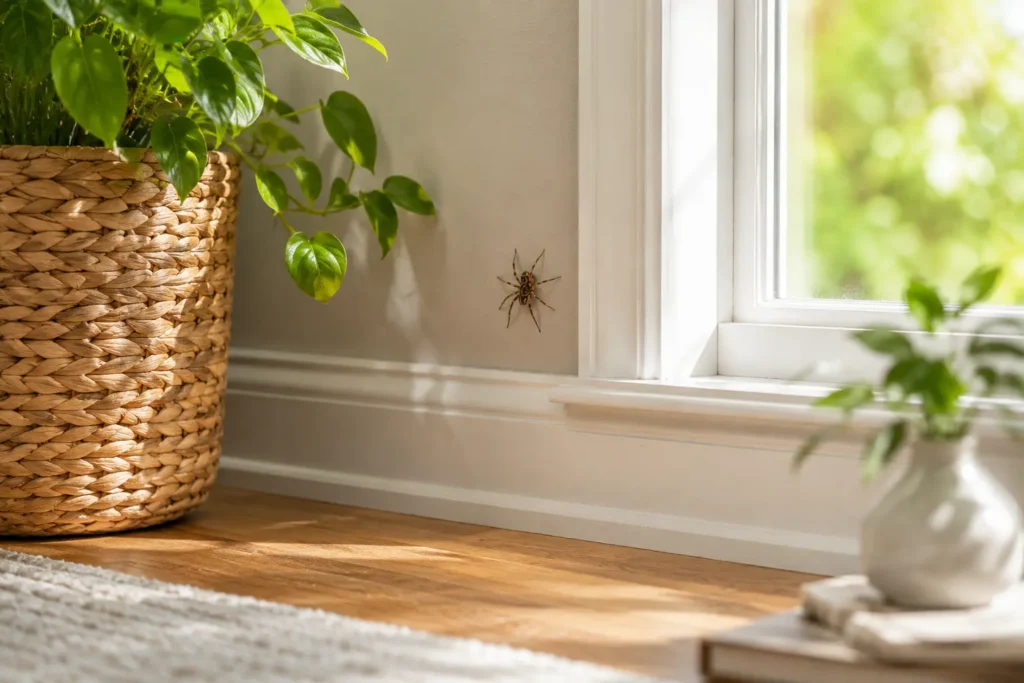
You walk into your basement, flip on the light, and there it is — another spider web stretched across the corner that wasn’t there last week. Then you spot one scurrying along the baseboard in the kitchen. If you’ve found yourself asking why are there so many spiders in my house all of a sudden, you’re definitely not the only one. This is one of the most common questions homeowners ask pest control companies, and the answer is usually simpler than you’d think.
The truth is, spiders don’t show up randomly. There’s almost always a reason — and once you understand what’s actually drawing them in, you can do something about it.
Why Are There So Many Spiders in My House All of a Sudden?
Here’s the thing — a sudden increase in spider sightings rarely means spiders just appeared out of nowhere. Most of the time, it means conditions in or around your home have become more favourable for them, and you’re only now noticing it.
A few common triggers explain a sudden spike:
- A change in season — cooling temperatures push spiders to seek shelter indoors
- A nearby insect population boom — more bugs means more food, which means more spiders
- A recently undisturbed area — basements, storage rooms, or garages that haven’t been cleaned in a while
- New entry points — a damaged screen, a gap around a pipe, or a door that doesn’t seal properly anymore
What actually happens is that spiders have likely been present in smaller numbers for a while. You just didn’t notice them until their numbers grew enough, or until one happened to wander somewhere visible like your kitchen floor or bathroom wall.
If you’ve already noticed activity specifically in your basement, our guide on why spiders are in your basement breaks down exactly what draws them to that particular space.
What Attracts Spiders Indoors?
Spiders are predators, not scavengers. Unlike ants or mice, they’re not coming inside looking for crumbs on your counter. They’re coming inside because something else is already there for them to eat.
Most people don’t realize this connection, but it’s the single most important thing to understand about spider problems. The most common attractants include:
- Other insects — flies, ants, moths, and other small bugs are a spider’s actual food source. If your home has an insect problem, even a minor one, spiders will follow.
- Moisture — damp basements, leaky pipes, and humid bathrooms create ideal conditions, both for spiders directly and for the insects they feed on.
- Clutter — cardboard boxes, piles of old magazines, and cluttered storage areas give spiders dark, undisturbed places to build webs and lay eggs.
- Outdoor lighting — bright white or blue-toned outdoor lights attract flying insects at night, which in turn draws spiders toward your entry points.
- Gaps and cracks — around windows, door frames, utility lines, and foundation walls are all common ways spiders slip inside.
Do you have a pile of boxes sitting untouched in a corner of your basement right now? That’s exactly the kind of spot spiders look for — quiet, dark, and rarely disturbed.
Are Spiders More Active in Fall or Summer?
Both seasons bring spiders out for different reasons, and knowing which season you’re in helps explain what’s happening.
Summer is when spider populations are at their highest outdoors. Warm weather means more insects, more food, and ideal breeding conditions. Spiders that have been growing since spring reach their largest size by late summer, which makes them far more noticeable when you do spot one.
Fall is when spiders become more visible indoors specifically. This is mating season for many species — mature males leave their hiding spots and actively roam in search of females, which significantly increases the odds you’ll see one wandering across your floor or wall. At the same time, dropping temperatures push spiders toward warmth, and they migrate indoors through small gaps and cracks around your home’s exterior.
So the population itself isn’t necessarily growing in fall — spiders are just far more visible because they’re moving, mating, and searching for shelter all at once.
Common Spiders Found in Alberta Homes
Most spiders you’ll encounter indoors in Alberta fall into a few common categories, and recognizing them helps you understand what you’re actually dealing with.
House spiders are small, brownish, and build the messy, irregular webs you’ll find in corners and behind furniture. They’re by far the most common indoor spider and are completely harmless.
Wolf spiders are large, hairy, and hunt on the ground rather than building webs. They’re often found near basement doors, garages, and mulch beds. Their size makes them look intimidating, but they’re not aggressive toward people.
Cellar spiders, sometimes called daddy longlegs, are long and spindly with thin legs. You’ll typically find them in dark, quiet corners of basements and bathrooms, hanging in loose, irregular webs.
Orb weavers build the large, intricately patterned webs you might see on porches or between shrubs. They’re an outdoor species but occasionally wander indoors through open doors or windows.
The vast majority of spiders found in Alberta homes are harmless and actually help control other insect populations. Imagine your basement without spiders — you’d likely have far more flies and other small insects around instead.
Are These Spiders Dangerous?
This is usually the first question people ask once they’ve spotted a few spiders, and the honest answer is reassuring for most Alberta homeowners.
The vast majority of spiders found indoors in Alberta pose no real threat to people. House spiders, cellar spiders, and wolf spiders are not aggressive and rarely bite unless directly handled or threatened. Even when bites do happen, they typically cause nothing more than mild, localized irritation similar to a mosquito bite.
That said, it’s worth knowing what to watch for. Spiders with distinct markings — particularly anything with an hourglass-shaped marking — warrant caution and should be left alone rather than handled directly. If you’re ever unsure about a specific spider you’ve found, it’s always safer to avoid contact and, if needed, ask a professional to identify it.
For most households, the bigger issue isn’t danger — it’s simply not wanting webs, egg sacs, and spiders showing up in living spaces.
How to Keep Spiders Out of Your Home
Once you understand what’s drawing spiders in, prevention becomes a lot more straightforward.
Seal entry points around your home. Check window screens for tears, inspect door frames for gaps, and caulk any cracks around your foundation. Spiders can squeeze through surprisingly small openings, so even minor gaps matter.
Reduce clutter, especially in basements and storage areas. Switch from cardboard boxes to sealed plastic containers, and vacuum corners and undisturbed areas regularly. Less clutter means fewer places for spiders to hide and build webs undisturbed.
Control moisture. Fix leaky pipes, use a dehumidifier in damp basements, and make sure bathrooms are well ventilated. Drier conditions are less appealing to spiders and to the insects they feed on.
Manage outdoor lighting. Switch porch and exterior lights to warmer yellow or amber tones rather than bright white or blue. This attracts fewer flying insects at night, which in turn means fewer spiders showing up near your entry points.
Keep vegetation trimmed back. Bushes, shrubs, and plants touching your home’s exterior give spiders an easy path indoors. Keep a clear gap between greenery and your walls.
Address other insect problems. Since spiders follow their food source, dealing with flies, ants, or other indoor pests removes much of what’s attracting spiders in the first place.
These steps work together. Sealing entry points without addressing clutter or moisture only solves part of the problem — and the same is true in reverse.
When to Call a Professional Spider Control Service
DIY prevention handles most everyday spider sightings well. A few webs in the basement corner, an occasional spider on the wall — these are normal and manageable on your own.
But some situations call for more than a vacuum and some caulk.
You should consider professional help if:
- You’re seeing large numbers of spiders consistently, not just the occasional one
- You’ve found egg sacs, which can contain hundreds of eggs and rapidly increase the population
- DIY prevention hasn’t reduced the activity after a few weeks
- You’re noticing webs rebuilding faster than you can clear them
- You’re unsure what species you’re dealing with and want peace of mind
Professional spider control addresses the problem more thoroughly than DIY methods alone. A trained technician identifies entry points you might miss, treats the insect population spiders are feeding on, and applies targeted treatment that reduces both current activity and future infestations.
Xpeller pest control helps Alberta homeowners get ahead of spider problems before egg sacs hatch and a manageable situation turns into a much bigger one.
FAQ
Why am I suddenly seeing spiders in my house when I never did before? A sudden increase usually means something has changed — a seasonal shift, a nearby insect population increase, or a recently undisturbed area like a basement or storage room. Spiders were likely present in smaller numbers already; you’re just noticing them now because their numbers have grown or one has wandered into a visible spot.
Does seeing a lot of spiders mean my house is dirty? Not necessarily. Spiders are attracted to insects, moisture, and clutter rather than dirt specifically. Even clean, well-kept homes can attract spiders if there’s a nearby insect food source or a damp basement. That said, reducing clutter and controlling moisture does make a home significantly less appealing to them.
Are house spiders in Alberta dangerous to have around? The vast majority of spiders found in Alberta homes are harmless and won’t bite unless directly handled. They’re also beneficial in a sense, since they help control other insect populations. The main exception is anything with distinctive warning markings, which should be left alone and identified by a professional if you’re unsure.
Why do I see more spiders in fall specifically? Fall is mating season for many spider species, which means male spiders are actively roaming in search of females rather than staying hidden. Combined with dropping temperatures pushing spiders to seek warmth indoors, this makes fall the time of year when spider sightings tend to spike noticeably.
Will spiders go away on their own if I just leave them alone? Spiders won’t simply disappear if the conditions that attracted them remain unchanged. Without addressing food sources, moisture, clutter, and entry points, spider populations tend to persist or grow, especially once egg sacs are laid. Taking proactive steps is far more effective than waiting it out.
Conclusion
So why are there so many spiders in my house all of a sudden? It almost always comes down to food, shelter, moisture, and easy entry points. Once those conditions are in place, spiders move in — and once they’re comfortable, they stay.
Start by sealing obvious entry points, clearing out cluttered areas, and addressing any moisture problems in your basement or bathroom. Controlling other insects in your home removes the food source that’s drawing spiders in the first place.
If you’re still seeing spiders despite your best efforts, or you’ve found egg sacs you’re not sure how to handle, don’t wait for the problem to grow. Contact our team today for a professional inspection and get a clear plan to keep your home spider-free.