
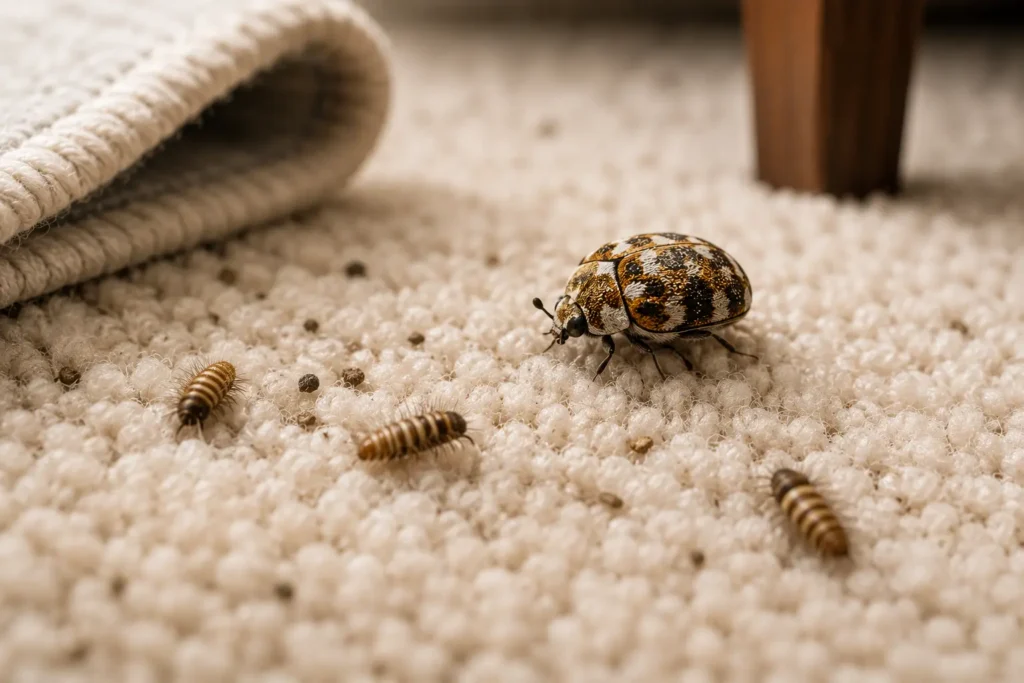
You spot a tiny beetle crawling near a window. A few days later, you notice small holes in a wool sweater stored in the closet. Then you find another beetle near the baseboard.
If this sounds familiar, you’re probably asking yourself: why are carpet beetles in my house?
The truth is that carpet beetles are one of the most overlooked household pests. Unlike mice or cockroaches, they often go unnoticed until they start damaging fabrics, carpets, and stored belongings. The good news is that once you understand what attracts them, you can take steps to stop them from becoming a bigger problem.
Many homeowners first discover carpet beetles while searching for professional pest control services after noticing damage to clothing, rugs, or furniture.
Why Are Carpet Beetles in My House?
Carpet beetles enter homes for one simple reason: they find food, shelter, and a safe place to reproduce.
Adult carpet beetles are attracted to light and often enter through open doors, windows, and small gaps around the home. Once inside, they lay eggs in areas where the larvae will have access to food.
The larvae are actually the destructive stage of the carpet beetle life cycle. They feed on natural fibers and organic materials found throughout many homes.
Common food sources include:
- Wool carpets
- Clothing
- Blankets
- Upholstered furniture
- Pet hair
- Feathers
- Stored fabrics
- Dust and debris
Even clean homes can attract carpet beetles if these food sources are available.
What Attracts Carpet Beetles?
Most people assume carpet beetles only appear in dirty homes. That’s not true.
Here’s the thing. Carpet beetles are more interested in food sources than general cleanliness.
Natural Fibers
Carpet beetle larvae love materials made from natural animal products.
These include:
- Wool
- Silk
- Fur
- Leather
- Feathers
Items stored in closets, attics, and basements often become targets because they remain undisturbed for long periods.
Pet Hair and Lint
Pet hair collects under furniture, along baseboards, and in hidden corners.
Combined with dust and lint, these materials can provide an excellent food source for developing larvae.
Dead Insects
Many homeowners don’t realize that carpet beetles also feed on dead insects.
Window sills, attics, and crawl spaces sometimes provide ideal feeding locations.
Signs of Carpet Beetles in Your Home
Early detection can save you from costly damage.
Damaged Fabrics
One of the most obvious signs is damage to clothing and fabrics.
You may notice:
- Small holes in sweaters
- Damaged blankets
- Worn areas in carpets
- Damage to upholstered furniture
Unlike moth damage, carpet beetle damage often appears in scattered areas.
Shed Larval Skins
As larvae grow, they shed their skins.
These shed skins are often found:
- Along baseboards
- Inside closets
- Under furniture
- Near storage boxes
Adult Beetles Near Windows
Adult carpet beetles are attracted to sunlight.
It’s common to find them:
- On window sills
- Near glass doors
- Around light fixtures
Finding adult beetles often indicates a larger hidden population elsewhere in the home.
A Real-Life Scenario
Imagine you’re preparing winter clothes for the colder months.
You pull out a favorite wool sweater from storage and notice several small holes. At first, you assume the damage happened years ago.
A week later, you spot a small beetle near the bedroom window and another in the closet.
Suddenly, the pieces start to fit together.
This is how many homeowners first discover a carpet beetle infestation.
Where Do Carpet Beetles Hide?
Carpet beetles prefer quiet areas where they won’t be disturbed.
Common hiding spots include:
- Closets
- Attics
- Basements
- Under furniture
- Behind baseboards
- Air vents
- Storage boxes
Because larvae avoid light, infestations often remain hidden for months.
How to Get Rid of Carpet Beetles
If you’ve confirmed carpet beetle activity, acting quickly is important.
Vacuum Thoroughly
Regular vacuuming helps remove:
- Larvae
- Eggs
- Shed skins
- Food sources
Pay close attention to:
- Corners
- Baseboards
- Closets
- Under furniture
Wash Stored Fabrics
Clothing, blankets, and linens should be washed or dry cleaned before storage.
This removes eggs and larvae that may be hidden in fabric fibers.
Reduce Clutter
Clutter creates hiding places and makes inspections difficult.
Organized storage areas are easier to monitor and maintain.
How to Prevent Carpet Beetles From Returning
Prevention is often easier than treatment.
Store Fabrics Properly
Use sealed containers whenever possible.
Proper storage protects valuable fabrics from pests and dust.
Inspect Seasonal Items
Check stored items before placing them back into closets.
Early detection helps prevent larger infestations.
Keep Your Home Clean
Regular cleaning helps remove food sources that attract carpet beetles.
Focus on:
- Baseboards
- Closets
- Storage areas
- Furniture edges
Homeowners who maintain clean, organized spaces often experience fewer pest problems overall.
When Should You Call Professional Help?
Sometimes carpet beetles continue appearing despite cleaning efforts.
You may need professional carpet beetle control services if:
- Damage continues increasing
- Adult beetles keep appearing
- Multiple rooms are affected
- Larvae are found throughout the home
Professional inspections can help identify hidden breeding areas that are easy to miss.
If you’ve recently dealt with other pest problems, reviewing our guide on signs of mice in walls can help you identify additional warning signs around your home.
Homeowners dealing with recurring pest issues often schedule pest control in Calgary inspections to catch problems early before significant damage occurs.
FAQ
Are carpet beetles dangerous to humans?
Carpet beetles do not bite people like bed bugs. However, some individuals experience skin irritation when they come into contact with carpet beetle larvae hairs.
Can carpet beetles damage clothing?
Yes. Carpet beetle larvae feed on natural fibers found in clothing, blankets, rugs, and upholstery.
Why do I keep finding carpet beetles near windows?
Adult carpet beetles are attracted to light. That’s why they are commonly seen on window sills and near glass doors.
Can carpet beetles live in mattresses?
They usually prefer fabrics, lint, and natural fibers. While they may occasionally be found near mattresses, they are more likely to infest nearby fabrics and stored items.
How long does it take to eliminate carpet beetles?
The timeline depends on the severity of the infestation. Small infestations may be controlled quickly, while larger infestations often require professional treatment.
Conclusion
If you’ve been wondering why are carpet beetles in my house, the answer usually comes down to food sources, hiding places, and access to natural fibers. These pests may be small, but they can cause significant damage if left untreated.
Regular cleaning, proper storage, and early inspections can go a long way toward preventing infestations. If carpet beetles continue appearing despite your efforts, don’t wait for the problem to spread.
Contact our pest control team today to schedule an inspection and protect your home from carpet beetle damage.