
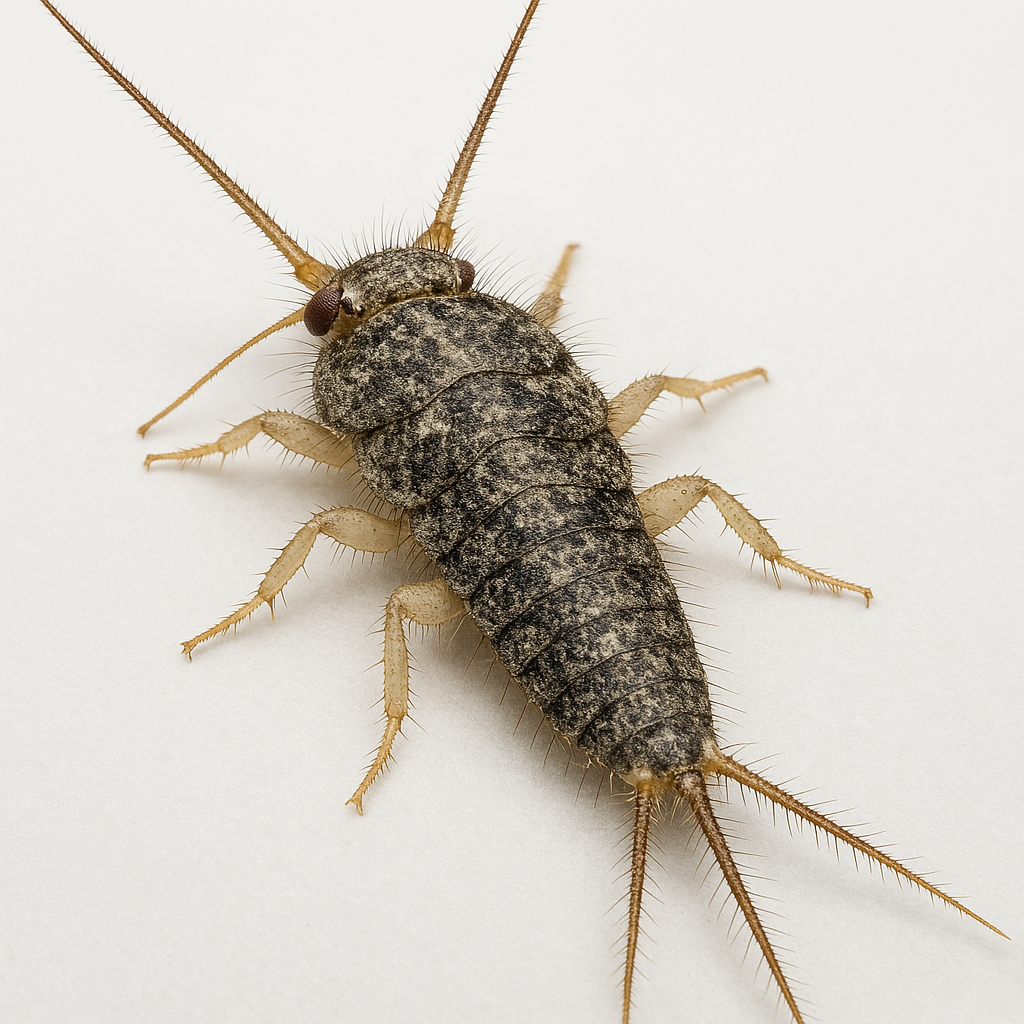
If you’ve noticed tiny, silvery insects darting around warm, dark areas of your home—especially in the kitchen, attic, or boiler room—you might be dealing with a firebrat infestation. Firebrats are closely related to silverfish and are often mistaken for them, but they thrive in hot, humid environments. These pests may be small, but they can cause significant damage to books, wallpaper, clothes, and stored food.
In this blog, we’ll cover the common signs of firebrats, what causes an infestation, and how to get rid of firebrats naturally and effectively.
🔍What Are Firebrats?
Firebrats (Thermobia domestica) are small, wingless insects about 1/2 inch long. They have:
- A carrot-shaped body covered in scales
- Long antennae and three long tail-like appendages
- A silvery or mottled gray-brown color
Firebrats prefer temperatures over 90°F and often live near heat sources like water heaters, furnaces, ovens, and insulation near hot pipes.
🚨 Signs of a Firebrat Infestation
Here are the most common signs of a firebrat infestation to watch out for:
1. Sightings of Fast-Moving, Silvery Insects
Firebrats are nocturnal, but if the infestation is large, you might spot them during the day. They run quickly and hide in cracks when exposed.
2. Yellow Stains or Droppings
You may notice small, pepper-like droppings or yellow stains on:
- Books
- Cardboard boxes
- Fabrics
- Stored grains and pantry food
3. Damage to Paper, Fabric, or Food Packaging
Firebrats chew on starchy substances like glue, paper, fabric, and dried food. Look for irregular holes in these materials.
4. Shed Skins
As firebrats grow, they molt. Finding these translucent exoskeletons around warm areas is a key sign of infestation.
5. Presence Near Heat Sources
If you regularly see these insects in warm places like attics, near water heaters, or under appliances, it’s likely you have firebrats.
🧪 Causes of Firebrat Infestations
Understanding what attracts firebrats helps in controlling them. Key causes include:
- High indoor temperatures and humidity
- Cluttered storage areas with cardboard, paper, and fabric
- Cracks and crevices that offer hiding spots
- Accessible food sources (dry goods, pet food, flour)
🛠 How to Get Rid of Firebrats Naturally
Looking for natural firebrat control methods? Here are eco-friendly, effective options:
1. Lower the Temperature
Firebrats can’t thrive in cool environments. Lower your indoor temperature or ventilate hot areas like attics and boiler rooms.
2. Remove Clutter and Food Sources
Eliminate hiding spots by decluttering:
- Store books and papers in sealed containers
- Clean pantry shelves and remove spilled food
- Avoid cardboard storage near warm pipes
3. Use Sticky Traps
Set up glue traps near suspected firebrat hiding spots. Check traps regularly to monitor activity.
4. Apply Diatomaceous Earth (DE)
This natural powder is harmless to humans but deadly to insects. Sprinkle DE:
- Around baseboards and cracks
- Near appliances
- In attics and behind water heaters
5. Seal Cracks and Entry Points
Use caulk or weatherstripping to seal gaps around windows, doors, and baseboards where firebrats may enter or hide.
🧼 Cleaning Tips to Prevent Firebrats
Ongoing cleanliness is key to preventing another firebrat infestation:
- Vacuum and dust frequently, especially near warm appliances
- Don’t leave pet food or dry grains exposed
- Use dehumidifiers in hot, damp areas
- Store pantry goods in airtight containers
By keeping your home clean and dry, you’ll make it less attractive to these pests.
🧑🔧 When to Call a Pest Control Expert
If natural remedies don’t eliminate the infestation or you’re dealing with a large number of firebrats, it’s time to contact pest control services near me.
A professional exterminator can:
- Identify the source of the infestation
- Apply targeted, eco-friendly treatments
- Offer long-term prevention plans
Search for firebrat pest control near me to find licensed and experienced technicians in your area.
🌿 Firebrats vs. Silverfish: What’s the Difference?

Though similar in appearance, there are differences between firebrats and silverfish:
| Feature | Firebrats | Silverfish |
|---|---|---|
| Preferred Temp | Very warm (over 90°F) | Cool to moderate |
| Common Places | Boiler rooms, attics | Bathrooms, basements |
| Appearance | Mottled gray or brown | Smooth, shiny silver |
Knowing the difference helps in using the right pest control methods.
🙋♀️ Frequently Asked Questions (FAQs)
1. Are firebrats harmful?
Firebrats don’t bite or spread disease, but they can damage household items like books, wallpaper, clothes, and dry food.
2. Where do firebrats hide?
Firebrats hide in warm, dark areas such as near boilers, ovens, attics, hot water heaters, and insulation around pipes.
3. How long do firebrats live?
Firebrats can live up to 2–3 years in ideal conditions and lay dozens of eggs during their lifespan, which is why fast action is important.
4. How do I prevent firebrats in the future?
- Reduce heat and humidity
- Clean storage areas
- Seal cracks
- Store food properly
Regular cleaning and maintenance are the best defenses.
5. Can I get rid of firebrats without chemicals?
Yes. Natural methods like diatomaceous earth, glue traps, and temperature control are effective. For larger infestations, consult pest control services offering eco-friendly solutions.
✅ Final Thoughts
A firebrat infestation can go unnoticed until damage becomes visible. By spotting the signs early and applying natural pest control methods, you can protect your home and belongings. Keep your space clean, control heat and humidity, and seal up hiding places to prevent these heat-loving pests from taking over.
If DIY methods don’t work, don’t hesitate to contact professional pest control companies for thorough and lasting firebrat removal.