
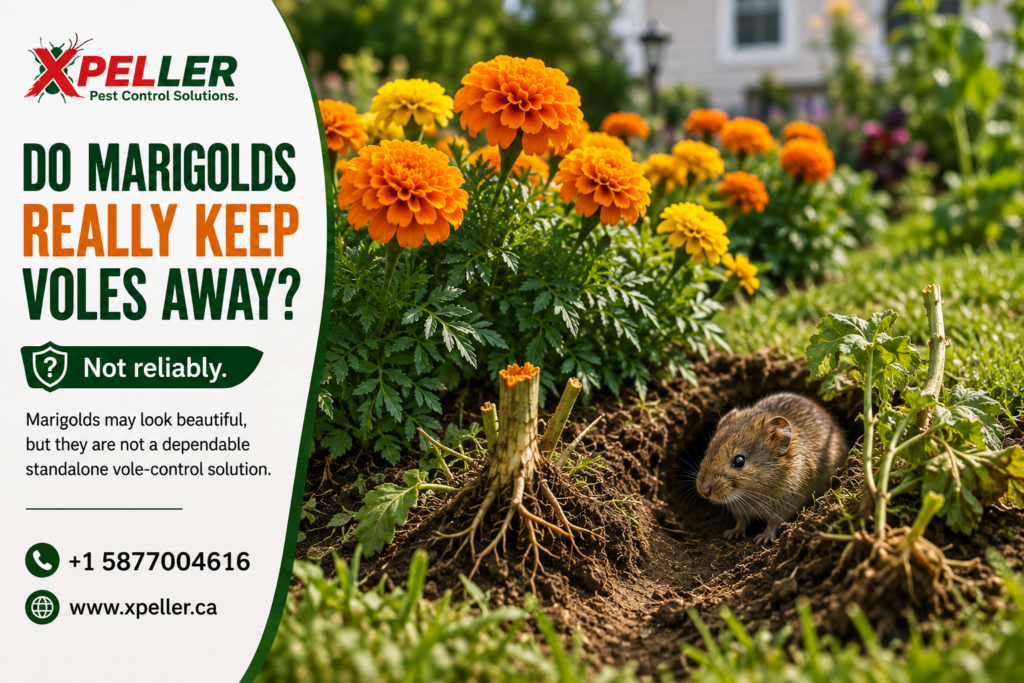
If you have noticed chewed plants, damaged roots, or small runways through your garden, you may be wondering: do marigolds really keep voles away?
Marigolds are popular garden flowers and are often recommended as a natural way to discourage pests. Their strong scent has led many gardeners to believe they can help repel unwanted animals. But when it comes to voles, the answer is not quite that simple.
Marigolds may be a useful addition to your garden, but they are not a proven or reliable way to eliminate a vole problem. If voles have access to food, shelter, and suitable nesting areas, simply planting marigolds is unlikely to keep them away.
For homeowners dealing with vole activity, identifying the cause of the problem and using practical vole prevention and control methods is usually much more effective.
What Are Voles?
Voles are small rodents that look somewhat like mice but have a stockier body and shorter tails. They are commonly found in grassy areas, gardens, yards, and landscapes with plenty of vegetation.
Unlike moles, which primarily feed on insects and other organisms found in soil, voles are plant eaters. They can feed on roots, bulbs, seeds, stems, vegetables, grass, and the bark of young trees and shrubs.
Voles can also create shallow runways through grass and vegetation. Because they often remain hidden under plants, mulch, or dense grass, homeowners may not notice them until visible damage appears.
A small vole population can become a bigger concern when the property provides plenty of food and cover.
Do Marigolds Really Keep Voles Away?
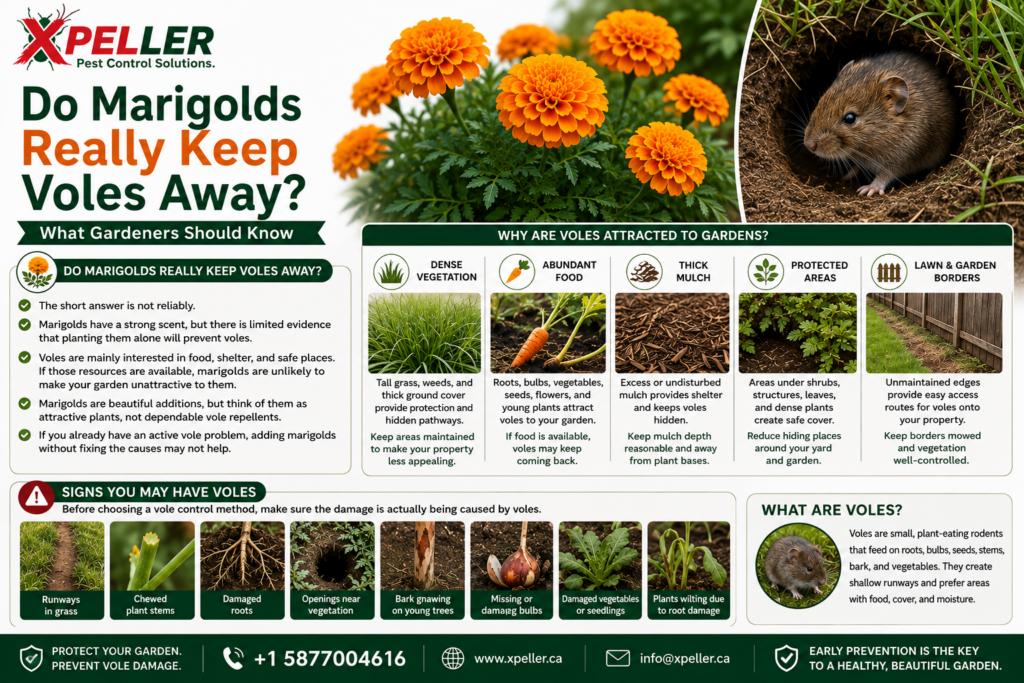
The short answer is not reliably.
Marigolds are sometimes described as natural pest-repellent plants because of their strong scent. However, there is limited evidence that planting marigolds alone will prevent voles from entering or remaining in a garden with do marigolds really keep voles away.
Voles are mainly interested in finding food, shelter, and safe places to move and nest. If those resources are available, the presence of marigolds is unlikely to make your garden completely unattractive to them.
So, while you can certainly grow marigolds, it is better to think of them as an attractive garden plant rather than a dependable vole repellent.
If you already have an active vole problem, adding marigolds without addressing the conditions attracting the rodents may not make much difference.
Why are Voles Attracted to Gardens?
Understanding what attracts voles can help you develop a more effective prevention strategy.
Dense Vegetation:
Tall grass, weeds, thick ground cover, and overgrown areas provide voles with protection from predators and do marigolds really keep voles away. Dense vegetation also gives them hidden pathways through your yard.
Keeping these areas maintained can make your property less appealing.
Abundant Food
Gardens can provide an easy food source for voles. Roots, bulbs, vegetables, seeds, flowers, and young plants may all attract these rodents.
If food is consistently available, voles may continue returning even when other deterrents are used.
Thick Mulch
Mulch is useful for protecting plants and improving soil moisture, but excessive or undisturbed mulch can also provide shelter for rodents.
Keeping mulch at a reasonable depth and away from the base of vulnerable plants can help reduce hiding places.
Protected Areas
Voles prefer locations where they can move around without being easily spotted. Areas beneath shrubs, garden structures, piles of leaves, and dense vegetation may provide suitable cover.
Lawn and Garden Borders
Unmaintained edges between lawns, gardens, fences, and wooded areas can provide convenient routes for voles to move onto your property.
Signs You May Have Voles
Before choosing a vole control method, make sure the damage is actually being caused by voles.
Common signs include:
- Shallow runways through grass
- Small openings near vegetation
- Chewed plant stems
- Damaged roots
- Missing bulbs
- Gnaw marks around the base of plants
- Damaged vegetables or seedlings
- Bark gnawing on young trees
- Plants wilting because their roots have been damaged
Voles can sometimes be mistaken for other rodents or garden pests. Correct identification is important because different pests require different management approaches.
Can Marigolds Still Be Helpful?
Yes. 🌼
There is nothing wrong with planting marigolds in your garden. They are colorful, attractive, and relatively easy to grow. Hey can also be part of a diverse and well-maintained landscape.
However, gardeners should avoid expecting marigolds to solve an established vole infestation. IF your main goal is to protect vegetables, flowers, bulbs, and landscaping from vole damage, use marigolds as an addition to your garden rather than your primary control method.
Think of it this way:
Marigolds can be part of your garden, but they should not be your entire vole-control plan.
How to Keep Voles Out of Your Garden:
If you want to reduce vole activity, focus on making your property less attractive and reducing opportunities for shelter.
1. keep, Grass! Short
Regular mowing reduces the amount of cover available to voles.Ay particular attention to grass around garden beds, fences, sheds, and other structures.
2. Emove Yard Debris.
Leaves, branches, dense vegetation, and piles of garden debris can provide hiding places.Eeping your yard clean can help reduce potential shelter.
3. Manage Garden Mulch
Avoid creating thick, undisturbed layers of mulch around plants. MAintaining an appropriate mulch depth can reduce the amount of protected space available to rodents.
4. Protect Vulnerable Plants
If voles repeatedly damage specific plants, physical barriers may help protect roots, bulbs, and other vulnerable areas.
5. Inspect Your Property:
Regularly check your lawn and garden for new runways, gnaw marks, damaged plants, and other signs of activity.EArly detection can make vole management easier.
6. Address the Problem Promptly
If vole activity continues despite basic prevention measures, consider professional assistance rather than allowing the population to grow.
Do Natural Vole Deterrents Work?
Homeowners often search for natural vole deterrents because they want to avoid more intensive pest-control methods.
You may find recommendations for strongly scented plants, homemade repellents, commercial products, and other DIY approaches. Some may temporarily discourage activity in specific situations, but results can vary.
The biggest issue is that a deterrent may not address the reason voles are attracted to your property form do marigolds really keep voles away.
For example, if your garden provides abundant food and dense cover, a scent-based deterrent may not be enough to prevent voles from returning.
That is why a combination of habitat management, plant protection, monitoring, and appropriate vole control is generally more practical than relying on one plant or home remedy.
Marigolds vs. Effective Vole Prevention
Planting marigolds is simple and inexpensive, which is why the idea of using them for pest control is appealing.
But there is an important difference between trying to discourage occasional activity and dealing with an established vole population.
If you notice one or two signs of activity, start by improving lawn and garden maintenance. Reduce hiding places, remove excess debris, and monitor the affected areas.
If you repeatedly see runways, damaged roots, chewed plants, or other signs, the problem may require a more targeted approach.
Effective vole prevention starts with understanding the conditions on your property and addressing the factors that allow the rodents to thrive.
When Should You Consider Professional Vole Control?
A professional pest control inspection may be worthwhile when:
- Vole activity continues despite your prevention efforts
- Plants are repeatedly being damaged
- Roots or bulbs are being destroyed
- You are seeing new runways regularly
- The affected area appears to be expanding
- You are unsure whether voles are responsible for the damage
Professional pest control can help identify the pest, determine where activity is occurring, and recommend an appropriate strategy for managing the problem.
How Xpeller Pest Control Solutions Can Help
At Xpeller Pest Control Solutions, we understand how frustrating it can be to discover that rodents are damaging your garden or landscaping.
Instead of relying entirely on home remedies such as planting marigolds, a professional approach focuses on identifying the source of the activity and determining the most practical way to manage it.
A proper assessment can help identify:
- Areas where voles are active
- Potential food sources
- Hiding and nesting locations
- Vulnerable areas of your landscape
- Opportunities for prevention
- Appropriate control options
Addressing vole activity early can help protect your lawn, garden, plants, and landscaping from continued damage from do marigolds really keep voles away.
Frequently Asked Questions:
Do marigolds really keep voles away?
Marigolds are not considered a reliable standalone vole repellent. Although their strong scent may be unpleasant to some pests, planting marigolds alone is unlikely to prevent voles from using a garden that provides food and shelter.
What plants keep voles away?
There is no single plant that can reliably keep voles out of a property. Some strongly scented plants are commonly recommended as deterrents, but their effectiveness can vary. Habitat management and physical protection are generally more reliable prevention strategies.
What attracts voles to a garden?
Voles are attracted to gardens that provide food, vegetation, moisture, and protected areas. Roots, bulbs, vegetables, grass, and dense plant growth can all provide suitable resources.
How can I prevent vole damage?
Keeping vegetation trimmed, removing debris, managing mulch, protecting vulnerable plants, and regularly inspecting your property can help reduce vole activity and damage.
Should I contact a pest control professional?
If vole activity continues or significant plant and landscaping damage is occurring, professional vole control can help identify the source of the problem and determine an appropriate management strategy.
Final Thought: Do Marigolds Really Keep Voles Away?
So, do marigolds really keep voles away?
The answer is not reliable. Marigolds can be a beautiful addition to your garden, but they should not be treated as a guaranteed solution for vole problems.
If voles are damaging your plants, focus on reducing food and shelter opportunities, maintaining your lawn and garden, protecting vulnerable plants, and monitoring for signs of activity.
When DIY prevention is not enough, professional vole control can provide a more targeted approach.
At Xpeller Pest Control Solutions, we can help you identify vole activity and determine practical ways to protect your property.
Don’t let a small vole problem become major damage to your garden. Take action early and protect your landscape.