
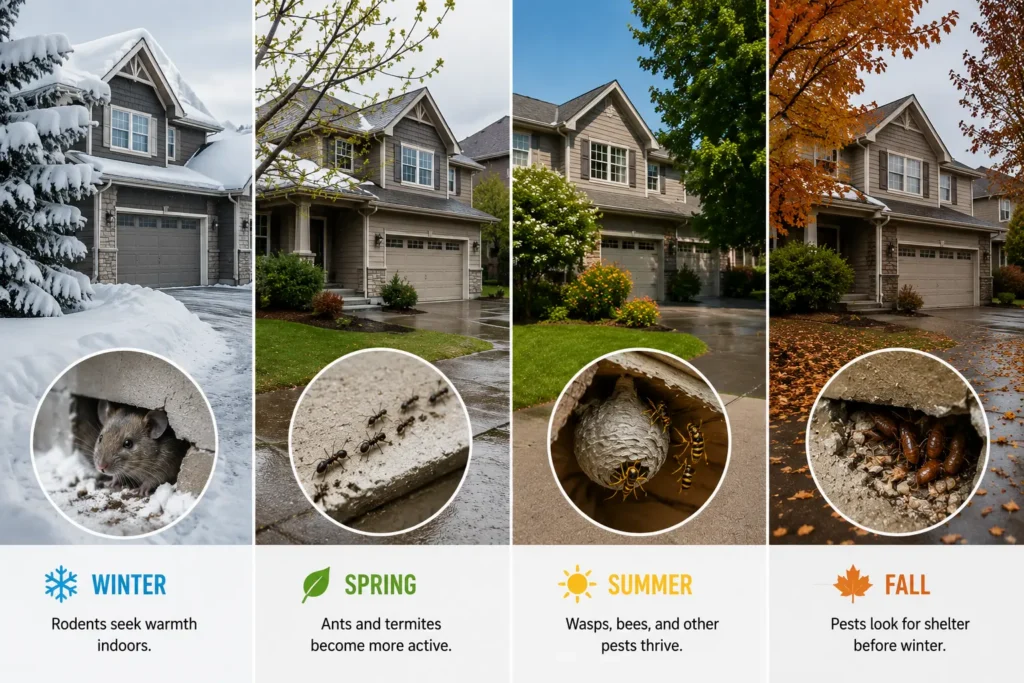
Calgary’s climate is known for its dramatic temperature shifts, long winters, sudden warm spells, and dry summers. While homeowners may adapt to these changes with jackets and air conditioning, pests respond in very different ways.
Understanding how Calgary’s weather impacts pest behavior can help you stay ahead of infestations and protect your home or business year-round.
Why Weather Plays a Major Role in Pest Activity
Pests are highly sensitive to temperature, moisture, and seasonal transitions. Unlike humans, they don’t regulate body temperature internally. Instead, they rely on environmental conditions to survive.
When outdoor conditions become extreme—too hot, too cold, or too wet—pests move indoors for:
- Warmth
- Shelter
- Food access
- Water sources
Calgary’s fluctuating climate creates predictable pest movement patterns throughout the year.
Winter: Rodents Move Indoors
Calgary winters are long and cold. Snow accumulation and freezing temperatures eliminate natural food sources for rodents.
Common Winter Pests:
- Mice
- Rats
- Occasional overwintering insects
Why They Enter Homes:
- Warm wall cavities
- Heated basements
- Garage storage
- Easy access to food
During winter, rodents often nest inside insulation, chew electrical wiring, and contaminate storage areas. Because they reproduce indoors, infestations can grow unnoticed for months.
Spring: Ants and Overwintering Pests Emerge
As temperatures rise, pests that survived winter inside walls and foundations begin to emerge.
Spring Activity Includes:
- Ant colonies expanding
- Spiders becoming visible
- Overwintering beetles appearing near windows
- Increased rodent movement
Melting snow also creates moisture issues around foundations, attracting ants and other insects searching for water.
Spring is one of the busiest pest seasons in Calgary because pests become active at the same time homeowners begin cleaning and renovating.
Summer: Peak Insect Season
Summer warmth accelerates insect breeding cycles. Calgary’s dry heat can push pests indoors in search of moisture.
Common Summer Pests:
- Wasps
- Ants
- Flies
- Spiders
- Stored product pests
Outdoor gatherings, open doors, and increased food exposure create ideal feeding opportunities for insects.
Wasps, in particular, become more aggressive in late summer as colonies mature and food sources decline.
Fall: The Second Rodent Surge
Fall is one of the most critical times for pest control in Calgary.
As temperatures drop, rodents aggressively seek indoor shelter. Small entry points around foundations, vents, and door frames become access routes.
Fall Risk Factors:
- Gaps in siding
- Cracked foundations
- Unsealed utility openings
- Garage door gaps
Once inside, rodents prepare nests to survive winter, leading to larger infestations by spring.
Chinooks: Calgary’s Unique Pest Trigger
Calgary’s Chinook winds bring sudden warm spells during winter. These rapid temperature shifts can disrupt pest dormancy.
Chinooks may cause:
- Sudden rodent activity
- Insects emerging unexpectedly
- Movement inside walls
These unpredictable warm periods can make pest problems appear random, even during winter.
Moisture & Pest Attraction
Moisture plays a significant role in pest behavior.
Heavy rain or snowmelt can drive pests indoors due to:
- Flooded burrows
- Saturated soil
- Increased humidity
Basements and crawl spaces are particularly vulnerable during wet periods.
How Businesses Are Affected Differently
Commercial properties face seasonal pest risks based on industry type.
- Restaurants experience increased fly and rodent activity in summer.
- Warehouses may see rodent movement during fall and winter.
- Multi-unit housing can experience year-round issues due to shared walls.
Weather-driven pest movement affects both residential and commercial properties.
Preventing Weather-Related Pest Problems
Proactive prevention reduces seasonal infestations.
Year-Round Prevention Tips:
✔ Seal cracks and foundation gaps
✔ Install door sweeps
✔ Keep garbage sealed
✔ Trim vegetation away from buildings
✔ Maintain proper drainage
✔ Schedule regular pest inspections
The most effective pest management strategy is prevention before seasonal spikes occur.
Why Seasonal Pest Control Matters
Many homeowners wait until they see pests before calling for help. However, by that time, infestations may already be established.
Seasonal pest control programs focus on:
- Preventative exterior treatments
- Monitoring high-risk areas
- Early detection
- Long-term protection
Regular service is more effective than reactive treatments.
Final Thoughts
Calgary’s climate creates predictable pest cycles throughout the year. From winter rodent invasions to summer insect surges, each season presents different risks.
Understanding how weather influences pest behavior allows homeowners and businesses to take proactive steps before small problems turn into major infestations.
A year-round strategy tailored to Calgary’s climate provides the strongest protection for your propert