
Introduction
How to get rid of voles in your yard is a common concern for homeowners who notice damaged lawns, chewed plants, and small tunnels appearing across their garden. Voles may look harmless, but they can quickly destroy your yard if not controlled early.
These small rodents live underground and feed on roots, grass, and vegetables. Because they reproduce quickly, even a small problem can turn into a serious infestation within a short time.
In this guide, you will learn how to identify vole activity, remove them effectively, and prevent them from coming back.
What Are Voles?
Voles are small, mouse-like rodents often confused with moles. However, unlike moles that primarily dig and feed on insects, voles feed directly on plants and roots.
Key characteristics:
- Small body with short tail
- Brown or gray fur
- Found in lawns, gardens, and fields
- Create shallow tunnels on the surface
Understanding their behavior helps in choosing the right control method.
Why Voles Are a Problem
Voles can cause significant damage to your yard and garden.
Common problems include:
Lawn Damage
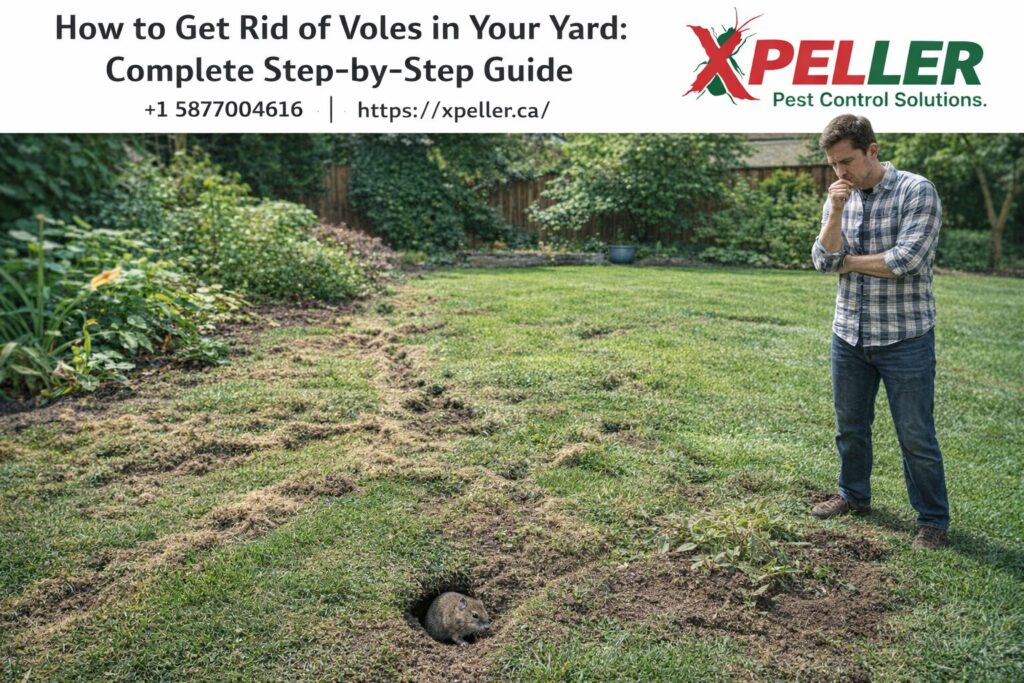
Voles create visible runways on the surface, leaving your lawn uneven and damaged.
Plant Destruction
They feed on roots, stems, and bark, which can kill plants and trees.
Rapid Reproduction
Voles breed quickly, making infestations difficult to control if ignored.
Signs of Voles in Your Yard
Early detection is important to prevent serious damage.
Look for these signs:
- Narrow surface tunnels in grass
- Small burrow openings
- Dead patches on your lawn
- Chewed roots and plant stems
- Bark damage on trees
If you notice these signs, it’s time to act quickly.
How to Get Rid of Voles in Your Yard (Step-by-Step)
Getting rid of voles requires a combination of methods. Follow these steps for best results.
Step 1: Remove Food Sources
Voles are attracted to areas with plenty of food. Keep your yard clean by:
- Removing fallen fruits and vegetables
- Cleaning up garden waste
- Avoiding overgrown vegetation
A clean yard reduces their attraction.
Step 2: Use Traps
Traps are one of the most effective ways to control vole populations.
- Place traps along active tunnels
- Use bait like peanut butter or apple slices
- Check traps regularly
This method works quickly when placed correctly.
Step 3: Reduce Shelter Areas
Voles prefer areas where they can hide safely.
To reduce shelter:
- Trim grass regularly
- Remove thick mulch
- Clear debris and wood piles
This makes your yard less attractive to them.
Step 4: Install Barriers
Protect your plants by installing barriers.
- Use wire mesh around plant roots
- Install fencing around garden areas
- Protect tree bases with guards
Barriers help prevent direct damage.
Step 5: Apply Natural Repellents
Natural repellents can help deter voles.
Common options include:
- Castor oil-based sprays
- Garlic or pepper solutions
- Commercial repellents
These methods are safe and eco-friendly.
Best Prevention Tips
Prevention is the most effective long-term solution.
Follow these tips:
- Keep your lawn well-maintained
- Avoid excessive watering
- Remove weeds regularly
- Store food properly
- Monitor your yard frequently
Consistency helps keep voles away.
Difference Between Voles and Moles
Many people confuse voles with moles.
| Feature | Voles | Moles |
|---|---|---|
| Diet | Plants | Insects |
| Damage | Roots, plants | Soil disturbance |
| Tunnels | Surface | Deep underground |
Knowing the difference ensures proper treatment.
When to Call Professional Pest Control
Sometimes DIY methods are not enough.
You should call professionals if:
- Infestation is large
- Damage continues despite efforts
- Voles keep returning
- You cannot locate tunnels
Professional pest control services can provide effective and long-term solutions.
FAQs
What is the fastest way to get rid of voles?
Using traps combined with removing food sources is the quickest method.
Are voles harmful to humans?
Voles are not dangerous to humans but can damage property and plants.
How do voles damage lawns?
They create tunnels and feed on roots, causing dead patches.
Can voles come back after removal?
Yes, if the environment still attracts them. Prevention is essential.
Do repellents really work?
Repellents can help, but they work best when combined with other control methods.
Conclusion
Learning how to get rid of voles in your yard is essential to protect your lawn and garden. Voles can cause serious damage if ignored, but with the right steps, you can control and prevent them effectively.
By maintaining your yard, using traps, and applying preventive measures, you can keep your outdoor space healthy and pest-free.
Call to Action
If voles are damaging your yard and you need fast results, don’t wait.
Contact pest control experts today for safe and effective solutions and protect your lawn from further damage.