
If you run a restaurant, café, bakery, grocery store, or food processing facility, you’ve probably dealt with fruit flies at some point. They seem to appear overnight and multiply quickly. One day everything looks fine, and the next you’re seeing tiny flies hovering around drains, produce displays, or prep areas.
The truth is that fruit flies can become a serious problem for food businesses. They don’t just annoy staff and customers. They can damage your reputation, trigger health inspection concerns, and create sanitation issues that no business owner wants to face.
That’s why fruit fly control for food businesses should be a priority before a small problem turns into a major infestation.
Why Fruit Flies Are a Big Problem for Food Businesses
Most people think fruit flies are harmless. While they’re not dangerous in the same way as rodents or cockroaches, they can still create significant issues.
Customers often associate visible pests with poor cleanliness. Even a few fruit flies around a service counter can leave a bad impression.
Food businesses must also meet strict sanitation standards. Repeated fruit fly activity may raise concerns during inspections and affect customer confidence.
Here’s the thing: fruit flies reproduce incredibly fast. A single female can lay hundreds of eggs during her lifetime. If breeding sources aren’t removed quickly, populations can explode within days.
What Attracts Fruit Flies to Food Businesses?
Understanding what attracts fruit flies is the first step toward prevention.
Overripe Fruits and Vegetables
Fruit flies are naturally drawn to fermenting produce.
Common problem areas include:
- Produce displays
- Storage rooms
- Prep stations
- Compost containers
Even small amounts of decaying produce can attract large numbers of flies.
Dirty Drains
Many food business owners are surprised to learn that drains are one of the most common breeding sites.
Organic material builds up inside drains and provides food for developing larvae.
Common drain problem areas include:
- Kitchen sinks
- Floor drains
- Bar drains
- Utility sinks
Beverage Residue
Spilled juice, soda, beer, wine, and sugary liquids attract fruit flies quickly.
Pay close attention to:
- Beverage stations
- Coffee bars
- Under equipment
- Ice machines
Garbage and Recycling Areas
Fruit flies thrive around waste containers containing food residue.
Garbage bins should be emptied regularly and cleaned thoroughly to reduce breeding opportunities.
Common Signs of a Fruit Fly Infestation
You may not always notice the source immediately.
Watch for:
- Small flies hovering near drains
- Increased activity around produce
- Flies near garbage containers
- Insects around beverage stations
- Repeated sightings in food prep areas
Imagine opening your business one morning and noticing fruit flies around the kitchen sink. By the end of the week, staff members are seeing them throughout the facility. That’s how quickly a small problem can grow.
Fruit Fly Control for Food Businesses: Prevention Strategies
Keep Drains Clean
Drains are often the hidden source of recurring infestations.
Create a regular cleaning schedule for:
- Floor drains
- Sink drains
- Bar drains
- Utility drains
Removing organic buildup eliminates breeding sites.
Store Produce Properly
Fresh produce should be inspected regularly.
Remove:
- Damaged fruit
- Overripe produce
- Rotting vegetables
Proper stock rotation helps reduce attractants.
Improve Cleaning Practices
The truth is that fruit flies need very little food to survive.
Focus on:
- Cleaning under equipment
- Wiping spills immediately
- Sanitizing food prep surfaces
- Emptying trash regularly
Consistent cleaning makes a huge difference.
Monitor High-Risk Areas
You should regularly inspect:
- Kitchens
- Storage rooms
- Beverage stations
- Waste areas
Early detection prevents larger infestations.
Practical Steps Your Staff Can Follow Daily
Employees play a major role in prevention.
Create simple daily habits:
- Clean spills immediately
- Empty garbage at closing time
- Inspect produce for spoilage
- Report fruit fly sightings
- Clean drains routinely
Small actions performed consistently are often more effective than occasional deep cleaning.
When DIY Methods Aren’t Enough
Sometimes fruit flies keep returning despite good sanitation practices.
Why does this happen?
Often, hidden breeding sites exist behind equipment, inside drains, beneath floor mats, or in hard-to-reach storage areas.
If staff members continue seeing fruit flies after implementing prevention measures, a professional inspection may be necessary.
When to Get Professional Fruit Fly Control Services
You should consider professional help if:
- Fruit flies keep returning
- Customers are noticing the problem
- Staff complaints increase
- Sanitation efforts aren’t working
- Multiple breeding areas are suspected
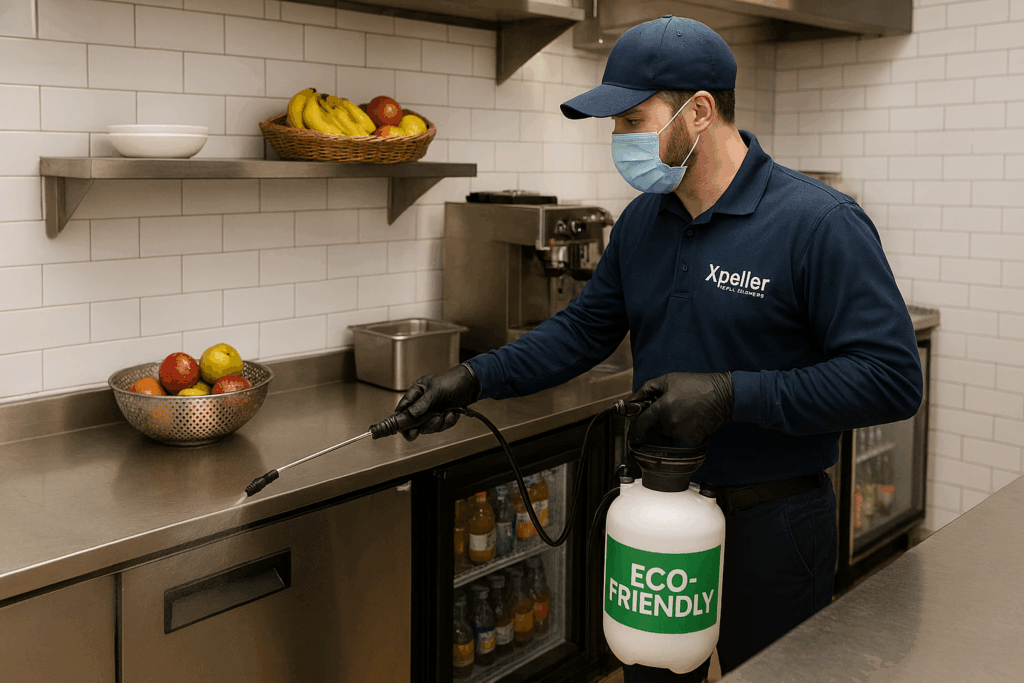
Professional pest control technicians can identify hidden sources and create a long-term management plan tailored to your facility.
Many food businesses schedule routine pest management inspections to prevent future infestations and maintain compliance standards.
FAQ
Why are fruit flies common in restaurants and food businesses?
Food businesses naturally contain produce, beverages, drains, and organic waste that attract fruit flies. Without regular sanitation, these areas can become breeding sites.
Can fruit flies cause health inspection problems?
While fruit flies may not carry the same risks as some pests, visible infestations can raise concerns during inspections and affect customer confidence.
How quickly do fruit flies multiply?
Fruit flies reproduce rapidly. Under the right conditions, populations can increase significantly within a matter of days.
Are drains really a major source of fruit flies?
Yes. Many infestations begin in drains because organic material provides an ideal breeding environment for larvae.
When should a food business call a pest control professional?
If fruit flies continue appearing despite cleaning efforts, professional inspections can help locate hidden breeding sites and prevent ongoing problems.
Conclusion
Fruit fly control for food businesses isn’t just about eliminating a few flying insects. It’s about protecting your reputation, maintaining sanitation standards, and creating a better experience for customers and staff.
The good news is that most fruit fly problems can be prevented through proper sanitation, drain maintenance, waste management, and regular inspections. When infestations persist, professional pest control services can help identify hidden sources and provide long-term solutions.
If you’re seeing recurring fruit fly activity in your restaurant, café, grocery store, or food facility, don’t wait for the problem to grow. Take action early and keep your business clean, compliant, and pest-free.