
Standing in your yard with a can of wasp spray, staring at a nest under the eaves, is a moment where the wrong decision can mean a trip to the hospital instead of a solved problem. DIY wasp removal can be safe, but only under specific conditions — a small, low, easily visible nest treated at night with the right protective gear is a very different situation than a large colony hidden inside a wall. In our service calls across Alberta, a large share of the wasp emergencies we’re called out for started as a DIY attempt that escalated — not because the homeowner did something reckless, but because they misjudged which category their nest actually fell into. This guide breaks down exactly when DIY removal is genuinely safe, what precautions matter most, and the clear signs that mean it’s time to stop and call a professional instead.
Is it safe to remove a wasp nest yourself?
DIY wasp removal is generally safe only for small, exposed nests under golf-ball to tennis-ball size, treated at night when wasps are least active and with proper protective clothing. Larger nests, nests inside walls or underground, and any nest near high foot traffic carry significant risk and are better handled by a professional with commercial-grade equipment and protection.
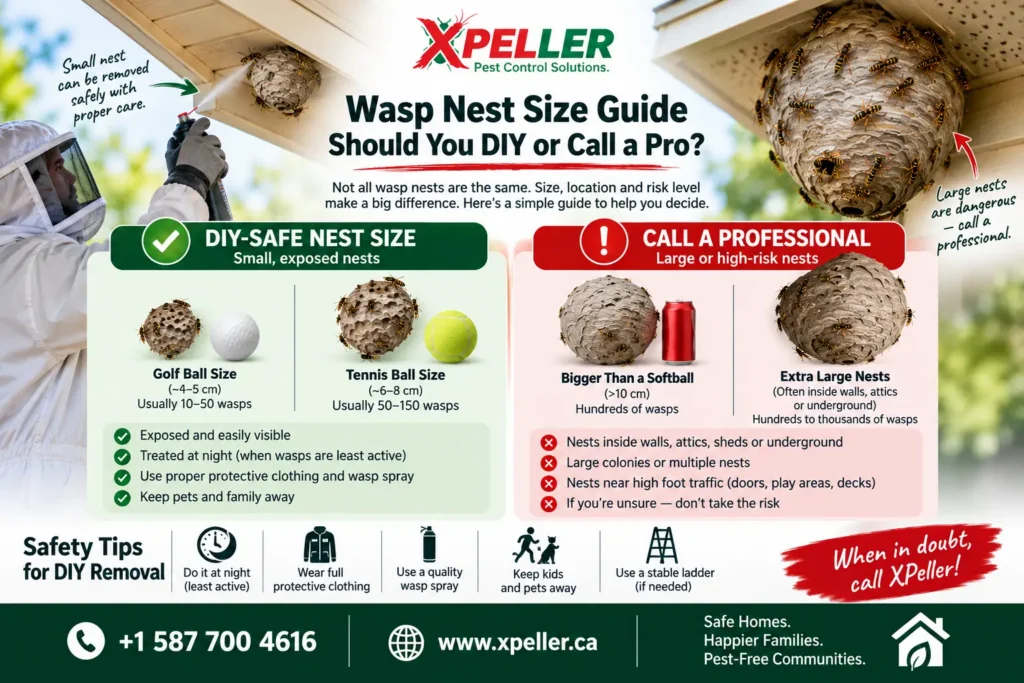
When Is DIY Wasp Removal Actually Safe?
DIY removal is realistically an option only when every one of the following is true:
- The nest is small — roughly golf-ball to tennis-ball sized, indicating an early-stage colony
- The nest is fully exposed and easy to see, not hidden inside a wall, roof void, or underground
- It’s located low and easily reachable without a ladder or awkward positioning
- No one nearby has a known wasp/bee sting allergy
- You’re able to treat it at night, when wasps are inactive and clustered inside the nest
If a nest meets all five conditions, a same-evening DIY treatment carries relatively low risk. If even one condition is missing — especially size or accessibility — the risk profile changes significantly, and our earlier guide on why fall wasp nests get more dangerous explains why colony size specifically matters so much to that risk.
What Tools and Precautions Are Needed for DIY Removal?
If a nest genuinely qualifies as DIY-safe, proper preparation matters as much as the treatment itself:
- Wear thick, protective clothing — long sleeves, pants tucked into socks, and gloves, ideally with no exposed skin
- Use an aerosol spray rated for wasp nests, not a general insect spray, sprayed from the manufacturer’s recommended distance
- Treat at night, using a red-filtered flashlight if needed (wasps see red light poorly, reducing the chance of triggering activity)
- Have a clear, unobstructed escape route planned before starting
- Never stand directly under the nest while spraying
- Recheck the next day from a safe distance to confirm activity has stopped, rather than removing the nest immediately
Skipping any of these steps — especially daytime treatment or standing too close — is where most DIY attempts go wrong.
When Should You Never Attempt DIY Wasp Removal?
Certain situations move firmly out of DIY territory, regardless of how confident you feel:
- The nest is large — softball-sized or bigger, indicating a mature, high-population colony
- The nest is hidden inside a wall void, attic, soffit, or underground burrow, since you can’t accurately judge colony size or reach it safely
- Anyone in the household has a known sting allergy
- The nest is a species you can’t confidently identify — our wasp vs. hornet comparison guide is worth checking first, since hornets and large yellow jacket colonies require a different level of caution than a small paper wasp nest
- It’s located somewhere requiring a ladder or awkward reach
What Mistakes Do People Make With DIY Wasp Spray?
The most common DIY mistakes we see aren’t about the product itself, but about timing and judgment:
- Spraying during the day, when the full colony is active and more likely to swarm defensively
- Underestimating nest size because only the visible portion (often just an entrance hole) was assessed
- Standing too close or directly beneath the nest while spraying
- Assuming one treatment fully eliminates the colony, when surface spray often fails to reach the queen or inner nest structure
- Removing the nest too soon after treatment, before confirming all activity has stopped
What Happens If DIY Removal Goes Wrong?
When a DIY attempt goes wrong, it’s typically because the colony was larger or more defensive than it appeared from the outside, resulting in multiple stings from an alerted, swarming colony rather than the expected quick, contained treatment. Multiple stings in a short period carry real medical risk even without a known allergy, since venom exposure compounds with each sting.
If a DIY attempt has already gone wrong or a nest turns out to be larger than expected, our wasp and hornet removal team in Calgary and Edmonton can safely finish the job with the right equipment.
When Should You Call a Professional Instead?
Call a professional any time a nest is large, hidden, located somewhere hard to reach, or when anyone nearby has a sting allergy. It’s also the right call any time you’re simply unsure — a misjudged nest size is the single most common reason DIY attempts turn into emergencies, and a quick professional inspection removes that guesswork entirely.
Frequently Asked Questions
Can I use a garden hose to remove a wasp nest?
No — hosing down a nest agitates the colony without effectively neutralizing it, often triggering a defensive swarm response.
Is it safe to remove a wasp nest during the day?
Not recommended — daytime treatment means the full colony is active and away from the nest, increasing the chance of stings both during treatment and from returning wasps.
How long should I wait before removing a treated nest?
At least 24 hours, and only after confirming from a safe distance that all activity has stopped.
Does store-bought wasp spray really work?
It can work for small, exposed nests, but it often fails to reach the entire colony in larger or hidden nests, which is why bigger infestations typically need professional treatment.
Conclusion
DIY wasp removal isn’t a simple yes-or-no decision — it depends entirely on nest size, location, and how confident you are in accurately assessing both before you start. A small, exposed, easily reached nest treated at night with proper protection is a manageable task; anything larger, hidden, or uncertain is where the real risk begins.
Take a look at the nest on your property against the checklist above — does it genuinely meet every condition for safe DIY treatment, or does something about it give you pause?
📞 Call Us Now
💬 Chat on WhatsApp
📝 Get a Free Quote
XPeller proudly serves Calgary, Edmonton, Lethbridge, and communities across Alberta.