
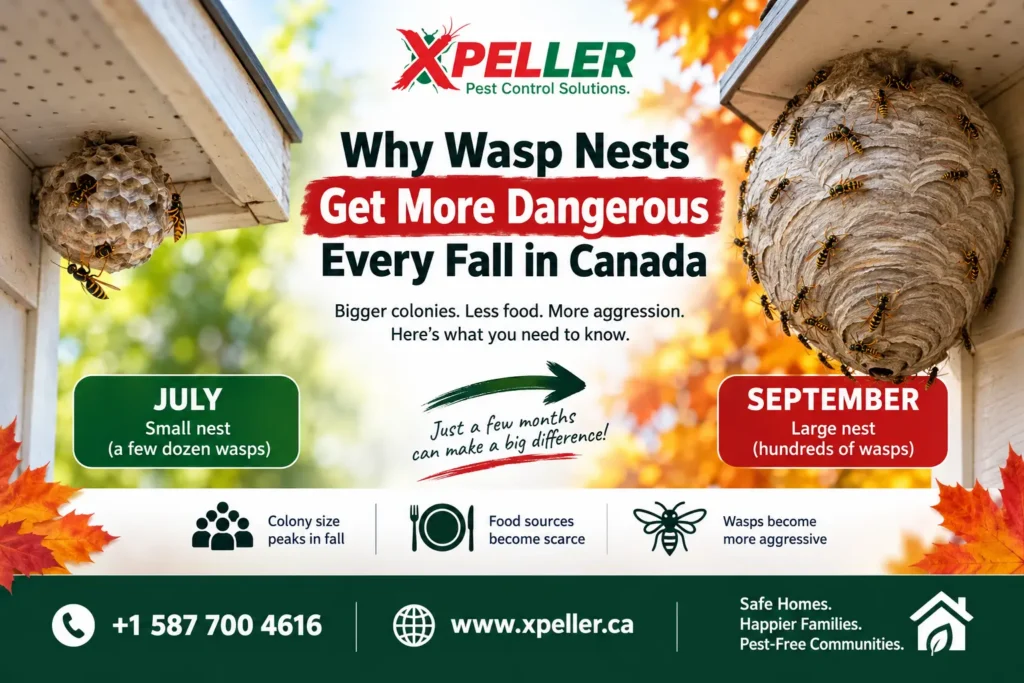
By late September, a wasp nest that looked manageable in July can hold hundreds of wasps, and the colony’s mood has changed along with the weather. The reason fall wasp nests turn dangerous comes down to two things: colony size peaks right before winter, and shrinking food sources make wasps more aggressive toward anything nearby — including you, your kids, or your pets. We saw this firsthand last month — in August alone, we received around 150 calls and form submissions for wasp-related service across Alberta, and that number typically climbs even higher once fall sets in. This guide walks through why that happens, how to spot a nest before someone gets stung, and exactly what to do if you’re dealing with one right now.
Why do wasp nests get more dangerous in fall?
Wasp colonies reach their largest size of the year by early fall, and as natural food sources disappear, wasps become significantly more aggressive while defending the nest. This behavioral shift is the main reason fall wasp encounters and stings increase sharply compared to summer months. Homeowners often mistake a small summer nest for harmless, unaware it has grown into a much larger, more defensive colony by September.
What Are the Signs of a Dangerous Wasp Nest?
Wasp nests aren’t always easy to spot until the colony has already grown large. Homeowners typically notice a problem only after seeing repeated wasp activity in one specific area of the property.
Common warning signs include:
- Visible paper-like nest structures under eaves, in sheds, or inside wall voids.
- Increased wasp traffic in and out of one specific spot, especially in early morning or evening.
- Papery rustling sounds coming from walls, attics, or soffits.
- Ground holes with wasp activity (common with ground-nesting species like yellow jackets. see our yellow jacket removal guide if you suspect ground nesting).
- A noticeable smell of rotting wood, since wasps chew wood fibers to build their nests.
A single wasp sighting doesn’t necessarily mean a nest is nearby, but repeated activity in the same location over several days is a strong indicator.
Why Do Wasps Become More Aggressive in Fall?
Wasp aggression increases sharply in fall because colonies reach their annual peak population right before the queen stops laying eggs for the season. At the same time, natural food sources like insects and flowering plants become scarce, pushing wasps toward human food and garbage as alternative sources — bringing them into closer, more frequent contact with people.
This combination — a larger colony with fewer natural resources — is why fall consistently produces more wasp-related emergency calls than any other season. Across Alberta, this pattern shows up clearly in service data: XPeller received approximately 150 wasp-related calls and form submissions in August alone, a number that typically climbs further as the season progresses into September and October.
Where Do Wasps Commonly Build Nests Around Homes?
Wasps look for sheltered, undisturbed locations close to a food source. Around residential properties, the most common nesting sites include:
- Under roof eaves and soffits
- Inside wall cavities or attics
- Inside sheds, garages, or unused vehicles
- Underground burrows (typically yellow jackets)
- Inside playground equipment or hollow fence posts
- Behind loose siding or shutters
Because many of these locations are hidden from casual view, nests often go unnoticed until the colony has already grown significantly — which is part of why fall nests tend to be so much larger and more dangerous than early-summer ones.
Is It Safe to Remove a Wasp Nest Yourself?
DIY wasp nest removal carries real risk, particularly once a colony has reached its fall size. Store-bought sprays typically only reach the surface of a nest, leaving the queen and inner colony intact, and disturbing a large nest without proper protective equipment significantly increases the chance of multiple stings.
According to entomology guidance from agricultural extension resources, larger stinging insect colonies should generally be handled by a pest control professional with the right protective equipment, rather than attempted as a DIY project.
For small, easily accessible nests spotted early in the season, homeowners may be able to manage removal safely at night when wasps are least active. Fall-sized nests are a different situation entirely, and professional removal is strongly recommended.
What Should You Do If You Find a Wasp Nest?
If you spot a nest on your property, the safest approach is:
- Keep a safe distance — avoid disturbing the nest or the area around it
- Limit outdoor food and garbage exposure nearby, since this can escalate activity
- Avoid blocking the entrance, which can provoke defensive swarming
- Monitor from indoors if possible, rather than approaching repeatedly
- Contact a professional for inspection and safe removal, especially for nests found in fall
Children and pets should be kept away from the area entirely until the nest has been professionally assessed.
When Should You Call a Professional for Wasp Removal?
A professional should be called any time a nest is large, located somewhere hard to reach (inside walls, underground, high up), or discovered during fall when colonies are at peak size and defensiveness. Anyone with a known allergy to wasp stings should never attempt removal themselves, regardless of nest size.
Xpeller’s technicians assess nest size, location, and species before determining the safest removal method, then follow up to confirm the colony has been fully eliminated — since a partially treated nest can relocate or rebuild nearby.
Frequently Asked Questions
How much does wasp nest removal cost?
Pricing depends on nest size, location, and accessibility — a technician can provide an exact quote after inspection.
Do wasps come back to the same nest spot next year?
No, wasps don’t reuse old nests, but new queens may build in the same general area if entry points and attractants aren’t addressed.
Are wasps more dangerous than bees?
Wasps can sting multiple times without dying, unlike honeybees, which makes a defensive wasp colony more dangerous in a swarm situation.
What time of year is wasp season worst in Alberta?
Late August through October typically sees the highest wasp activity and stings, as colonies peak before winter.
Dealing with a wasp nest right now? Don’t wait for it to get worse.
📞 Call Us Now
💬 Chat on WhatsApp
📝 Get a Free Quote
XPeller proudly serves Calgary, Edmonton, Lethbridge, and communities across Alberta.