

If you’ve spotted droppings near your shed, gnaw marks on the deck railing, or tiny tracks cutting across the snow toward your foundation, you’re not imagining things — mice are outside your house, and they’re looking for a way in. The good news is that learning how to get rid of mice outside the house is a lot easier than dealing with them once they’ve moved into your walls. Get ahead of it now, and you can usually keep it that way.
Here’s a practical, step-by-step plan Calgary homeowners can use to get rid of mice outside the house — and keep them from ever making it inside.
Why Are Mice Outside Your House in the First Place?
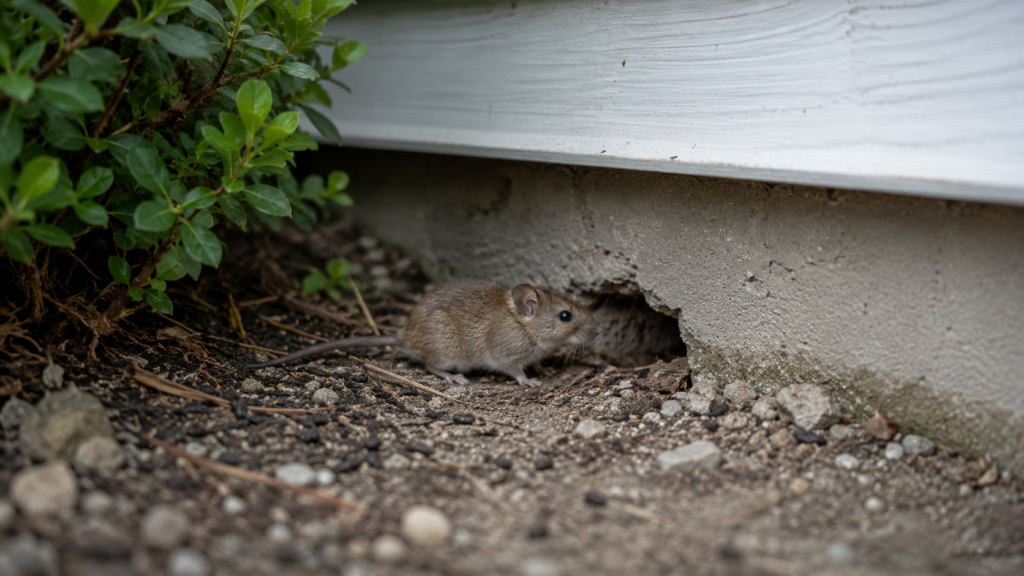
Mice don’t show up randomly. They’re following three things: food, shelter, and warmth. As Calgary’s temperatures drop in the fall, mice actively search for a warmer place to nest — and a house radiates heat, has gaps around the foundation, and often sits next to a food source (bird feeders, garbage bins, compost) without anyone thinking twice about it.
Common signs you have mice outside your home:
- Small, pellet-shaped droppings near the foundation, shed, or garage
- Gnaw marks on siding, deck wood, or stored items
- Greasy rub marks along fences or foundation walls (from repeated travel along the same path)
- Small burrows or holes near foundation edges, gardens, or under sheds
- Tracks in snow or mud leading toward the house
If you’re seeing two or more of these, it’s worth acting before the weather pushes them from “outside” to “inside.”
Step 1: Remove What’s Attracting Them
Mice are opportunists. Cut off their food and water sources and a surprising number will simply move on — this is one of the fastest ways to keep mice away from your house without traps or chemicals.
- Bird feeders: Use feeders with trays that catch fallen seed, and sweep up spillage regularly — spilled birdseed is one of the biggest mice magnets in a yard.
- Pet food: Don’t leave bowls out overnight; store dry food in sealed metal or thick plastic containers.
- Garbage and compost: Make sure bins have tight-fitting lids. Avoid composting meat, dairy, or bread scraps, which draw rodents fast.
- Fallen fruit: If you have fruit trees, pick up windfall fruit regularly rather than letting it rot on the ground.
- Standing water: Fix leaky outdoor taps and remove sources of standing water where possible.
Step 2: Make Your Yard Less Hospitable (Mice Exterior Control)

Mice need cover to feel safe moving around — take that away and they have to work a lot harder to survive near your home. This kind of mice exterior control is a key part of any outdoor rodent control plan.
- Keep grass mowed and trim back overgrown shrubs, especially along the foundation
- Clear brush piles, leaf piles, and dense ground cover away from the house
- Store firewood at least 10–12 inches off the ground and away from exterior walls
- Declutter sheds and garages — stacked boxes and clutter make ideal nesting spots
- Trim tree branches so they don’t touch or overhang the roofline
Step 3: Natural & DIY Deterrents That Actually Work (and Ones That Don’t)
There’s no shortage of home remedies for keeping mice away from your house exterior — some genuinely help as a supplement, none work as a total fix on their own.
- Peppermint oil: Soaked cotton balls placed near burrows or entry points can be mildly effective as a short-term deterrent — mice dislike the strong scent.
- Predator scent: Used cat litter placed near known mouse trails can discourage activity, though it needs regular refreshing.
- Natural predators: Installing an owl box, or simply having an outdoor cat, can keep mouse populations in check over time.
- Ultrasonic repellers: Evidence here is mixed at best — some homeowners see a temporary effect, but mice tend to habituate to the sound within a few weeks. Don’t rely on these alone.
Think of natural deterrents as one layer of a broader strategy to get rid of mice outside the house, not a standalone solution.
Step 4: Set Up Outdoor Traps the Right Way
If mice are already active in your yard, outdoor mice traps are the fastest way to reduce numbers.
- Snap traps are effective and quick; place them along fences, foundation edges, and other paths mice are clearly using (look for the rub marks and droppings from Step 1).
- Live-catch traps are an option if you’d rather relocate mice rather than kill them, though they require checking daily and releasing far enough from the property that the mice don’t just come back.
- Bait with peanut butter or seeds rather than cheese — mice are drawn to high-calorie, high-protein food.
- Keep traps away from areas kids or pets can access, or use tamper-resistant bait stations.
Step 5: Seal the Exterior — This Is the Step That Actually Stops Them
Everything above buys you time, but sealing your home’s exterior is what actually keeps mice from becoming an indoor problem. A mouse can squeeze through a gap the size of a dime.
- Inspect your foundation for cracks, gaps around utility pipes, and vents
- Fill small gaps with steel wool packed into caulk — mice can’t chew through it
- Add weatherstripping to the bottom of exterior doors and garage doors
- Check where cables, dryer vents, and gas lines enter the house — these are classic overlooked entry points
- Screen any foundation or attic vents with wire mesh
Do a full walk-around of your house once a season, especially before winter, when mice are most motivated to find their way inside. This kind of mice exclusion work is what separates a temporary fix from a lasting one.
When DIY Mouse Control Isn’t Working: Call a Calgary Expert
Sometimes the DIY approach isn’t enough to get rid of mice outside the house for good — particularly if:
- Droppings or activity keep reappearing even after cleanup
- You’re finding entry points faster than you can seal them
- Your property backs onto fields, ravines, or greenspace common around many Calgary neighborhoods, which puts constant pressure from nearby rodent populations
- You’ve already had mice get inside once and want to make sure it doesn’t happen again
At that point, it’s worth bringing in professional mice control services in Calgary to do a full exterior inspection, identify entry points you might have missed, and put a long-term exclusion plan in place — rather than fighting the same battle every few weeks.
Why Calgary Homeowners Often Bring in Help
Calgary’s mix of older neighborhoods with aging foundations, newer builds with landscaping that hasn’t fully settled, and proximity to open prairie land all add up to more rodent pressure than a lot of homeowners expect — especially as temperatures drop in the fall. That combination is exactly why mice control in Calgary tends to be an ongoing seasonal task here rather than a one-time fix.
If you’d rather have a trained team handle the inspection and sealing work, Xpeller offers mice control services in Calgary built specifically around local properties, and you can book a free inspection to get a clear picture of where mice are getting close to your home. Alberta’s rat-free status
FAQs
How do I get rid of mice outside without killing them?
Focus on exclusion and deterrence: remove food sources, seal potential entry points, and use live-catch traps instead of snap traps. Release captured mice well away from your property, ideally in accordance with local wildlife guidelines.
What smells keep mice away outdoors?
Peppermint oil, predator scent (like used cat litter), and cayenne pepper are commonly used deterrents. They work best combined with habitat reduction and exclusion, not as a standalone fix.
How long does it take to get rid of mice outside the house?
With consistent trapping and habitat changes, most homeowners see a noticeable drop in activity within 2–4 weeks. Full exclusion (sealing entry points) is what determines whether the improvement lasts.
Do ultrasonic mice repellents really work outside?
They can have a mild, temporary effect, but mice tend to adjust to the sound over time. They’re best used as one layer of a broader strategy rather than relied on alone.
Will mice outside eventually come inside my house?
Very likely, especially once temperatures drop. Mice that are already comfortable in your yard are the ones most likely to find their way in through an unsealed gap, which is why addressing them outside — before they get in — matters.
The Bottom Line
Getting rid of mice outside the house comes down to five things: remove what’s attracting them, reduce their cover, use deterrents and traps where needed, and seal up the exterior so they can’t get in. Do those consistently, especially heading into fall, and you’ll deal with far fewer surprises once winter hits.
If mice keep coming back no matter what you try, that’s usually a sign the entry points need a professional eye — get in touch with Xpeller for a Calgary mice control inspection and long-term plan.