

Have you been hearing scratching sounds at night or finding tiny droppings in your kitchen? These could be the first signs of mice in your house, even if you’ve never seen a mouse. Mice are excellent at staying hidden. They usually become active after dark, travel through walls, and nest in places homeowners rarely check. By the time you spot one, there may already be several more hiding nearby. The good news is that mice leave behind plenty of clues. Recognizing these warning signs early can help you prevent property damage, food contamination, and a much larger infestation.
At Xpeller Pest Control Solutions, we help homeowners detect and eliminate rodent problems before they become serious. In this guide, you’ll learn the ten most common signs to watch for and what to do if you suspect mice have moved into your home.
1. Mouse Droppings Around Your Home
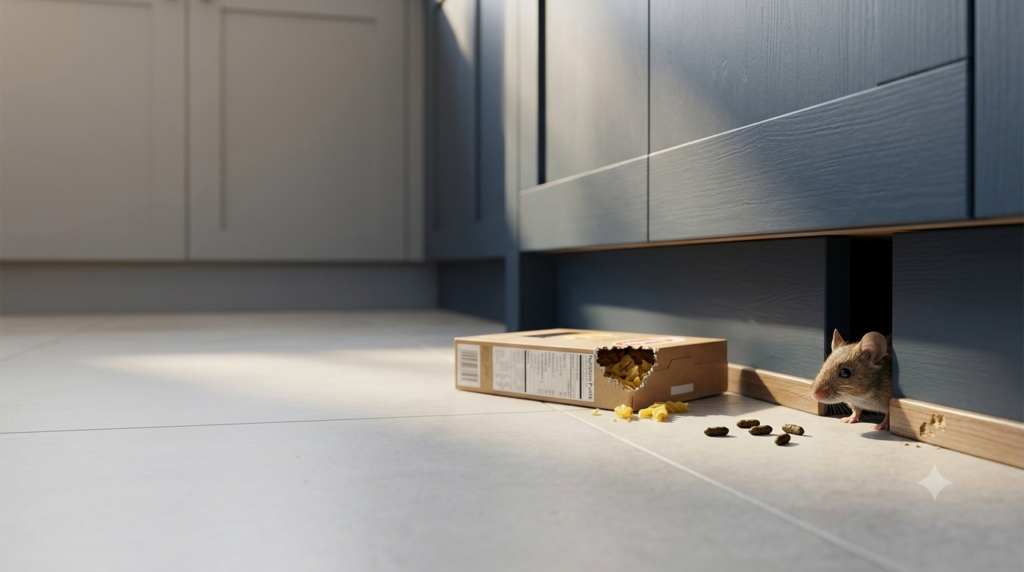
One of the earliest and most obvious signs of mice in your house is finding mouse droppings.
Mouse droppings are:
- Small and dark
- About 3–6 mm long
- Shaped like tiny grains of rice
- Usually found in groups
Common places include:
- Kitchen cabinets
- Pantry shelves
- Under sinks
- Behind refrigerators
- Inside drawers
- Along baseboards
If you continue finding fresh droppings after cleaning, mice are likely still active inside your home.
2. Scratching or Scurrying Sounds at Night
Mice are nocturnal, meaning they’re most active when your home becomes quiet.
You may hear:
- Scratching inside walls
- Light running sounds above ceilings
- Rustling in attic insulation
- Gnawing noises behind cabinets
- Tiny footsteps under the floor
These sounds usually occur shortly after sunset or during the early morning hours.
If the noises come from the same location night after night, mice are probably using that area as a regular travel route or nesting site.
3. Chewed Food Packaging and Gnaw Marks
Another clear indicator is finding chew marks on household items.
Mice constantly gnaw because their front teeth never stop growing.
Look for damage on:
- Cereal boxes
- Flour bags
- Rice packets
- Pet food bags
- Cardboard boxes
- Wooden furniture
- Plastic containers
Even electrical wiring isn’t safe.
Chewed electrical cables can create a serious fire hazard, making this one of the most important signs of mice in your house to address immediately.
4. Unpleasant Musty or Ammonia-Like Odours
A persistent unpleasant smell often indicates hidden mouse activity.
Mouse urine produces a strong ammonia-like odour that becomes more noticeable in enclosed areas such as:
- Cupboards
- Closets
- Under kitchen sinks
- Basements
- Garages
- Attics
If one room consistently smells musty despite regular cleaning, inspect the area carefully for other evidence of mice.
5. Hidden Nests Made from Soft Materials
Mice build nests close to food and water sources using whatever soft materials they can find.
Common nesting materials include:
- Shredded paper
- Cardboard
- Tissue paper
- Cotton
- Fabric scraps
- Insulation
- Dryer lint
Nests are commonly hidden:
- Behind appliances
- Inside storage boxes
- Under furniture
- In attic insulation
- Inside wall cavities
- Behind kitchen cabinets
Finding a nest usually means mice are living and breeding inside your property rather than simply passing through.
6. Grease Marks and Mouse Runways
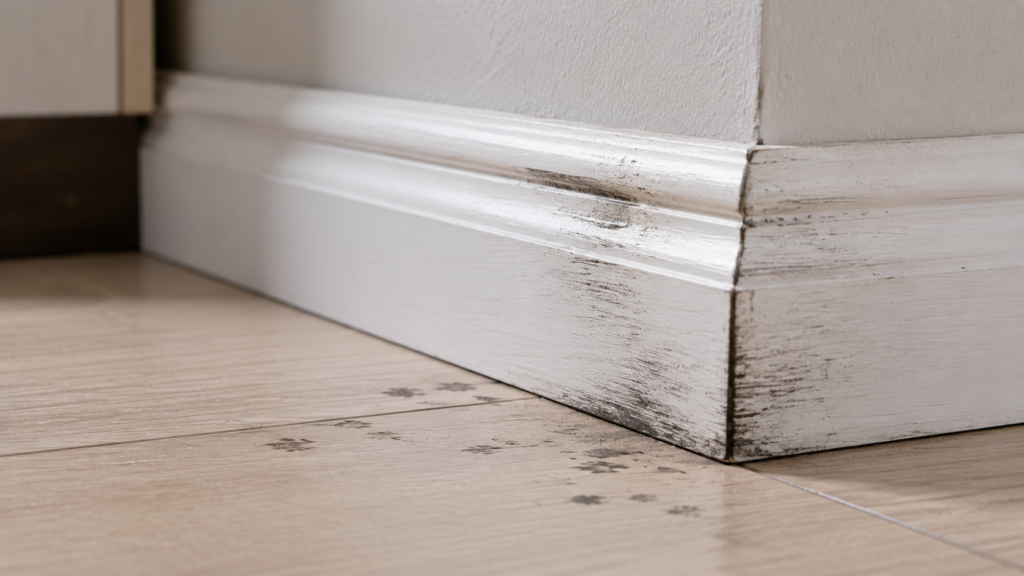
Mice rarely travel across open spaces.
Instead, they move along walls where they feel protected.
As they repeatedly use the same path, oils and dirt from their fur create dark smudge marks known as grease marks.
Check:
- Baseboards
- Utility pipes
- Wall corners
- Garage walls
- Basement edges
These marks often reveal exactly where mice travel every night.
7. Tiny Footprints or Tail Marks
Dusty areas can provide surprisingly useful evidence.
Mice leave behind:
- Small footprints
- Tail drag marks
- Tiny tracks through dust
If you suspect activity but aren’t sure, sprinkle a light layer of flour in the area before bedtime.
Check it the following morning.
Fresh footprints usually confirm active mice without ever seeing one.
8. Unusual Behaviour from Pets
Dogs and cats often detect mice long before people notice them.
Watch for pets that suddenly:
- Stare at one wall
- Paw behind appliances
- Sniff cabinets repeatedly
- Bark at empty corners
- Chase unseen movement
9. Damaged or Contaminated Food
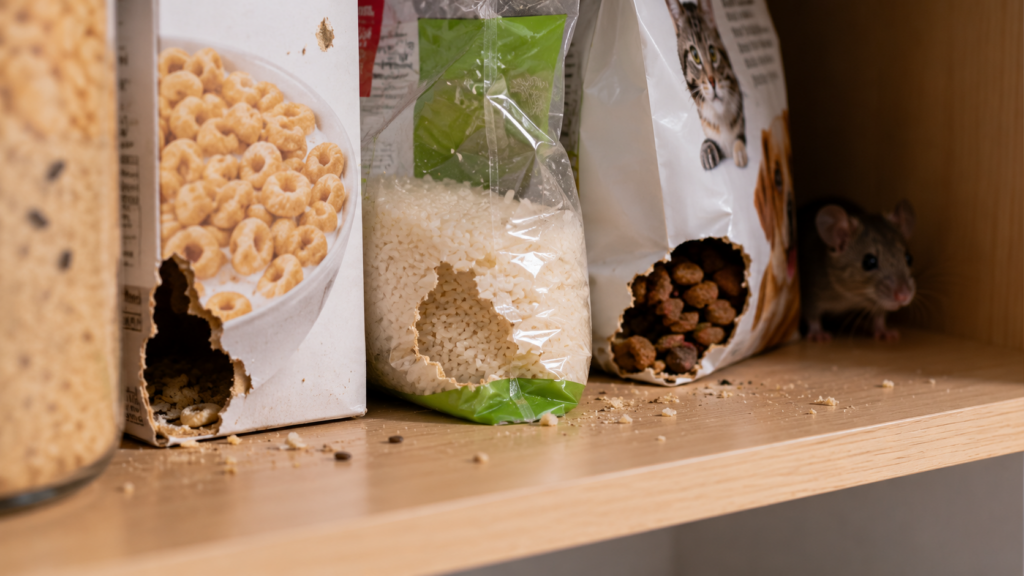
Mice only need a tiny amount of food each day, but they’ll contaminate far more than they eat.
Signs include:
- Torn food packaging
- Bite marks
- Missing pet food
- Food crumbs scattered inside cupboards
- Opened snack packets
Any food that shows signs of rodent activity should be discarded immediately.
Mice can spread bacteria and contaminate food with urine and droppings.
10. Small Entry Holes Around Your Home
Perhaps the most overlooked signs of mice in your house are the entry points themselves.
Many homeowners underestimate just how small an opening a mouse needs.
Inspect areas around:
- Utility pipes
- Air vents
- Garage doors
- Foundation cracks
- Window frames
- Exterior siding
- Roof vents
A gap roughly the width of a pencil can be large enough for a mouse to squeeze through.
Sealing these openings is one of the best long-term prevention methods.
Why Early Detection Matters
Mice reproduce incredibly quickly.
A single breeding pair can lead to dozens of mice within a few months if left untreated.
Ignoring the early signs of mice in your house can result in:
- Damaged insulation
- Chewed electrical wiring
- Contaminated food
- Structural damage
- Unpleasant odours
- Increased repair costs
- Larger infestations
If you’ve noticed several warning signs, don’t wait until you actually see a mouse.
Take these simple steps:
- Store all food in airtight containers.
- Clean up crumbs and spills promptly.
- Remove clutter where mice may hide.
- Seal cracks and gaps around your home.
- Place traps in areas with visible activity.
- Schedule a professional inspection if the signs continue.
Professional pest control can identify hidden nesting areas and entry points that are easy to overlook.
Why Choose Xpeller Pest Control Solutions?
At Xpeller Pest Control Solutions, we don’t just remove mice—we help prevent them from returning.
Our experienced technicians:
- Conduct thorough home inspections
- Identify nesting areas
- Locate hidden entry points
- Provide safe, effective rodent control solutions
- Offer practical prevention advice for long-term protection
Whether you’ve found droppings, heard scratching sounds, or noticed other signs of mice in your house, our team can help restore your peace of mind.
Final Thoughts
The signs of mice in your house are often subtle at first, but they should never be ignored. From droppings and scratching noises to gnaw marks, nests, and unpleasant odours, each clue tells part of the story.
The earlier you recognise these warning signs, the easier it is to stop a small rodent problem from becoming a costly infestation.
If you suspect mice have entered your home, acting quickly is the best way to protect your property, your food, and your family’s health.
Need professional rodent control? Contact Xpeller Pest Control Solutions today for a thorough inspection and effective, long-lasting mouse control services.
Frequently Asked Questions
What are the first signs of mice in your house?
The earliest signs usually include small droppings, scratching noises at night, chew marks on food packaging, and unusual pet behaviour.
Can you have mice without seeing one?
Yes. Mice are nocturnal and avoid people. Many homeowners notice droppings or hear scratching long before they actually see a mouse.
What smell indicates mice?
A strong musty or ammonia-like odour often comes from mouse urine and nesting areas, especially in enclosed spaces.
Is one mouse a problem?
Yes. If you see one mouse, there may already be others hiding nearby. Mice reproduce rapidly, so early action is important.
How do mice enter a home?
They can squeeze through tiny gaps around pipes, vents, foundations, garages, windows, and doors. Even very small openings can allow entry.
When should I call a pest control professional?
If you notice multiple signs of mice, continue finding fresh droppings after cleaning, or hear repeated scratching inside walls, it’s best to arrange a professional inspection before the infestation grows.