
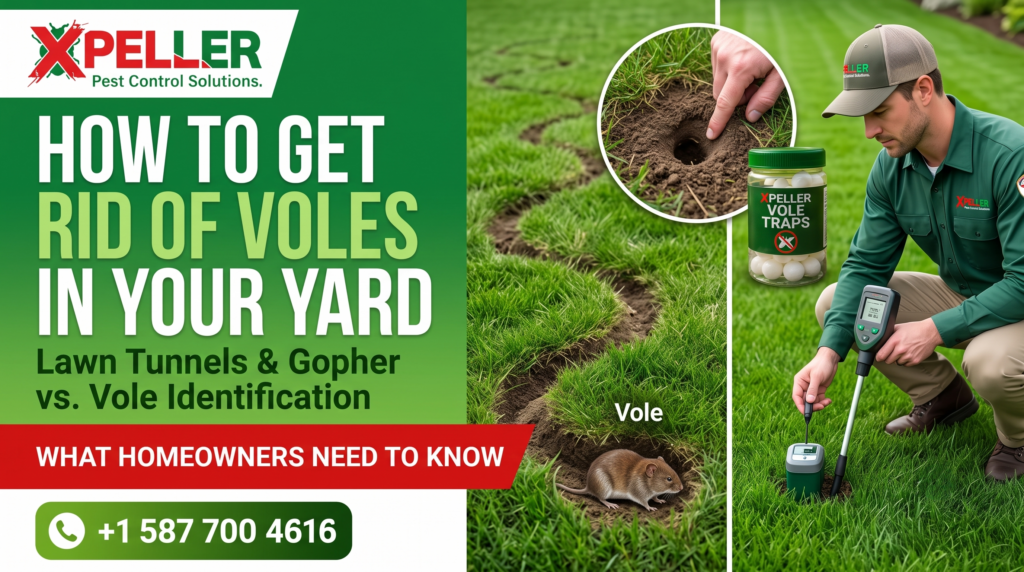
If you have noticed small tunnels in your lawn, dead patches of grass, or damaged plant roots, you may be dealing with a vole infestation. How to get rid of voles in yard is a common question among homeowners because these tiny rodents can quickly destroy a healthy lawn and garden. Unlike moles, which mainly eat insects, voles feed on plants, roots, bulbs, vegetables, and even the bark of young trees. Their rapid breeding makes it important to take action as soon as you spot the signs.
Voles are small, mouse-like rodents with short tails and rounded bodies. They create narrow surface runways through grass and often leave small burrow openings around the yard. Because they stay active year-round, the damage can continue through every season, especially during winter when food is scarce.
Signs You Have Voles in Your Yard:
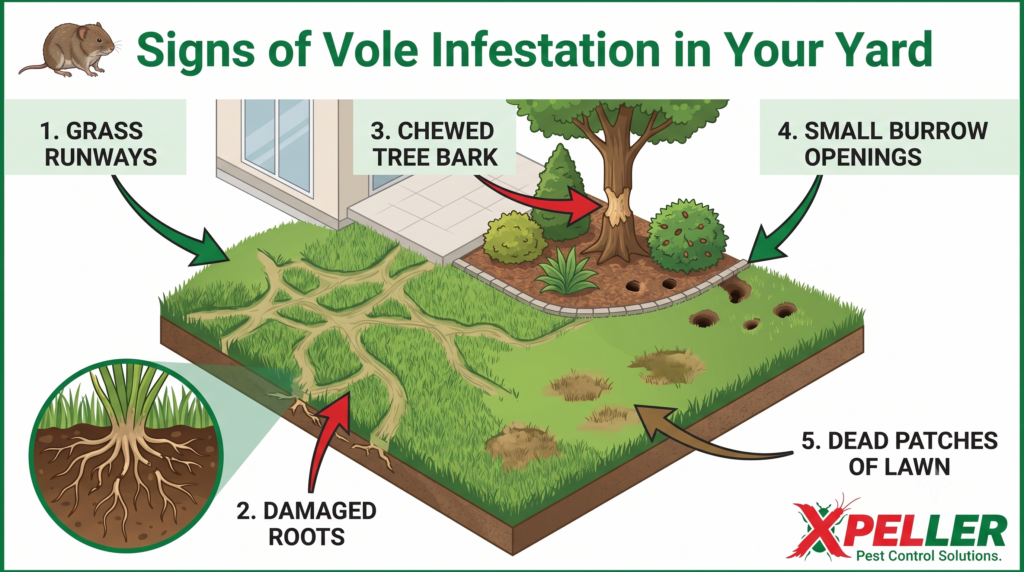
Before choosing a control method, confirm that voles are the problem. Common signs include visible grass runways, small holes about 1–2 inches wide, chewed plant roots, damaged flower bulbs, and bark stripped from the base of trees. You may also notice that sections of your lawn feel soft or loose because voles have tunneled underneath.
Remove Food and Shelter:
The first step in how to get rid of voles in yard is making your property less attractive to them. Keep grass trimmed to about 2–3 inches and remove weeds, brush piles, fallen leaves, and thick mulch where voles can hide. Store firewood off the ground and clean up spilled bird seed beneath feeders. A tidy yard reduces both shelter and food sources, making it harder for voles to survive.
Use Natural Repellents:
Many homeowners prefer natural solutions before using traps or professional treatments for how to get rid of voles in yard. Castor oil-based repellents are commonly used because they make the soil and vegetation less appealing to voles. You can also use garlic spray or hot pepper spray around garden beds and tree bases. These repellents do not always eliminate voles completely, but they can encourage them to move elsewhere when combined with other control methods.
Install Physical Barriers:
Protecting valuable plants is one of the most effective long-term strategies. Wrap young tree trunks with hardware cloth or metal mesh that has openings no larger than ¼ inch. Bury the mesh a few inches into the soil to prevent voles from digging underneath. Raised garden beds can also be lined with wire mesh to protect vegetables and bulbs from underground feeding.
Set Traps Correctly:
Trapping is often the fastest way to reduce an active vole population. Place snap traps along visible runways or near burrow entrances. Cover the traps with a small box or bucket with entry holes to keep pets and birds away. Bait the traps with peanut butter mixed with oatmeal, apple slices, or sunflower seeds. Check the traps daily and continue trapping until activity stops.
Encourage Natural Predators:
Nature can help control voles for you. Owls, hawks, foxes, snakes, and even some cats prey on voles. Installing an owl nesting box in a quiet area of your property can provide ongoing natural pest control. Avoid using excessive rodenticides, as they can harm the predators that would otherwise help reduce the vole population.
Prevent Future Infestations:
Once you have reduced the current population, prevention becomes the key to keeping your yard vole-free. Continue mowing regularly, remove excess vegetation, avoid overwatering, and inspect your yard every few weeks for new runways or burrows. During winter, keep snow from piling up around young trees because voles often feed under the protective snow cover.
Common Mistakes to Avoid:
A common mistake is confusing how to get rid of voles in yard voles with moles and using the wrong treatment. Another is relying only on poison baits without removing shelter and food sources. Leaving thick mulch against tree trunks or allowing tall grass to grow can quickly attract voles back to the area. Consistency is essential; stopping control measures too early often leads to another infestation.
When to Call a Professional:
If your yard has extensive tunneling, repeated infestations, or severe damage to lawns, gardens, or trees, it may be time to contact a licensed pest control professional. Professionals can identify the exact rodent species, assess the level of infestation, and use advanced trapping or exclusion methods that are more effective for large populations.
Conclusion:
Learning how to get rid of voles in yard starts with early detection and a combination of vole control methods. Remove shelter, use natural repellents, install protective barriers, set traps correctly, and encourage natural predators. These steps work best together rather than individually. With regular lawn maintenance and ongoing prevention, you can protect your grass, garden, and trees from costly vole damage and keep your yard healthy throughout the year.