
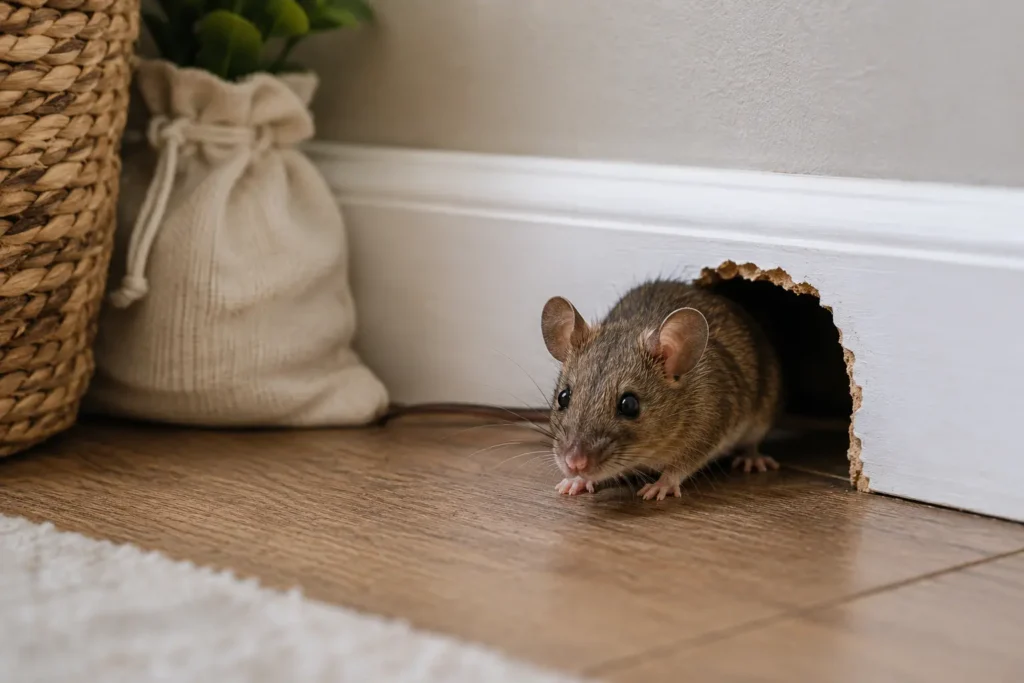
You’ve heard a scratching sound in the wall again. You head straight to the store, stand in front of a shelf full of sprays, pouches, and plug-in gadgets, and have absolutely no idea which one — if any — will actually solve your problem. If you’re searching for the best mouse repellent, you’re not alone, and the honest truth is that not every product on that shelf works the way it claims.
Here’s the thing — some repellents genuinely help. Others are mostly marketing. The trick is knowing which is which, and understanding that no repellent alone replaces proper exclusion. Let’s go through what actually works, what doesn’t, and how to put together a plan that gets real results.
What Makes a Mouse Repellent Actually Work?
Mice rely heavily on their sense of smell. Their eyesight is poor, but their nose is incredibly sensitive — which is exactly why scent-based repellents exist in the first place.
Most effective repellents work by overwhelming a mouse’s nasal passages with a scent strong enough to make an area unpleasant. Think of it like walking into a room that smells overwhelmingly like ammonia. You wouldn’t want to stay there either.
What actually happens, though, is that mice are also incredibly motivated by hunger and the need for shelter. If a repellent is the only thing standing between a mouse and a warm, food-filled home, a strong smell alone often isn’t enough to stop a determined mouse — especially once they’ve already settled in.
This is why the best mouse repellent strategies combine more than one approach. Scent deterrents work best as a layer of protection, not a standalone fix.
Best Mouse Repellent Gels and Sprays
Gel-based repellents have become one of the more reliable options on the market, and there’s a good reason why.
Capsaicin and mineral oil gels create an intense irritation when mice make contact with treated surfaces. Unlike a scent that simply smells unpleasant, this type of repellent creates a genuinely uncomfortable physical reaction — similar to what happens if you touch your eyes after handling hot peppers. Mice that encounter it tend to avoid the area going forward.
These gels hold up well outdoors and in places where you need long-lasting protection — garage perimeters, vehicle engine bays, and exterior gaps are common applications. Many formulas remain effective for months, even through rain and temperature changes.
Sprays, on the other hand, are more hit-or-miss. Most spray repellents rely on essential oils like peppermint or cinnamon, and they evaporate fairly quickly. You’ll need to reapply every few days for any noticeable effect, which makes sprays better suited for spot treatment rather than long-term prevention.
Best Mouse Repellent Scent Pouches
If you’ve ever opened a drawer or cupboard and caught a strong minty or cedar-like smell, you’ve probably encountered a scent pouch repellent.
These plant-based pouches use concentrated essential oils — typically peppermint, cinnamon, or balsam fir — to create an aroma that overwhelms a mouse’s senses in enclosed spaces. They work best in areas with limited airflow, like inside cabinets, behind appliances, in attics, or tucked into vehicle interiors during storage.
Most scent pouches last between thirty and sixty days before the fragrance fades and needs replacing. That’s worth knowing before you buy — if you’re not tracking replacement dates, you might assume the product stopped working when really it just ran its course.
Imagine placing a pouch under your kitchen sink in spring, forgetting about it completely, and then wondering in late fall why mice suddenly showed up again. That’s not necessarily a sign the product failed — it’s a sign the scent wore off months earlier without you noticing.
Do Ultrasonic Mouse Repellents Work?
This is probably the most debated category of mouse repellent, and the honest answer is — it depends on your expectations.
Ultrasonic devices emit high-frequency sound waves that are inaudible to humans but supposedly irritating to rodents. They plug into an outlet and run continuously, which makes them appealing for a hands-off approach.
The research on these devices is mixed at best. Some studies show a short-term reduction in activity. But mice are adaptable creatures, and many become accustomed to the sound over time, especially if the frequency stays constant. Walls, furniture, and other obstacles can also block or weaken the sound waves, reducing their range significantly.
Are ultrasonic repellers a complete waste of money? Not necessarily — but they shouldn’t be your only line of defense. If you do use one, rotating between a couple of different devices every few weeks can help prevent mice from fully adjusting to the sound pattern.
Will Mothballs or Peppermint Keep Mice Away?
These two questions come up constantly, and they deserve a straight answer.
Mothballs are not designed or labeled for outdoor or general pest deterrent use. They contain naphthalene, which is toxic in concentrated amounts and poses real risks to children and pets if scattered around accessible areas. While the smell may briefly discourage a mouse from one specific spot, mice will simply relocate to a different part of the wall or tunnel system. Mothballs are not a reliable or safe long-term solution for keeping mice away.
Peppermint, by contrast, has more legitimate support behind it. The menthol compounds in peppermint oil genuinely irritate a mouse’s nasal cavity, and many pest professionals consider it one of the more effective natural deterrents available. The catch is consistency — a few drops on a cotton ball dry out within days, losing most of their potency. For peppermint to work reliably, it needs regular reapplication or a higher-concentration product specifically formulated to last.
If you’re choosing between the two, peppermint is the safer and more evidence-backed option of the two by a wide margin.
The Most Effective Long-Term Solution — Exclusion
Here’s what most repellent product packaging won’t tell you directly — no scent, sound, or spray fully replaces sealing your home properly.
Mice can squeeze through gaps as small as a dime. That means even a well-placed repellent won’t stop a determined mouse from finding an unsealed opening just a few feet away.
The most effective long-term approach combines:
- Sealing entry points — Use caulk for small gaps and steel wool or copper mesh stuffed into larger openings before sealing, since mice can’t chew through metal mesh the way they can through plastic or foam.
- Removing food sources — Store dry goods, pet food, and birdseed in airtight containers. Even small amounts of accessible food can sustain a mouse population.
- Reducing clutter — Basements, garages, and attics filled with cardboard boxes and loose fabric give mice ideal nesting material and hiding spots.
- Managing the exterior — Trim vegetation away from your foundation, keep firewood elevated and away from the house, and secure outdoor garbage bins with tight lids.
Repellents work best layered on top of these exclusion steps — not as a substitute for them. If you’ve already noticed signs of activity, our guide on when are mice most active can help you understand the timing and urgency of your situation.
When to Call a Professional Mice Control Service
DIY repellents and prevention steps work well for early-stage problems — a mouse or two you’ve noticed quickly, before they’ve had time to nest.
But repellents have real limits, especially once mice have already established themselves inside your walls or attic. At that point, no amount of peppermint oil or ultrasonic sound is going to solve the problem.
You should call a professional if:
- You’ve tried multiple repellents without lasting results
- You’re hearing consistent activity in walls or ceilings
- You’ve found droppings, nesting material, or gnaw marks in multiple rooms
- The infestation seems to be growing rather than shrinking
- You want a thorough inspection to identify every entry point — not just the obvious ones
Professional mice control goes beyond what any store-bought repellent can offer. A trained technician identifies every access point, locates nesting areas you wouldn’t think to check, and builds a treatment plan that actually solves the underlying problem rather than just masking it for a few weeks.
Xpeller pest control helps homeowners get ahead of mouse problems before they spread — because the earlier you act, the simpler and less costly the solution becomes.
FAQ
What is the single best mouse repellent for indoor use? For enclosed indoor spaces like cabinets, attics, and pantries, plant-based scent pouches using peppermint, cinnamon, or balsam fir oil tend to perform the most consistently. They’re non-toxic, safe around most households, and specifically designed for confined areas where scent can build up effectively.
Do electronic ultrasonic repellers actually keep mice away? The evidence is mixed. Some homeowners notice reduced activity initially, but mice can adapt to constant ultrasonic frequencies over time, and walls or furniture can block the sound waves from reaching every corner of a room. They work best as a supplementary tool rather than your only line of defense.
Is it safe to use mothballs to repel mice? Mothballs aren’t designed or labeled for this purpose, and they pose real safety risks to children and pets if left in accessible areas. They also tend to only push mice to a different nearby spot rather than eliminating the problem. Safer, purpose-built alternatives are a better choice.
How long do scent-based mouse repellents last? Most scent pouches and gels remain effective for thirty to sixty days before needing replacement, while sprays applied to cotton balls can dry out and lose potency within just a few days. Setting a reminder to replace or refresh these products keeps your protection consistent.
Can a repellent alone get rid of mice that are already inside my home? Repellents are far more effective at preventing new mice from entering than at removing an established population. If mice have already nested inside your home, sealing entry points and addressing the infestation directly — often with professional help — will give you much better results than relying on repellents alone.
Conclusion
Finding the best mouse repellent isn’t about picking one magic product off the shelf. Gels and scent pouches offer real, evidence-backed protection when used correctly. Ultrasonic devices and mothballs fall short of their marketing claims. And peppermint oil, while genuinely effective, needs consistent reapplication to stay useful.
The strategy that actually works combines repellents with sealing entry points, removing food sources, and reducing clutter — addressing the problem from every angle rather than relying on one product to do all the work.
If mice have already made their way into your home and repellents alone aren’t cutting it, don’t keep guessing. Contact our team today for a professional inspection and get a real plan to keep mice out of your home for good.