
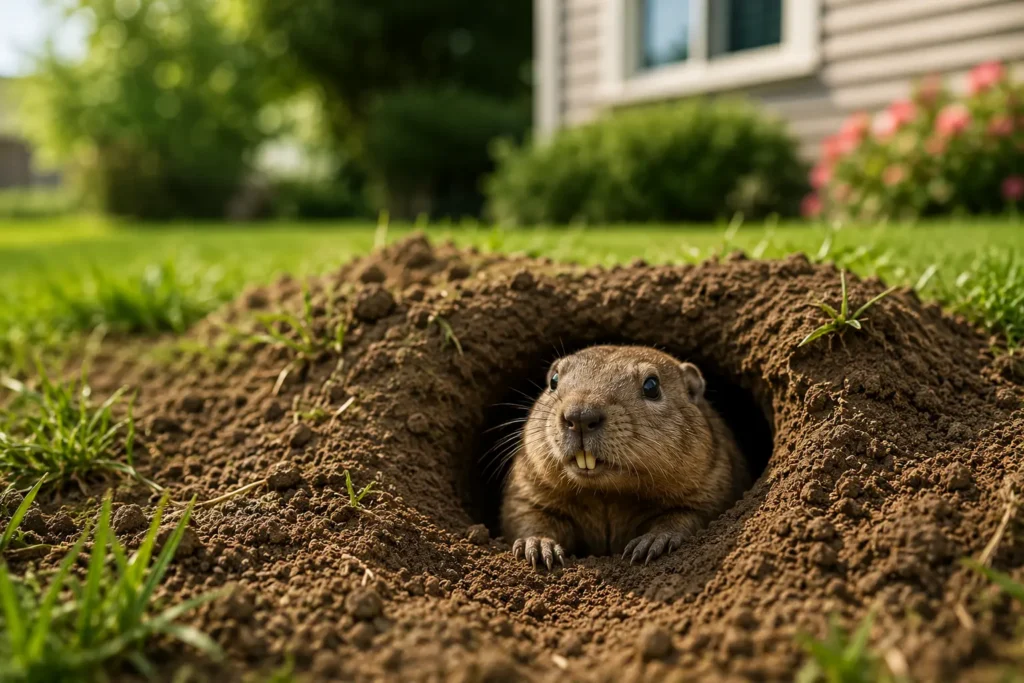
You walk outside one morning and find a fresh mound of dirt sitting right in the middle of your lawn. Somebody told you to toss a few moth balls down the hole and the gophers will pack up and leave. It sounds simple enough. But will moth balls keep gophers away, or is this one of those tips that sounds good in theory and falls apart in practice?
Here’s the honest answer — and you deserve to hear it before you spend money on something that probably won’t solve your problem. Moth balls are not a reliable way to get rid of gophers. They might irritate a gopher for a moment, but they won’t make your gopher problem go away. Let’s go through exactly why, and what actually works instead.
Do Moth Balls Actually Repel Gophers?
Moth balls contain naphthalene or paradichlorobenzene — chemicals designed to release a strong vapor that kills moths and other fabric pests in tightly sealed spaces like closets and storage containers. The smell is unpleasant, and that’s exactly why people assume it would bother gophers too.
The truth is, gophers do dislike the smell at first. Most homeowners report a brief reaction — the gopher avoids that particular spot for a few days. But here’s what actually happens next: gophers build extensive tunnel systems with multiple entrances, and they simply dig a new opening somewhere else. You haven’t solved the problem. You’ve just relocated it a few feet over.
What’s worse, gopher tunnels are surprisingly well ventilated. The concentration of fumes that makes moth balls effective in a sealed closet disperses quickly underground. Temperature, humidity, and soil conditions all affect how much odor actually reaches the gopher, which means results are inconsistent at best.
Why Moth Balls Don’t Work as a Long-Term Solution
Most people don’t realize how adaptable gophers actually are. They’re not easily spooked by a smell that doesn’t pose any real threat to them.
Think about it this way. If a smell alone could permanently drive a gopher out of its tunnel system, pest control companies wouldn’t need trapping methods, exclusion barriers, or professional-grade solutions at all. The fact that gopher problems persist for homeowners who’ve already tried moth balls tells you everything you need to know.
Gophers are also remarkably persistent diggers. A single gopher can create dozens of feet of tunnels and multiple mounds in a relatively short time. Blocking one entrance with moth balls doesn’t address the rest of the tunnel system — and gophers rarely rely on just one entry point.
Most people who try this method end up doing it weekly, refilling holes with moth balls every few days, only to find new mounds appearing nearby. That’s not pest control. That’s just managing frustration.
Are Moth Balls Safe to Use Outdoors?
This is where things get genuinely concerning, and it’s worth pausing on before you reach for a box of moth balls.
Moth balls are registered pesticides, and they’re designed for use in enclosed, controlled spaces — not scattered across open soil in your yard. Using them outdoors for purposes other than their intended use is against the label instructions in many places, and for good reason.
The chemicals in moth balls can leach into soil and groundwater. They pose a real risk to pets who might dig them up out of curiosity, and to children who spend time playing in the yard. Exposure to naphthalene can cause headaches, nausea, and respiratory irritation in both people and animals. If you have a dog that likes to dig, or kids who play in the grass, this is a real safety concern — not just a minor inconvenience.
So even setting aside the question of whether moth balls work, there’s a strong argument for avoiding them altogether.
Natural Gopher Repellents That Work Better
If you’re looking for something safer than moth balls, a few natural options have shown more consistent results — though it’s worth setting realistic expectations here too. No repellent alone will fully solve a serious gopher problem.
Castor oil granules. Unlike moth balls, castor oil-based repellents are specifically formulated for soil application and are widely used by landscapers. The smell and taste deter gophers from feeding in treated areas without the toxicity concerns of naphthalene.
Predator scent. Gophers rely heavily on visual cues to detect predators, but a strong unfamiliar scent — like fox or coyote urine — can make them more cautious, even if it doesn’t drive them away entirely.
Plant-based deterrents. Gopher purge (Euphorbia lathyris) and daffodils are plants gophers tend to avoid, and planting them around vulnerable garden beds can offer some protection.
Vibration devices. Solar-powered sonic spikes that emit underground vibrations are sold as gopher deterrents. Results are mixed — some homeowners notice a temporary reduction in activity, but gophers often adjust over time.
The truth is, repellents work best as one part of a larger strategy, not as a standalone fix. Most pest professionals will tell you the same thing.
Best Way to Get Rid of Gophers for Good
If you actually want gophers gone — not just temporarily inconvenienced — trapping and exclusion are the methods backed by real evidence.
Trapping is the most reliable DIY method. Box traps and pincer-style traps placed directly in active tunnels can significantly reduce gopher populations when used correctly and consistently. The key is identifying active tunnels versus old, abandoned ones — fresh mounds with loose, recently disturbed soil are your best indicator.
Exclusion barriers prevent gophers from reaching specific areas in the first place. Burying hardware cloth or wire mesh around garden beds, at least 24 inches deep, creates a physical barrier gophers can’t easily dig through. This works especially well for protecting vegetable gardens and ornamental beds.
Flooding tunnels can sometimes work as a short-term flush-out method, though it carries a real risk of waterlogging your lawn and isn’t a long-term solution on its own.
Removing food sources helps too. Gophers are drawn to areas with abundant roots, bulbs, and vegetation. Keeping garden beds well maintained and removing root vegetables that have gone to waste reduces the appeal of your yard.
Imagine spending an entire weekend setting traps, checking them daily, and finally seeing the mounds stop appearing after two weeks of consistent effort. That’s realistically what effective gopher control looks like — not a one-time fix, but a process.
For more on how to spot the difference between gopher activity and other yard pests, check out our guide on gopher mounds vs mole hills.
When to Call a Professional Gopher Control Service
DIY methods can work for a single gopher or a small, newly noticed problem. But gopher populations can grow quickly, and tunnel systems often extend further than what’s visible on the surface.
You should consider professional help if:
- New mounds keep appearing despite consistent trapping
- The gopher activity covers a large area of your lawn or garden
- You’ve tried multiple DIY methods without lasting results
- Gophers are damaging tree roots, irrigation lines, or garden beds
- You want a safe, effective solution without the risks of DIY chemical methods
Gopher control from a professional team includes a full property assessment, identification of active tunnel systems, and targeted treatment that goes well beyond what moth balls or home remedies can achieve. It’s the difference between temporarily annoying a gopher and actually solving the problem.
Xpeller pest control helps homeowners protect their lawns and gardens from gophers using methods that are proven to work — not just folk remedies passed around online.
FAQ
Do moth balls kill gophers, or just repel them? Moth balls don’t kill gophers. At best, they may temporarily irritate a gopher enough to make it avoid one specific tunnel entrance. Most experts agree there’s no reliable evidence that moth balls drive gophers away permanently or reduce their population in any meaningful way.
Is it legal to use moth balls outdoors for pest control? In many regions, using moth balls for any purpose other than their labeled use — protecting fabrics in enclosed spaces — violates pesticide regulations. Moth balls are registered pesticides, and using them outside their intended application can carry fines in some jurisdictions. It’s worth checking local regulations before considering this method.
What is the fastest way to get rid of gophers? Trapping is generally the fastest effective DIY method when done correctly, particularly when traps are placed in actively used tunnels. For larger or persistent infestations, professional gopher control typically resolves the problem faster and more thoroughly than DIY efforts alone.
Can moth balls harm my pets if I use them in the yard? Yes, moth balls can be genuinely dangerous to pets. Dogs in particular may dig them up out of curiosity and ingest them, which can cause serious poisoning. If you have pets that spend time in your yard, it’s best to avoid moth balls entirely and consider pet-safer alternatives instead.
Why do new gopher mounds keep appearing after I treat one area? Gophers build extensive tunnel systems with multiple entrances and exits, often spanning a much larger area than what’s visible above ground. Treating or blocking one entrance doesn’t address the rest of the system, which is why new mounds often appear nearby. This is one of the main reasons professional treatment tends to be more effective than spot treatments.
Conclusion
So will moth balls keep gophers away? Based on the evidence, not reliably — and the risks to pets, children, and the environment make them a questionable choice even if they offered modest results. Gophers are adaptable, persistent, and very good at simply moving their activity a few feet away from whatever’s bothering them.
If you’re serious about solving a gopher problem, trapping, exclusion barriers, and removing food sources give you a much better shot at lasting results. And if the problem has gotten beyond what DIY methods can handle, professional treatment addresses the full tunnel system — not just the part you can see.
Don’t waste another weekend refilling holes with moth balls. Contact our team today for a professional gopher inspection and get a real plan to protect your lawn and garden for good.