
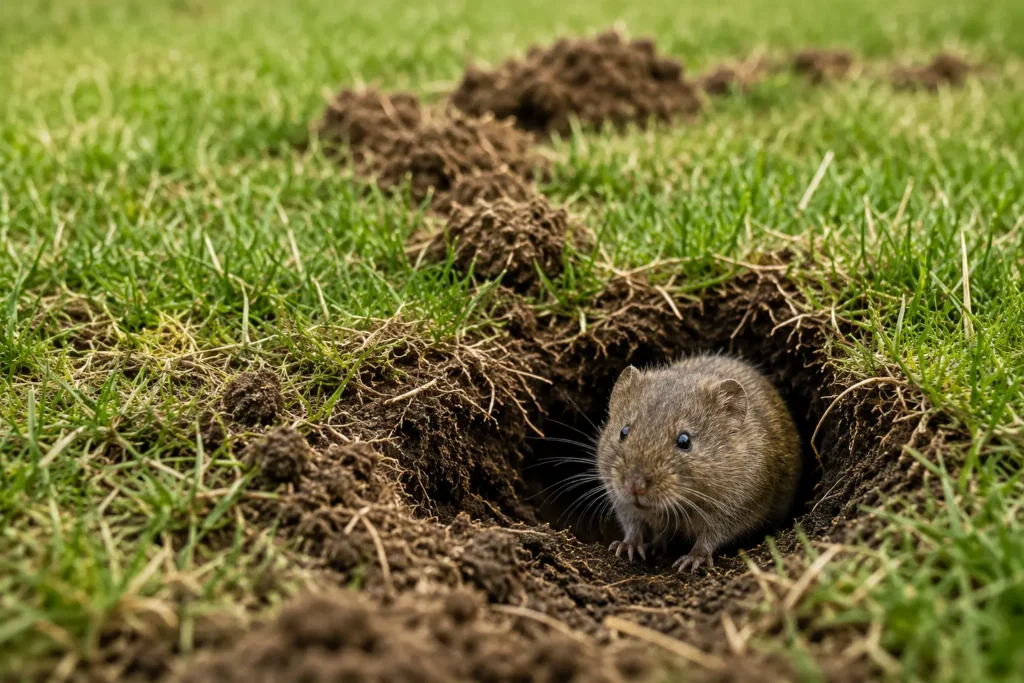
You walk outside one morning, coffee in hand, and stop dead in your tracks. Your lawn — the one you spent all spring getting just right — is covered in shallow trenches, dead grass patches, and what looks like tiny runways cutting across the yard. If this sounds familiar, you’re likely dealing with voles.
Why are voles destroying my lawn in Edmonton? It’s a question more homeowners are asking every spring and fall. Voles are small, mouse-like rodents that live underground and feed on grass, roots, and bulbs. They’re common across Alberta, and Edmonton yards give them exactly what they need to thrive — thick grass, garden beds, and plenty of places to hide.
The good news is that vole damage is manageable when you catch it early and take the right steps. This guide will walk you through exactly what’s happening to your lawn, why voles chose your yard, and what you can do about it.
What Are Voles and Why Are They in Edmonton?
Voles are often mistaken for mice or moles. They’re small, stocky rodents with short tails, small ears, and a rounded nose. Most people never actually see them — they see the damage they leave behind instead.
Edmonton’s climate and landscape make it a perfect environment for voles. The long winters followed by wet springs create ideal conditions for vole populations to explode. Dense grass, mulched garden beds, and snow cover all provide the shelter and food voles need to survive and breed.
Here’s what makes voles particularly frustrating. A single pair of voles can produce several litters per year, with up to ten offspring per litter. Under the right conditions, a small vole problem can become a serious infestation within a single season.
They don’t hibernate either. Voles stay active all year long — tunnelling under snow in winter, feeding on grass roots in spring, and working through garden beds in summer and fall.
Signs of Vole Damage on Your Lawn
Before you can solve the problem, you need to confirm it actually is voles causing the damage. Not all lawn damage looks the same, and confusing voles with moles or other pests leads to the wrong treatment.
The most common signs of voles in Edmonton yards include:
- Surface runways — shallow, winding paths about 4–5 centimetres wide cut through your grass
- Dead grass patches — irregular brown or yellow areas where voles have eaten the roots
- Small burrow openings — golf ball sized holes at the end of runways or near garden edges
- Gnaw marks — on the base of trees, shrubs, or perennial plants just above or below the soil line
- Exposed roots — especially on ornamental plants and young trees
If you’re seeing surface runways combined with dead patches, that’s a strong sign voles have been active for a while. For a full breakdown, check out our guide on 7 signs of voles in yard every homeowner should know.
One important distinction — voles create surface runways you can see. Moles dig deeper tunnels and leave raised ridges. If you’re unsure which pest you’re dealing with, our article on vole mounds vs mole hills can help you tell the difference.
Why Are Voles Destroying My Lawn?
This is the question most Edmonton homeowners want answered. You haven’t changed anything about your yard — so why are voles suddenly tearing it apart?
The truth is, your lawn probably has exactly what voles are looking for.
Thick, overgrown grass is the number one attractant. Voles prefer lawns where the grass is long enough to hide their runways. If you’ve missed a few mowing cycles or let the edges grow out, voles feel safer moving in.
Dense ground cover and mulch around garden beds gives voles the perfect protected habitat. They tunnel just beneath the surface, using mulch and plant debris as insulation and cover from predators.
Birdfeeders and compost bins are another major draw. Spilled seed and food scraps attract voles just like they attract mice. If you have a birdfeeder near your lawn, it may be contributing to the problem more than you realize.
Snow cover in winter is a big factor in Edmonton specifically. A heavy snowpack insulates voles from the cold and hides their activity completely. By the time spring arrives and the snow melts, they’ve already carved up your lawn underneath. Most homeowners don’t discover the damage until it’s fully exposed in April or May.
Neighbouring green spaces also play a role. If your yard borders a park, field, ravine, or undeveloped lot — common in many Edmonton neighbourhoods — voles from those areas will migrate into your yard looking for food.
How to Get Rid of Voles in Edmonton
Once you’ve confirmed voles are the problem, the goal is to reduce their population and make your yard less attractive to new ones.
Mow your lawn regularly. Keep grass short, especially along fences, garden edges, and property lines. Short grass removes the cover voles depend on and exposes them to predators.
Remove ground cover near garden beds. Pull back heavy mulch from the base of trees and shrubs, especially heading into fall. Leave a clear zone of at least 15–20 centimetres around plant stems and trunks to remove vole hiding spots.
Use vole repellents. Castor oil-based repellents applied to the lawn can discourage vole activity. They won’t eliminate an existing population, but they help push voles toward other areas and can prevent new ones from moving in.
Set snap traps in active runways. Place unbaited snap traps directly inside active surface runways, perpendicular to the path. Check traps daily and reset as needed. This is one of the most effective DIY methods for reducing vole numbers quickly.
Eliminate food sources. Move birdfeeders away from the lawn or switch to feeders with trays that catch spilled seed. Keep compost bins sealed and away from garden edges.
For a full step-by-step treatment plan, read our complete guide on how to get rid of voles in your yard.
How to Prevent Voles From Coming Back
Getting rid of voles is only half the battle. Without prevention, new voles from surrounding areas will move back into your yard within weeks.
Maintain your lawn consistently. Regular mowing through spring, summer, and fall is the single most effective long-term prevention step. Don’t let grass grow long heading into winter.
Install hardware cloth around vulnerable plants. For young trees, ornamental shrubs, and perennial beds, a cylinder of hardware cloth buried 15–20 centimetres into the soil and extending 30 centimetres above ground creates a physical barrier voles can’t easily get through.
Clear debris in fall. Leaf piles, brush, and plant debris left over winter give voles perfect winter shelter. Do a thorough yard cleanup before the first snowfall.
Encourage natural predators. Owls, hawks, foxes, and cats all prey on voles. Installing an owl box in your yard can help attract natural predators that keep vole populations in check.
Check your lawn early every spring. As soon as snow melts, walk your yard and look for fresh runway activity. Catching a small problem in April is far easier than dealing with a large infestation by June.
When to Call a Professional
DIY methods work well for mild to moderate vole activity — a few runways, some patchy grass, manageable damage.
But some situations call for professional help.
If your lawn has extensive runway systems covering large areas, if voles have damaged multiple trees or shrubs, or if DIY trapping hasn’t reduced activity after two to three weeks — it’s time to bring in professional vole control.
Professional treatment includes a thorough property inspection to identify the full extent of activity, targeted treatment using methods appropriate for your specific yard and situation, and follow-up to make sure the problem is fully resolved.
Xpeller pest control serves Edmonton and the surrounding area, helping homeowners identify and eliminate vole activity before it causes serious long-term lawn and garden damage. Contact our team today to schedule an inspection and get a clear plan for protecting your yard.
FAQ
Are voles dangerous to humans? Voles are not aggressive and rarely come into direct contact with people. They don’t typically enter homes the way mice do. The main concern with voles is property damage — to lawns, gardens, trees, and shrubs — rather than any direct risk to people or pets.
How do I know if voles are still active in my yard? Fresh runway activity is the clearest sign. Place a small piece of cardboard or a board flat over an active runway and check it the next day. If it has been disturbed or if you see fresh droppings nearby, voles are still active in that area.
Will vole damage repair itself over time? Minor surface runway damage often fills in naturally as grass regrows in spring. However, areas where voles have eaten through grass roots may need reseeding. Damage to trees and shrubs — particularly girdling of the trunk — can be permanent and may kill younger plants.
What time of year are voles most destructive in Edmonton? Late winter and early spring are typically when damage becomes most visible, as snow melts and reveals what voles have been doing all winter. Fall is when voles are most actively preparing — feeding heavily and expanding their tunnel systems before winter arrives.
Do voles come back to the same yard every year? Yes, if conditions remain favourable. Voles have small home ranges and tend to stay in areas that provide good food and shelter. Without changes to your yard — keeping grass short, removing cover, eliminating food sources — new voles will move into the same areas season after season.
Conclusion
If voles are destroying your Edmonton lawn, you’re not alone and you’re not helpless. Understanding why voles chose your yard — thick grass, ground cover, snow protection, nearby green spaces — gives you a clear path to solving the problem.
Start with the basics: mow regularly, remove cover near garden beds, set traps in active runways, and eliminate food sources. For ongoing prevention, protect vulnerable plants with hardware cloth and do a thorough yard cleanup every fall before snow arrives.
And if the damage has already gone further than DIY methods can handle, don’t wait. Contact our team today for a professional inspection and get your Edmonton lawn back on track before voles cause any more damage.