
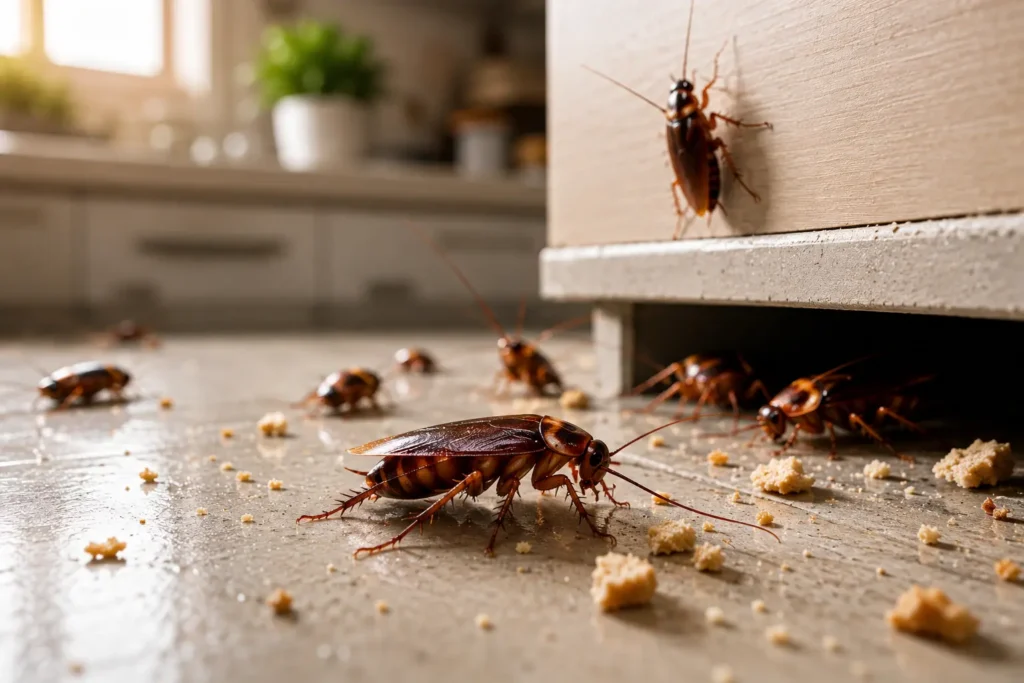
You walk into your kitchen late at night, flip on the light — and something small and dark scurries behind the stove. Your stomach drops. Most Calgary homeowners don’t think about cockroaches until they actually see one. But by that point, there’s usually more hiding where you can’t see them.
So what attracts cockroaches in the first place? The answer might surprise you. It’s not always about having a dirty home. Even clean, well-kept houses can attract cockroaches if the right conditions exist. Understanding what draws them in is the first step to keeping them out for good.
What Attracts Cockroaches in the House?
Cockroaches are survivors. They’ve been around for millions of years, and they’re very good at finding what they need — food, water, warmth, and shelter.
Your home offers all four.
Here’s the thing — cockroaches don’t need much to thrive. A few crumbs behind the fridge. A small drip under the sink. A warm gap behind the baseboard. That’s enough to keep a small colony fed and comfortable for weeks.
What are roaches attracted to most? Three things consistently bring them inside:
- Moisture — leaky pipes, condensation, damp basements
- Food sources — crumbs, grease, open garbage, pet food
- Warmth and shelter — wall gaps, cardboard boxes, cluttered storage areas
Calgary winters push cockroaches to seek warmth indoors more aggressively than in warmer climates. Once they find a way in, they don’t leave on their own.
If you’ve already spotted one, it’s worth reading about the signs of cockroaches in your home to understand how far things may have progressed.
What Attracts Cockroaches in the Kitchen?
The kitchen is the number one hotspot in any home. And it makes complete sense when you think about it.
Food preparation happens there every single day. Grease builds up on stovetops. Crumbs fall behind appliances. Moisture collects under the sink. For a cockroach, your kitchen is basically a five-star hotel.
What attracts cockroaches in the kitchen specifically:
- Dirty dishes left in the sink overnight
- Grease buildup behind and under the stove
- Open or loosely sealed food containers
- Fruit left out on the counter
- Garbage cans without tight-fitting lids
- Damp mops or sponges left near the sink
Most people clean the visible surfaces and think that’s enough. But cockroaches are after what you can’t easily see — the drip behind the tap, the crumbs under the toaster, the thin film of grease on the back of the stove.
Wipe down appliances regularly. Store food in sealed containers. Take out the garbage every night before bed. These small habits make a big difference over time.
What Attracts Cockroaches in the Bedroom?
You might be thinking — why would cockroaches even come into the bedroom? There’s no food in there.
Actually, there often is.
Eating in bed, snacks on the nightstand, a half-empty cup of juice left overnight — these are more common than people realize. And cockroaches will travel surprisingly far from their hiding spots to find food.
What attracts cockroaches in the bedroom goes beyond food though. They’re also drawn to:
- Clutter — piles of clothing, boxes, and bags give them places to hide
- Cardboard boxes stored under the bed or in closets
- Warmth from electronics like chargers, TVs, and gaming consoles
- Pet food or water bowls left nearby
The bedroom feels personal, which is exactly why finding cockroaches there is so unsettling. Keep bedroom floors clear, avoid eating in bed, and check under furniture and inside closets regularly.
What Smells Attract Cockroaches?
This one catches a lot of people off guard.
Cockroaches have a strong sense of smell, and certain odors draw them in from a distance. Understanding what smells attract cockroaches can help you identify problem areas you might be overlooking.
They’re strongly attracted to:
- Fermentation smells — overripe fruit, fermenting vegetables, old garbage
- Grease and cooking odors — especially meat and oil buildup
- Sweet smells — sugary drinks, juice spills, syrup residue
- Musty smells — damp wood, mold, and mildew in basements or bathrooms
- Pheromones — cockroaches release chemical signals that attract other cockroaches
That last point is important. Once a few cockroaches move in, they leave behind scent trails that guide others to the same food and water sources. It’s one of the reasons infestations grow faster than most people expect.
Keeping your home smelling clean — especially in the kitchen and basement — removes one of the biggest triggers that brings cockroaches inside.
What Attracts German Cockroaches?
German cockroaches deserve their own section because they behave differently from other species.
They’re smaller, faster, and they breed much more quickly. A single female German cockroach can produce hundreds of offspring in her lifetime. They’re also the most common cockroach species found inside Canadian homes and apartments.
What attracts German cockroaches specifically:
- Warm, humid kitchens and bathrooms
- Areas near appliances that generate heat — fridges, dishwashers, microwaves
- Cracks and gaps in cabinetry and walls
- Multi-unit buildings where they travel easily between units through shared walls and pipes
Here’s the thing with German cockroaches — by the time you see one during the day, you likely already have a significant infestation hiding in your walls and cabinets. They’re nocturnal by nature. Daytime sightings usually mean the hidden population has grown large enough that competition for space is pushing them out into the open.
This is one situation where calling professional cockroach control early makes a real difference.
How to Stop Attracting Cockroaches
The good news is that most of what attracts cockroaches is within your control.
You don’t need expensive products or complicated systems. Consistent habits and a few home maintenance fixes go a long way.
Fix moisture problems first. Check under all sinks for slow drips. Look for condensation around pipes in the basement. Fix leaky faucets promptly. Cockroaches can survive weeks without food but only days without water — cut off their water supply and you make your home far less appealing.
Seal entry points. Cockroaches can squeeze through gaps as thin as a credit card. Check where pipes enter walls, around baseboards, and behind appliances. Use caulk to seal any cracks or gaps you find.
Store food properly. Everything in your pantry should be in sealed containers — not just left in the original packaging, which cockroaches can chew through easily. This includes pet food.
Reduce clutter. Especially cardboard boxes, which cockroaches love to nest inside. Switch to plastic storage bins wherever possible.
Clean regularly and thoroughly. Not just countertops — behind and under appliances, inside cabinets, along baseboards. Pay attention to the areas you don’t normally clean.
Take out garbage daily. Especially kitchen waste. A garbage can with a tight lid is far less attractive than an open one.
These steps won’t guarantee cockroaches never appear, but they make your home a much harder target. Xpeller pest control Calgary also offers home inspections to identify vulnerabilities you might miss on your own.
When to Call a Professional
DIY prevention works well when you catch things early.
But if you’re already seeing cockroaches regularly — especially during the day, in multiple rooms, or in large numbers — it’s time to bring in professional help. Cockroach infestations grow fast and are notoriously difficult to eliminate completely without professional-grade treatments.
Signs you need professional help:
- Cockroaches appearing during the day
- Finding them in multiple rooms
- Seeing egg cases or shed skins
- Smell a musty, oily odor in your kitchen or bathroom
- DIY treatments aren’t working
Don’t wait too long on this one. The longer an infestation has to grow, the harder and more expensive it becomes to treat.
FAQ
Does a clean home prevent cockroaches? A clean home definitely helps, but it’s not a guarantee. Cockroaches are also attracted to moisture, warmth, and structural entry points that have nothing to do with cleanliness. Even well-maintained homes can have hidden drips or wall gaps that make them vulnerable.
Can cockroaches come in through drains? Yes, they can. Cockroaches sometimes enter through floor drains or sewer connections, particularly in basements and older homes. Keeping drain covers in place and maintaining your plumbing helps reduce this risk.
Why do I only see cockroaches at night? Cockroaches are nocturnal, so nighttime activity is normal. If you’re seeing them during the day, it usually means the infestation has grown large and they’re being pushed out of hiding spots by competition for space — a sign things have already gotten serious.
Do cockroaches go away on their own in winter? No. Calgary winters drive cockroaches further inside, not away. Unlike outdoor pests that die off in cold weather, cockroaches living inside your home are insulated from the cold and will remain active year-round.
How fast do cockroach infestations grow? Faster than most people expect. A German cockroach can produce up to 300 offspring in her lifetime, and those offspring can start reproducing within a few weeks. A small problem can become a large infestation within a couple of months if left untreated.
Conclusion
Understanding what attracts cockroaches is the most practical thing you can do to protect your home. Moisture, food, warmth, and shelter — remove those, and you remove most of what draws them inside.
Start with the kitchen and work through the rest of the house. Fix leaks. Seal gaps. Store food properly. Clean the spots you normally skip.
And if things have already gone further than simple prevention can handle, don’t wait. Contact our team today for a professional inspection and get a clear plan to deal with the problem before it gets worse.