
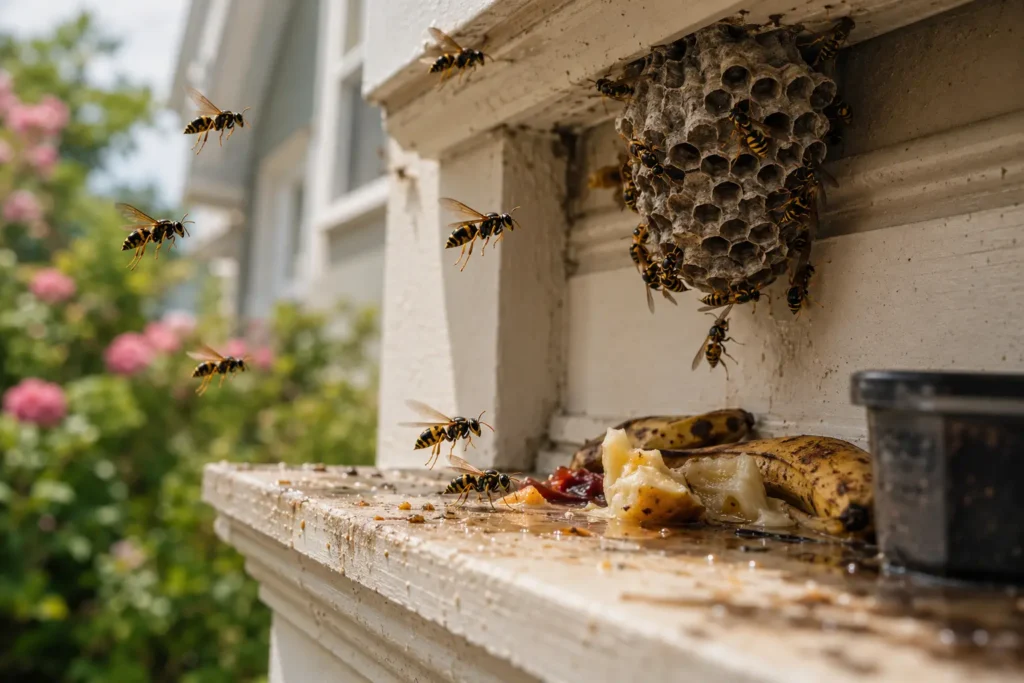
Have you noticed more wasps flying around your yard, deck, or windows lately? Maybe you’ve spotted a few hovering near your garbage bins or found a nest under the roofline.
If so, you’re probably wondering what attracts wasps to your house in the first place.
The truth is that wasps don’t randomly choose a property. They are constantly searching for food, water, shelter, and safe places to build nests. Once they find these conditions around your home, they often return again and again.
Many homeowners don’t realize they’re accidentally attracting wasps until a nest appears nearby. Understanding why wasps are interested in your property is the first step toward preventing future problems.
Why This Problem Matters
A few wasps flying around may not seem like a big deal.
But here’s the thing.
A single queen wasp can start a nest in spring that grows into hundreds or even thousands of wasps by late summer.
For families with children, pets, or anyone allergic to stings, wasp activity can become more than just an annoyance.
The earlier you identify what attracts wasps, the easier it becomes to keep them away from your property.
Many homeowners eventually search for professional pest control services after discovering a hidden nest near a doorway, deck, or backyard play area.
What Attracts Wasps to Your House?
Several factors can make your home highly attractive to wasps.
Let’s look at the most common reasons.
Food Sources Around Your Property
Wasps spend much of their time searching for food.
During spring and early summer, they hunt insects and protein sources. Later in the season, they become attracted to sugary foods and drinks.
Common attractants include:
- Outdoor garbage bins
- Pet food
- Fallen fruit
- Compost piles
- Sugary drinks
- Barbecue residue
- Outdoor dining areas
Have you ever left a soda can outside and noticed wasps gathering around it later?
That’s because sweet smells are incredibly attractive to them.
Garbage and Recycling Bins
One of the biggest wasp attractants is improperly managed garbage.
Food residue inside bins provides a steady food source.
Pay special attention to:
- Garbage containers
- Recycling bins
- Compost bins
- Outdoor waste stations
Keeping lids closed can significantly reduce wasp activity.
Water Sources
Like all living creatures, wasps need water.
Common water sources include:
- Bird baths
- Leaky faucets
- Ponds
- Pet water bowls
- Standing water
Even small amounts of water can attract wasps during hot weather.
Shelter and Nesting Locations
Food and water may attract wasps initially, but shelter encourages them to stay.
Wasps prefer quiet, protected areas where they can safely build nests.
Popular nesting locations include:
- Roof overhangs
- Attics
- Sheds
- Decks
- Wall voids
- Garages
- Fence posts
Once a queen finds a suitable location, nest construction can begin quickly.
Why Are Wasps More Active During Summer?
Most people notice increased wasp activity during mid-to-late summer.
That’s because colonies reach their largest size during this period.
Calgary homeowners often report seeing more wasps around:
- Patios
- Outdoor dining areas
- Gardens
- Garbage storage areas
Alberta’s warm summer conditions can support rapid colony growth.
As food demands increase, worker wasps become more aggressive while searching for resources.
Signs That Wasps May Be Nesting Nearby
You don’t always see the nest right away.
However, there are several warning signs.
Frequent Wasp Activity
If you regularly see wasps flying through the same area, there may be a nest nearby.
Watch for:
- Repeated flight paths
- Groups of wasps entering small openings
- Activity around rooflines
- Increased backyard activity
Visible Nest Construction
Some nests are easy to spot.
Others remain hidden inside walls or attics.
Common nest locations include:
- Under eaves
- Inside sheds
- Behind siding
- Under decks
- Inside wall cavities
Increased Aggressive Behavior
Wasps become more defensive when protecting a nearby nest.
If wasps seem unusually aggressive around certain parts of your property, investigate carefully from a safe distance.
A Real-Life Scenario
Imagine you’re enjoying a summer evening barbecue with family.
At first, you notice one or two wasps around the food table.
A week later, there are several more.
Soon, every outdoor meal turns into a battle against persistent wasps.
Eventually, you discover a growing nest hidden beneath the deck.
This situation is extremely common because most nests begin unnoticed.
How to Prevent Wasps From Coming to Your House
The good news is that many wasp problems can be prevented.
Eliminate Food Sources
Keep outdoor eating areas clean.
Remember to:
- Clean barbecue grills
- Remove fallen fruit
- Store pet food indoors
- Clean spills immediately
- Secure garbage lids
Reducing food availability makes your property less attractive.
Remove Standing Water
Inspect your property regularly.
Look for:
- Leaky faucets
- Clogged gutters
- Bird baths
- Standing water containers
Reducing water sources can discourage wasp activity.
Seal Potential Nesting Areas
Inspect your home’s exterior for openings.
Seal:
- Cracks
- Gaps around vents
- Damaged siding
- Utility penetrations
Preventing access reduces nesting opportunities.
What Not to Do Around Wasps
Many homeowners accidentally make the situation worse.
Avoid:
- Swatting at wasps
- Disturbing active nests
- Spraying nests without proper protection
- Blocking nest entrances
Disturbed wasps often become more aggressive.
When Should You Call Professional Help?
Sometimes prevention isn’t enough.
You should consider professional wasp control services if:
- A nest is visible
- Wasp activity continues increasing
- Family members are allergic
- Nests are located in hard-to-reach areas
- Multiple nests are present
Professional technicians can safely identify nest locations and provide effective treatment options.
If you’ve previously dealt with indoor pest issues, our guide on how to get rid of wasps inside the house safely and naturally provides additional prevention tips.
Many homeowners schedule pest control inspections during summer to identify hidden nests before they become larger problems.
FAQ
Why are wasps suddenly attracted to my house?
Wasps are usually attracted by food, water, or suitable nesting locations. Seasonal changes can also increase activity as colonies grow.
What smells attract wasps?
Sweet scents from fruit, sugary drinks, flowers, and food residue commonly attract wasps.
Does standing water attract wasps?
Yes. Wasps need water to survive and often gather around bird baths, ponds, and leaking faucets.
What time of year are wasps most active?
Wasps are generally most active during late summer when colonies reach peak size.
Will wasps return to the same location every year?
While old nests are not reused, new queens may choose similar nesting locations if conditions remain favorable.
Conclusion
If you’ve been wondering what attracts wasps to your house, the answer usually comes down to food, water, and shelter. Garbage bins, outdoor dining areas, standing water, and protected nesting spots can all make your property more appealing to wasps.
The good news is that small prevention steps can make a big difference. Keeping your yard clean, removing attractants, and sealing potential nesting areas can help reduce wasp activity around your home.
If wasps continue returning or you discover an active nest, don’t wait for the problem to grow. Contact our pest control team today and let experienced professionals help protect your home and family.