
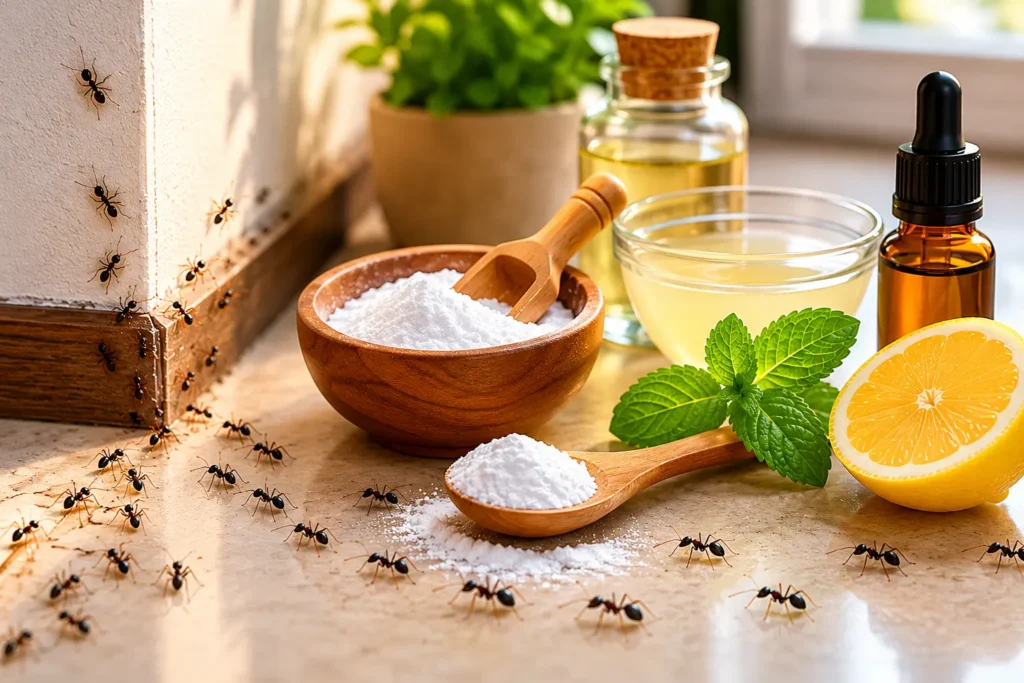
You walk into your kitchen, flip on the light, and there they are — a perfectly organized line of ants marching across your countertop like they pay rent. Sound familiar?
If you’ve been Googling how to get rid of ants in the house naturally, you’re not alone. Ant infestations are one of the most common household problems, and the good news is you don’t need harsh chemical sprays to solve them. With the right natural remedies, a bit of patience, and some smart prevention, you can take back your home — safely and affordably.
This guide covers everything: what attracts ants, how to kill them at the source, and how to keep them from ever coming back.
Why Are Ants Coming Into Your House?
Before you grab a spray bottle, it helps to understand why ants are there in the first place.
Ants are three things: hungry, thirsty, and opportunistic. They enter homes searching for:
- Food — especially sugars, grease, crumbs, and pet food
- Water — leaky pipes, damp sponges, or wet countertops
- Shelter — cracks in walls, under baseboards, or behind appliances
Once a scout ant finds something worth reporting, it leaves a pheromone trail — an invisible chemical highway that signals hundreds of its colony mates to follow. That’s why one ant quickly becomes twenty.
Knowing this is actually good news: disrupt the trail, cut off the food source, and you’ve already won half the battle.
12 Natural Ways to Get Rid of Ants in the House
1. White Vinegar Spray
White vinegar is probably the most accessible weapon in your natural ant-fighting arsenal.
Ants navigate using pheromone trails. Vinegar disrupts and masks those scent trails completely, sending the colony into confusion. It can also kill ants on direct contact.
How to use it:
- Mix equal parts white vinegar and water in a spray bottle
- Spray directly on ants, along trails, around entry points, and on countertops
- Wipe down surfaces afterward — the smell fades as it dries but the repellent effect lingers
Pro Tip: Don’t use vinegar on natural stone surfaces like marble or granite. The acid can etch the finish.
Image alt text suggestion: spray bottle with white vinegar and water solution for natural ant control
2. Diatomaceous Earth (DE) — The #1 Natural Ant Killer
If you want something that physically kills ants rather than just repelling them, food-grade diatomaceous earth is your best bet.
DE is a fine, chalky powder made from fossilized aquatic organisms. It’s completely safe for humans and pets — but for insects, it’s lethal. The microscopic sharp particles latch onto an ant’s exoskeleton, causing tiny cuts that lead to rapid dehydration. Within 24–48 hours, ants that cross a line of DE are dead.
How to use it:
- Buy food-grade DE only (not pool-grade — that’s chemically treated)
- Sprinkle a thin layer along windowsills, baseboards, door thresholds, and anywhere ants enter
- Reapply after rain or mopping, as moisture reduces its effectiveness
A single bag costs around ₹500–₹800 (or $10–$20) and can treat your entire home and yard.
Image alt text suggestion: food-grade diatomaceous earth powder sprinkled along home baseboard for ant control
3. Borax + Sugar Bait — Kill the Whole Colony
Here’s where things get interesting. Unlike repellents that just chase ants away, a borax bait targets the entire colony — including the queen.
Borax is a naturally occurring mineral that works as a slow-acting poison. Mix it with sugar, and worker ants happily carry it back to the nest, feeding it to the colony. Within a few days, the whole operation collapses.
Simple borax bait recipe:
- 1 tablespoon borax
- 1 cup warm water
- 2 tablespoons sugar
- Soak cotton balls in the mixture and place near ant trails
Important: Keep borax bait away from children and pets. Place it in small containers with tiny holes so only ants can access it.
Image alt text suggestion: homemade borax ant bait on cotton ball placed near ant trail indoors
4. Peppermint Essential Oil
Ants absolutely hate peppermint. The strong scent overwhelms their sensory receptors and disrupts the pheromone trails they rely on. As a bonus, your home smells great.
How to use it:
- Add 15–20 drops of peppermint essential oil to a spray bottle with water
- Spray around entry points, under the sink, near windows, and along baseboards
- Refresh every few days for best results
Other effective essential oils include tea tree oil, eucalyptus, clove oil, and thyme oil — all proven to deter ants naturally.
5. Cinnamon — A Surprisingly Powerful Repellent
Research shows that cinnamon contains trans-cinnamaldehyde, a compound that both repels and kills ants. It’s cheap, non-toxic, and smells wonderful.
How to use it:
- Sprinkle ground cinnamon near ant entry points, along windowsills, and on countertops
- Soak cotton balls in cinnamon essential oil and place near ant-prone areas
- Draw a “line” of cinnamon across doorways — ants are reluctant to cross it
6. Dish Soap and Water Spray
This is your immediate, no-prep solution for when ants are actively swarming.
Dish soap breaks down the protective coating on an ant’s exoskeleton, causing dehydration and death on contact. It also destroys their scent trails.
How to use it:
- Mix a few drops of dish soap with water in a spray bottle
- Spray directly on visible ants and wipe clean
- Use along baseboards and around the perimeter of rooms
7. Lemon Juice
Like vinegar, lemon juice is acidic and masks pheromone trails effectively. Its strong citrus scent is a natural deterrent.
How to use it:
- Mix 1 part lemon juice with 3 parts water
- Spray on counters, sinks, entry points, and anywhere you see ants
- Place lemon peels near windows and doorways
Citrus peels from oranges work similarly — the compounds in citrus rinds are genuinely repellent to ants.
8. Baking Soda + Powdered Sugar
This is a gentler, pet-safer alternative to the borax bait method.
When ants eat baking soda, it reacts with the acid in their digestive system and kills them. The powdered sugar acts as the lure.
How to use it:
- Mix equal parts baking soda and powdered sugar
- Place small amounts in jar lids near ant trails
- Replace every few days
9. Salt
Table salt is not a killer, but it is a decent short-term barrier. A thick line of salt at entry points creates a physical deterrent that ants prefer to avoid. A salt-water spray can also dehydrate ants over time.
It’s most useful as a quick fix while you set up more effective long-term solutions.
10. Cayenne or Black Pepper
Ants find raw pepper intensely irritating. Sprinkle cayenne or black pepper around areas where ants enter or congregate. You can also mix with water and spray directly.
It won’t kill them, but it reliably drives them away from treated areas.
11. Coffee Grounds
Used coffee grounds have a strong smell that ants dislike. Sprinkle them around the perimeter of your home, near doors, or in garden beds where ants are active. It’s a great way to recycle coffee waste while keeping pests at bay.
12. Cornmeal
Ants love carrying cornmeal back to their colony — but they cannot digest it. Over time, this natural bait gradually reduces colony numbers. Place small piles near ant trails and entry points, and let the ants do the work for you.
How to Prevent Ants from Coming Back
Getting rid of ants is one thing. Keeping them out permanently is another. Here’s what actually works:
Seal Every Entry Point
- Caulk cracks around windows, doors, and baseboards
- Seal gaps around pipes and utility lines
- Fix torn window screens
Clean Up Like You Mean It
- Store all food (especially sugar, honey, and grains) in airtight containers
- Wipe up spills immediately — even a tiny drop of juice is an invitation
- Deep clean your microwave, toaster tray, and stovetop regularly
- Don’t leave pet food sitting out
Manage Moisture
- Fix leaky pipes and faucets
- Don’t leave wet sponges or dish cloths sitting out
- Keep the area under the sink dry
Outdoor Prevention
- Trim back shrubs, branches, and plants that touch your house walls
- Keep firewood stored away from the house
- Move trash cans at least 10 feet from the home
- Remove fallen fruit, leaf piles, and standing water from your yard
What Type of Ant Do You Have?
Not all ants respond to the same treatments. Identifying the species helps you choose the right approach.
Black Garden Ants
The most common household ants. They love sugar. Borax bait and vinegar work extremely well.
Carpenter Ants
Larger, darker ants that tunnel through wood. They can cause structural damage. Require more aggressive treatment — diatomaceous earth inside wall voids and possibly professional help.
Fire Ants
Reddish, aggressive, and painful to encounter. Boiling water + dish soap poured into mounds, combined with diatomaceous earth barriers, works well outdoors.
Pharaoh Ants
Tiny, pale yellow ants that love warm, humid indoor spaces. Borax-based protein baits (using peanut butter instead of sugar) work best.
When Should You Call a Professional?
Natural remedies work well for most household ant problems. But there are times when professional pest control is the smarter call:
- The infestation has spread to multiple rooms or floors
- You’re dealing with carpenter ants causing structural damage
- Natural methods have been applied consistently for 2–3 weeks with no improvement
- You’ve spotted ant nests in wall voids or under flooring
A licensed pest technician can identify the colony location, destroy the queen, and apply targeted treatments that address the root cause — not just the visible ants.
Quick Reference: Natural Ant Remedies at a Glance
| Method | Best For | Kills or Repels? | Pet Safe? |
|---|---|---|---|
| Diatomaceous Earth | Entry points, baseboards | Kills | ✅ Yes |
| Borax + Sugar Bait | Colony elimination | Kills colony | ⚠️ Keep away from pets |
| White Vinegar Spray | Trails, surfaces | Repels + kills | ✅ Yes |
| Peppermint Oil | Entry deterrence | Repels | ✅ Yes |
| Dish Soap Spray | Active swarms | Kills on contact | ✅ Yes |
| Cinnamon | Barriers, countertops | Repels | ✅ Yes |
| Lemon Juice | Scent trail disruption | Repels | ✅ Yes |
| Baking Soda + Sugar | Light infestations | Kills | ✅ Yes |
FAQ: How to Get Rid of Ants in the House Naturally
Q: What is the fastest natural way to get rid of ants in the house? A: Diatomaceous earth kills ants within 24–48 hours of contact, making it the fastest-acting natural solution. For immediate results on a visible swarm, a dish soap and water spray works in seconds.
Q: Does vinegar permanently get rid of ants? A: Vinegar disrupts pheromone trails and kills ants on contact, but it’s not a permanent solution on its own. Combine it with borax bait or diatomaceous earth for longer-lasting results.
Q: How do I get rid of ants naturally without harming my pets? A: Diatomaceous earth (food-grade), peppermint oil, cinnamon, vinegar, and lemon juice are all safe around pets. Avoid borax if you have cats or dogs that might access bait areas.
Q: Why do ants keep coming back even after I treat them? A: Ants return when the source — food, moisture, or entry points — hasn’t been eliminated. Killing visible ants without reaching the queen means the colony simply sends more workers. Use borax bait to target the queen, and seal entry points to cut off access.
Q: How long does it take for natural ant remedies to work? A: It depends on the method. Dish soap and vinegar work instantly. Diatomaceous earth works in 24–48 hours. Borax bait takes 3–7 days to eliminate a colony since ants must carry it back to the queen.
Q: Is it safe to use diatomaceous earth around children? A: Food-grade diatomaceous earth is non-toxic and safe. However, avoid inhaling it in large quantities as the fine powder can irritate lungs. Apply it carefully and keep children from handling it directly.
Q: What smell do ants absolutely hate? A: Ants strongly dislike peppermint, cinnamon, citrus, vinegar, clove, eucalyptus, and pepper. These scents disrupt their ability to smell pheromone trails.
Conclusion: Take Back Your Home Naturally
Dealing with ants in the house is frustrating — but it doesn’t have to mean toxic sprays or expensive exterminators. If you know how to get rid of ants in the house naturally, you’ve already got everything you need to solve the problem safely and permanently.
Start with the basics: clean up food sources, seal entry points, and deploy a combination of vinegar, diatomaceous earth, and borax bait. Be consistent. Natural methods take a little more patience than chemical sprays, but they’re safer for your family, your pets, and the environment — and they work.
The key is attacking the problem from both ends: repel ants at the entry points and eliminate the colony from within. Do that, and those little squatters won’t stand a chance.
Ready to get started? Pick up food-grade diatomaceous earth and borax from your local hardware store or order online — they’re cheap, widely available, and genuinely effective. Combine them with the vinegar and essential oil tips above, and most household ant problems will be resolved within a week.