
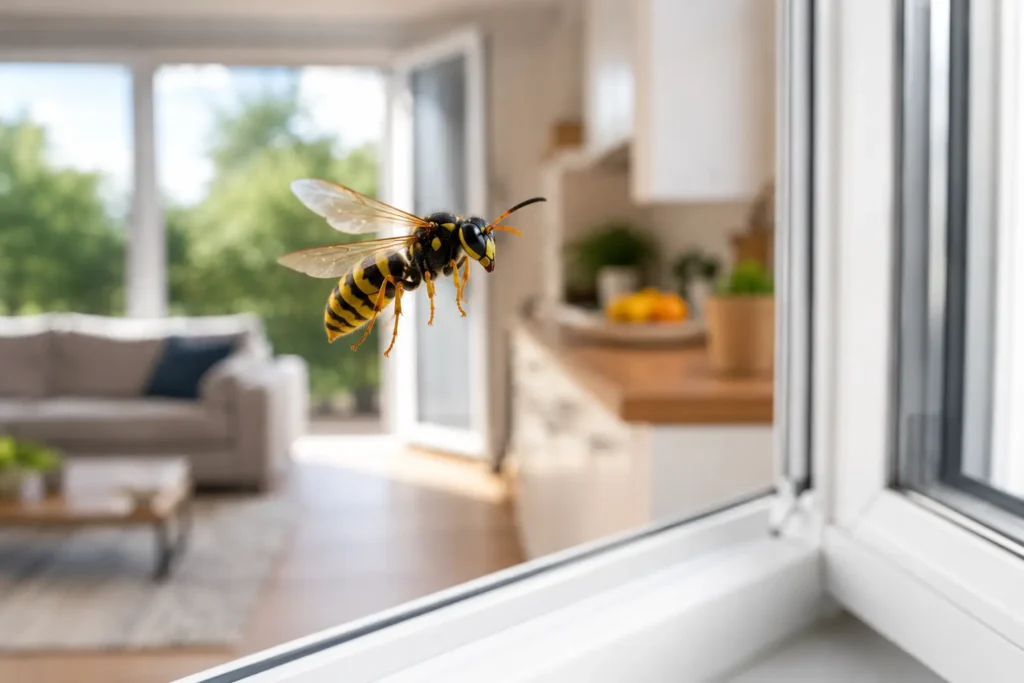
Finding a wasp flying around your home can be frustrating, especially when it happens repeatedly during warmer months. Many homeowners notice wasps near windows, lights, kitchens, or attic spaces and immediately worry about hidden nests nearby. While a single wasp indoors may not always mean a serious infestation, ignoring the problem can sometimes lead to larger issues later.
Wasps usually enter homes while searching for food, water, warmth, or shelter. Tiny openings around doors, vents, rooflines, and windows often give them easy access indoors. In some situations, nearby nests can also increase indoor wasp activity throughout the day.
The good news is that there are several safe ways to remove wasps and reduce the chances of them returning. Simple prevention methods combined with regular inspections can help keep your home protected during peak wasp season. Many homeowners also rely on professional pest control services when wasp problems become more difficult to control naturally.
Why Are Wasps Coming Inside Your House?
Wasps normally stay outdoors, but certain conditions attract them inside homes.
Some of the most common reasons include:
- Sweet food or sugary drinks
- Open garbage bins
- Small wall or roof gaps
- Bright indoor lighting
- Warm attic or basement spaces
- Nearby outdoor nests
During late summer and early fall, wasps become more aggressive while searching for food. This is why homeowners often notice increased wasp activity around kitchens, patios, and windows during these months.
If you continue seeing wasps indoors regularly, there is a chance a nest may be close to your property. In these situations, professional wasp nest removal services can help locate and remove hidden nesting areas safely.
Safe Ways to Get Rid of Wasps Indoors
Removing wasps safely is important because disturbing them aggressively can increase the risk of stings.
Open a Window or Door
One of the easiest methods is allowing the wasp to leave naturally. Turn off indoor lights and open a nearby window. Since wasps are attracted to sunlight, they often fly outside on their own after a few minutes.
Use a Glass and Paper Method
If the wasp lands on a flat surface:
- Place a clear glass over the wasp slowly
- Slide paper underneath the glass
- Carry it outside carefully
- Release the wasp away from the home
This method works well for single wasps without using chemicals indoors.
Vacuum Small Indoor Wasps
If multiple wasps gather around windows or lights, a vacuum can help remove them quickly. Empty the vacuum container outside immediately afterward to prevent them from escaping indoors again.
Natural Ways to Keep Wasps Away
Many homeowners prefer natural prevention methods before using sprays or chemical treatments.
Peppermint Oil Spray
Peppermint oil is commonly used as a natural wasp deterrent because strong mint smells can discourage wasps from staying near treated areas.
Mix:
- Water
- A few drops of peppermint oil
- Small amount of dish soap
Spray around:
- Windows
- Door frames
- Patio areas
- Outdoor furniture
- Vents and siding gaps
Seal Small Entry Points
Tiny cracks around the home can allow wasps to enter easily.
Inspect areas such as:
- Window frames
- Roof edges
- Utility openings
- Exterior vents
- Door gaps
Sealing these areas can significantly reduce indoor wasp activity over time.
Homeowners dealing with repeated stinging insect problems often schedule seasonal wasp nest removal services before nests become larger during summer.
Signs There May Be a Wasp Nest Nearby
Sometimes indoor wasps are a warning sign of a nearby nest.
Common signs include:
- Wasps gathering near rooflines
- Buzzing sounds inside walls
- Frequent activity near one area
- Wasps entering attic vents
- Increased outdoor swarming
If you notice these signs consistently, avoiding DIY nest removal is usually safer. Larger nests can become aggressive when disturbed unexpectedly.
When to Call Professional Wasp Removal Services
Small indoor wasp problems can sometimes be handled naturally, but larger infestations often require professional treatment.
You may need expert help if:
- Wasps keep returning daily
- A visible nest is near the house
- Someone in the home has allergies
- Wasps are inside walls or ceilings
- DIY sprays are not working
Professional technicians can safely remove nests, inspect hidden areas, and help prevent future infestations around the property.
Many homeowners searching for long-term prevention solutions choose professional pest control services to protect their homes during peak insect season.
Preventing Wasps From Returning
After removing wasps, prevention becomes the most important step.
Helpful prevention tips include:
- Keep garbage bins tightly closed
- Repair damaged window screens
- Remove outdoor food quickly
- Seal cracks around siding
- Trim bushes near entryways
- Inspect attic and roof spaces regularly
If you live in Alberta and experience recurring insect activity around your property, scheduling routine pest control Calgary inspections can help catch nesting problems early before they grow larger.
Frequently Asked Questions
Why do I keep finding wasps inside my house?
Wasps usually enter homes while searching for food, warmth, or shelter. Small cracks and nearby nests are common causes.
Can one wasp inside mean there is a nest nearby?
Not always, but repeated indoor wasp sightings may indicate a nearby nest around the property.
What smell keeps wasps away naturally?
Peppermint oil is one of the most popular natural wasp repellents used by homeowners.
Is it safe to spray wasps indoors?
Indoor sprays should be used carefully around children and pets. Natural removal methods are often safer for small problems.
Should I remove a wasp nest myself?
Small visible nests may sometimes be removed safely, but larger nests should usually be handled by professionals to avoid stings and injuries.
Conclusion
Finding wasps inside your home can quickly become stressful, especially during warmer months when insect activity increases. Fortunately, most small wasp problems can be reduced with simple prevention methods, natural repellents, and proper home maintenance.
If wasps continue returning or if you suspect a nearby nest, professional treatment may be the safest option. Early action can help prevent larger infestations and keep your home more comfortable throughout the season.
With regular inspections and proper prevention, you can greatly reduce the chances of wasps entering your home again.