
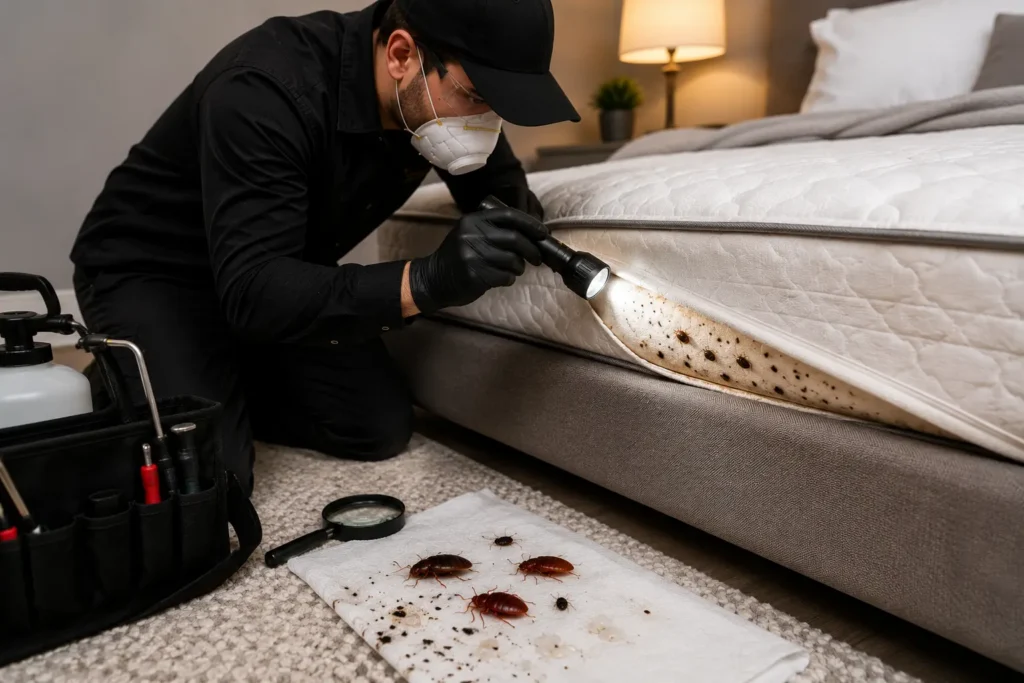
Finding one bed bug in your home can be stressful. Many homeowners immediately wonder how long can a single bed bug live and whether one bug can turn into a bigger infestation. The truth is that bed bugs are extremely resilient pests that can survive for months, even without feeding regularly.
If you notice a single bed bug in your mattress, couch, or furniture, it is important to act quickly. Bed bugs reproduce fast and can spread throughout your home before you even realize it. That is why many homeowners choose professional pest control services to stop the problem early.
How Long Can a Single Bed Bug Live?
An adult bed bug can live anywhere from 4 to 12 months depending on temperature, food supply, and hiding conditions. In cooler environments, bed bugs may survive even longer because their metabolism slows down.
A single bed bug usually survives by hiding during the day and feeding on blood at night. Even if only one bug is visible, there could already be eggs or young bed bugs hidden nearby.
Average Bed Bug Lifespan
| Bed Bug Stage | Average Lifespan |
|---|---|
| Bed Bug Egg | 6–10 days |
| Young Bed Bug (Nymph) | Several weeks |
| Adult Bed Bug | 4–12 months |
Can One Bed Bug Survive Alone?
Yes, one bed bug can survive alone for quite a long time. Bed bugs are experts at hiding in tiny cracks, mattress seams, furniture joints, and baseboards.
However, a single bed bug can eventually create a larger infestation if it is a pregnant female. Female bed bugs lay multiple eggs during their lifetime, which is why early treatment is important.
How Long Do Bed Bugs Live Without Blood?
One of the reasons bed bugs are difficult to eliminate is their ability to survive without feeding.
Adult bed bugs can live for several months without a blood meal. In some cooler indoor environments, they may survive close to a year without feeding.
This means simply leaving a room empty will usually not solve a bed bug problem.
Signs You May Have More Than One Bed Bug
Even if you only spot one bed bug, watch for these common warning signs:
Small Red Bite Marks
Bed bug bites often appear in clusters or straight lines on exposed skin.
Tiny Blood Stains on Sheets
Small rust-colored spots on bedding may come from crushed bed bugs.
Dark Fecal Spots
Black or brown dots near mattresses or furniture are common signs of activity.
Bed Bug Shells or Eggs
As bed bugs grow, they shed their outer skins. Tiny white eggs may also appear near hiding areas.
Where Bed Bugs Usually Hide
Bed bugs stay close to sleeping areas because they feed on people at night.
Common hiding spots include:
- Mattress seams
- Bed frames
- Headboards
- Sofas and couches
- Electrical outlets
- Cracks in walls
- Carpet edges
- Luggage and clothing
How Fast Do Bed Bugs Multiply?
Bed bugs multiply faster than many homeowners expect. A female bed bug can lay several eggs every day under ideal conditions.
Because eggs hatch quickly, a small problem can become a major infestation within weeks or months.
This is why quick inspection and treatment are extremely important.
What To Do If You Find One Bed Bug
If you find a bed bug in your home, avoid panic. Instead, follow these steps:
Inspect Nearby Areas
Check mattresses, couches, furniture, and bedding carefully.
Wash Bedding in Hot Water
High heat helps kill bed bugs and eggs.
Vacuum Thoroughly
Vacuum carpets, furniture, mattress edges, and cracks.
Reduce Clutter
Clutter gives bed bugs more hiding places.
Monitor for More Activity
Watch for new bites, stains, or additional bugs.
Call Professional Help
If you continue seeing signs, it may be time to contact our bed bug extermination team for a full inspection and treatment plan.
Can Bed Bugs Die on Their Own?
Bed bugs rarely disappear without treatment. Since they can survive months without feeding, they often stay hidden until they find another host.
Professional treatment is usually the most effective solution for eliminating both adult bed bugs and eggs.
How To Prevent Bed Bugs From Returning
Preventing future infestations is just as important as treatment.
Prevention Tips
- Inspect hotel beds while traveling
- Wash travel clothes immediately
- Vacuum frequently
- Use mattress protectors
- Reduce clutter near sleeping areas
- Inspect secondhand furniture before bringing it home
FAQ
How long can a single bed bug live without feeding?
A single bed bug can survive several months without feeding, especially in cooler temperatures.
Can one bed bug reproduce alone?
A single pregnant female bed bug can start an infestation by laying eggs.
Is there ever only one bed bug?
Sometimes yes, but often there are more hiding nearby.
How fast do bed bugs spread?
Bed bugs can spread quickly through furniture, luggage, walls, and clothing.
Will bed bugs go away if I leave the room empty?
No. Bed bugs can survive for months without feeding.
Conclusion
Understanding how long can a single bed bug live helps homeowners recognize how serious even one sighting can become. Bed bugs are highly resilient pests that hide well and survive for long periods without food.
If you notice signs of bed bugs in your home, taking action early is the best way to avoid a larger infestation. Cleaning, monitoring, and seeking professional help when needed can protect your home and family from ongoing bed bug problems.